


The Internet Is Due for an Upgrade
The entire internet will need to be upgraded to post-quantum encryption technologies.


Those who played the game paid Niantic to work for them. And none of them were told that Niantic was putting them to work.

Managing Editor’s Note: Before we get to today’s issue, don’t forget…
There’s still time to sign up to attend Jeff’s AI Doomsday event this Wednesday at 2 p.m. ET. With all the volatility we’re seeing this year, a strategy like Jeff’s that lets you profit from market downswings is an incredible advantage.
You can go here to automatically sign up to attend, or to add your name to the VIP list. We’ll even send you a special bonus report when you do…
On April Fools’ Day 2014, Google released a mobile game that challenged users to find little monsters hidden within Google’s Maps application.
There wasn’t much to it. The game wasn’t really interactive. When you found one of the monsters, you just tapped on it on your smartphone screen.
The idea came from a game called Bloom and was created by a computer science graduate from USC who presented his game to Google, which landed him a job at the internet giant.
Bloom caught the eye of John Hanke, who was the head of an internal startup inside of Google known as Niantic Labs. Hanke was an expert in geospatial data visualization and mapping and had a much grander vision of what was possible, leveraging mapping technology and augmented reality (AR).
In the fall of 2015, Hanke and Google spun out Niantic Labs with the initial funding from Google, The Pokémon Company, and Nintendo to create what is now known as Pokémon Go.
The rest was pretty much history.
Pokémon Go is not only one of the most successful mobile phone games in history, but also one of the most successful video games in history, raking in about $10 billion from its original launch.
I remember the launch like it was yesterday, as I was living and working in Japan – the first market the game was launched in. Australia, New Zealand, and the U.S followed when the global launch happened in July 2016.
More than 500 million people downloaded the app in just 60 days after the global launch. The numbers were unbelievable.
The augmented reality game that used a phone’s screen and cameras to overlay graphics and Pokémon monsters over the real world combined physical activity (walking) with augmented reality, gamification, location-based features, and social interaction.
It was an immersive version of a wildly popular franchise that had, at that time, sold nearly 280 million games since launching Pokémon Red and Green in Japan in 1996, as well as produced a popular collectible card game, multiple long-running animated television series, and several films.
It was Pokémon brought to reality, and the combination of all these elements proved wildly successful.

Source: Pokémon Go
By 2020, Pokémon Go was generating more than $1 billion a year in revenue. These were incredible numbers considering that the game was free to play. Revenue was primarily driven by in-app purchases and tickets to special events.
The strategy was simple: pull in new users with a sticky, fun, free game, and then monetize them once they are hooked.
It’s an incredible business model, especially if you can develop a hit game. And it was an absolute hit. At the height of its popularity, the game had more than 200 million active monthly players. You could see crowds rushing to locations where the in-game map showed a Pokémon had spawned nearby to catch.

A crowd of Pokémon Go players famously flooded Central Park to catch a rare Pokémon in 2016 | Source: Insider Tech
Nintendo and The Pokémon Company made absolute fortunes, and the success of Niantic enabled the company to raise money in 2021 at an incredible $9 billion valuation.
The outside world and the media saw a wildly successful gaming company in Niantic. But Niantic’s story is so much more interesting because the goal of Pokémon Go wasn’t about gaming. That was just a means to an end.
The game was just a hook to create a massive data collection system on a global scale.
It’s diabolical, actually. Give the game away for free, make billions in the process from users, and then collect all of the geospatial data users collect while they are playing the game.
Viewed another way, those who played Pokémon Go paid Niantic to work for them. And none of them were told that Niantic was putting them to work. 143 million active players over the years collected more than 30 billion real-world images. And Niantic got paid by them while players did all the work.
Niantic’s endgame was better revealed last year, when it sold the video game division of its company for $3.5 billion to game company Scopely, which is owned by Saudi Arabia’s public wealth fund.
It wasn’t about the game. It was about the data and image collection around the world, which Niantic kept. The key was in John Hanke’s background. He originally came from Keyhole, a company that specialized in geospatial data visualization.
Keyhole was acquired by Google in 2004. Hanke stayed on to head up Google’s Geo division until creating Niantic Labs inside of Google.
Pokémon Go was a brilliant mechanism to “force” players to collect the global database of real-world images and scans. Wherever Niantic had gaps in geospatial data, it could simply place Pokémon into the game for players to track down and collect images.
And once Niantic had what it needed – a comprehensive global database of the world, especially in dense urban areas where images tend to have lots of gaps – it was ready to sell off the gaming side of the business.
And it could keep the 30 billion + images – the golden geese – all to itself.
Niantic Spatial is the surviving company with the massive real-world data, and it launched with $250 million in funding last year after the sale of its video game.
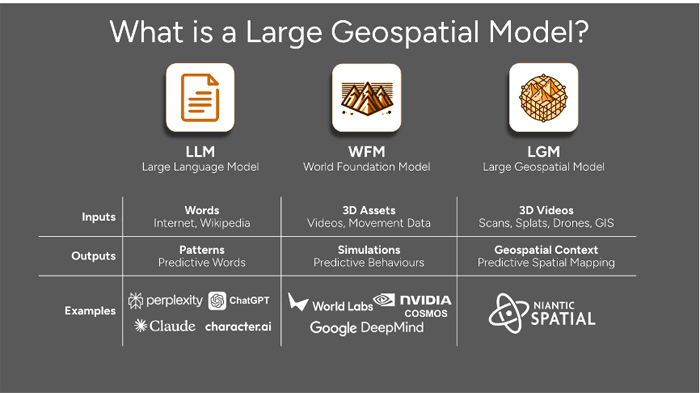
Announced earlier this year is Niantic’s endgame all along: what it now calls the Large Geospatial Model – a bit of play on Large Language Models.
Source: Niantic Spatial
The hard truth is that real-world data, especially detailed data in urban environments, is very difficult to collect. Niantic knew this all along, and Pokémon Go was its mechanism for collecting it.
And real-world data, to no surprise, is the most critical element to developing general-purpose intelligent robotics capable of navigating the real world.
I’ve been writing about this for years. This has always been the secret to Tesla’s ability to develop its vision-based deep neural network that has become its fully autonomous software stack capable of autonomous driving on any road with a safety that is 10X safer than humans.
Every Tesla with Autopilot or an early version of its self-driving software had the hardware installed to collect real-world data from navigating surface roads. Every Tesla is part of a massive data collection network, even to this day.
Tesla has now collected about 9 billion miles of real-world data on Autopilot, and as of this month, it has collected more than 9 billion miles of real-world data on full self-driving (FSD).
An incredible 18 billion total miles and counting have enabled Tesla to develop the most sophisticated general-purpose fully autonomous driving AI on the planet. And it gets better and better every month.
Niantic has done the same for the real world from a pedestrian perspective. Every sidewalk, cornerstone, plaza, alley, and street has been “seen” by Niantic. Anywhere humans might find themselves, Niantic has the data.
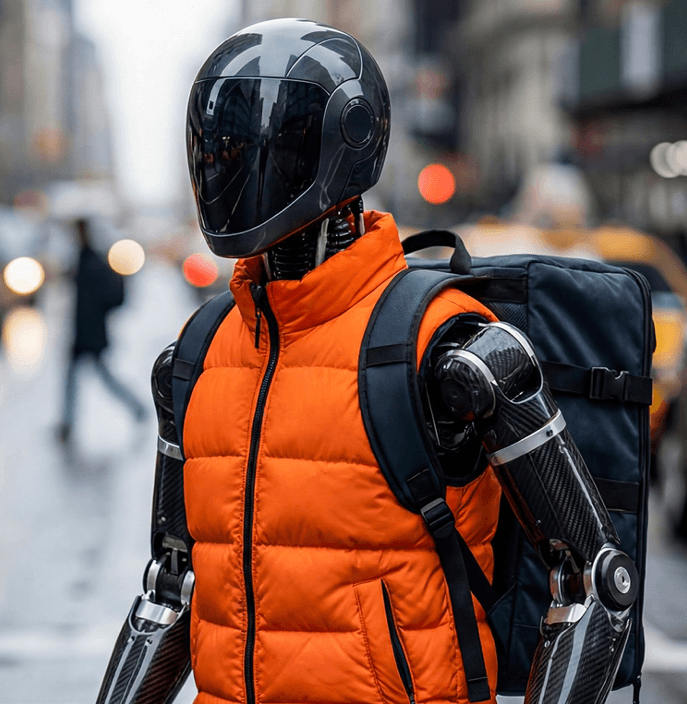
So, it wasn’t surprising at all last month to see Niantic Spatial announce a big move into general-purpose robotics.
Source: Niantic Spatial
Niantic Spatial isn’t going to manufacture robots. It has partnered with Coco Robotics, which is a private autonomous robotics company focused on delivery vehicles primarily for urban areas.
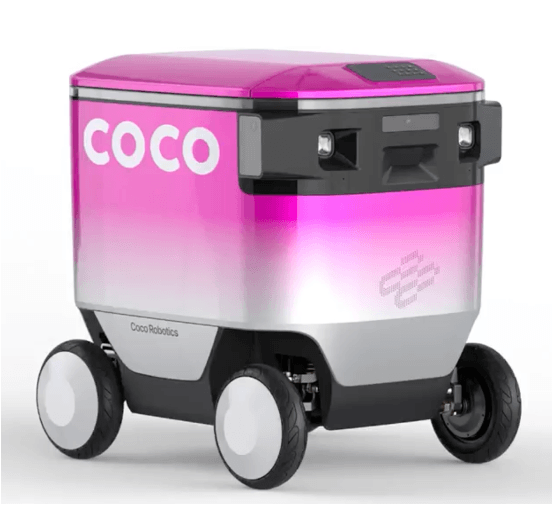
Coco 2 | Source: Coco Robotics
Niantic Spatial is delivering the geospatial intelligence to enable a company like Coco to train its AI and navigate urban environments. Niantic has the kind of data that would be impossible for a small private company like Coco to collect.
And Coco won’t be the only one. Niantic Spatial is sitting on an absolute fortune with its data. It has the largest data set of its kind, and arguably the best data set for training general-purpose humanoid robots to navigate the real world on foot.
The sheer fact that this data set exists is an accelerant for general-purpose autonomous delivery robots and humanoid robots.
A massive well-resourced company like Tesla or Amazon with large production capacity and data collection ability will likely develop their own “Large Geospatial Models,” but the rest of the industry will need to rely on what Niantic Spatial has to accelerate their training and have a competitive edge in the market.
Training advanced artificial intelligence requires high-quality, real-world data, something that the team at Niantic knew many years ago.
And now the robots exist to manifest AI in ways that will provide immense utility to the human race.
Jeff

Read the latest insights from the world of high technology.
The entire internet will need to be upgraded to post-quantum encryption technologies.

We’re on the cusp of the most extraordinary productivity boom in the history of the world.

A mistake like this would typically result in job losses, the loss of future funding, and the loss of...
Thanks for signing up for The Bleeding Edge — we’re glad you’re here!
Want updates sent straight to your phone too? Sign up for SMS alerts to get the latest delivered via text.
Brownstone Research: By submitting your phone number, you agree to our SMS Terms & Conditions, Terms of Use, & Privacy Policy, and give express written consent to receive marketing text messages from BSR. Messages are recurring & frequency may vary. Reply STOP to 94703 to opt out. Reply HELP to 94703 for info. Consent is not a condition of purchase. Message and data rates may apply. For additional information, you may contact Customer Service at 888-512-0726 or smssupport@brownstoneresearch.com.