



SpaceX to Launch a Mobile Network in the U.S.
Starlink Mobile is coming, and it can’t arrive soon enough.



What if we beam up the data centers into space?
Managing Editor’s Note: Jeff will be airing his strategy for profiting from crypto volatility in just a few hours…
Tonight, he’ll share the details of the neural network he’s developed to spot digital assets primed for a surge… and how he’s leveraging this artificial intelligence to make quick profits on those swings, usually in under 60 days.
It’s not too late to add your name to the guest list. Just go here to sign up with one click, and we’ll see you tonight at 8 p.m. ET.
The common refrain goes something like this:
The sun delivers far more energy to Earth every day than the world needs, so we should fuel the world’s electricity needs with solar panels and stop using fossil fuels.
When we hear comments like this, they are always devoid of any level of specificity.
While there is some truth in the statement, it ignores the practical realities, engineering challenges, environmental damage (mining and exploration, as well as toxic chemicals, are required to produce solar panels), and financial costs involved with even attempting to do something like this.
What is true is that in space, about 173,000 terawatts (TW) of energy hits Earth’s upper atmosphere every day.
Global energy production in 2024 was 30,000 terawatt hours (TWh), which is equivalent to about 3.42 terawatts of continuous energy.
Put simply, the amount of the Sun’s energy that hits Earth’s upper atmosphere daily is more than 50,000 times greater than our current energy production on Earth.
Striking.
Problem solved, right?
It sounds like we have a solution, right?
I wish it were true, but it’s not that easy…
But can’t we just put solar panels over the entire state of Nevada and then transmit electricity everywhere in the country?
Theoretically, it is possible, but the realities are quite different:
But can’t we just collect the energy in space, then, and “beam it” down to Earth?
I’ve covered this topic in the past in The Bleeding Edge…
The technology required is highly inefficient, and early tests have only been able to transmit less than 100 milliwatts to Earth – enough to light up two LEDs.
The obstacles are simply too great, which is why this idea hasn’t been pursued and isn’t being pursued.
But over the last week, harnessing the Sun’s power has suddenly become a topic of intense interest.
The catalyst, of course, has been the skyrocketing need for new sources of electricity to fuel new AI data centers.
The entire world, after all, is in pursuit of artificial general intelligence (AGI) and, ultimately, artificial superintelligence (ASI). And we need a lot more power to get there, as we’ve been exploring right here in The Bleeding Edge.
Nuclear energy has become all the rage recently, as I’ve been covering.
Fourth-generation nuclear fission technology – in the form of small modular reactors (SMRs) – has become a national priority.
Public nuclear tech companies like NuScale (SMR) and Oklo (OKLO) have received a lot of attention as a result.
I’ve been traveling the country to see the progress for myself.
Below is a picture of me in Kemmerer, Wyoming, earlier this month.
In the background is TerraPower’s Natrium nuclear reactor, which is under construction.
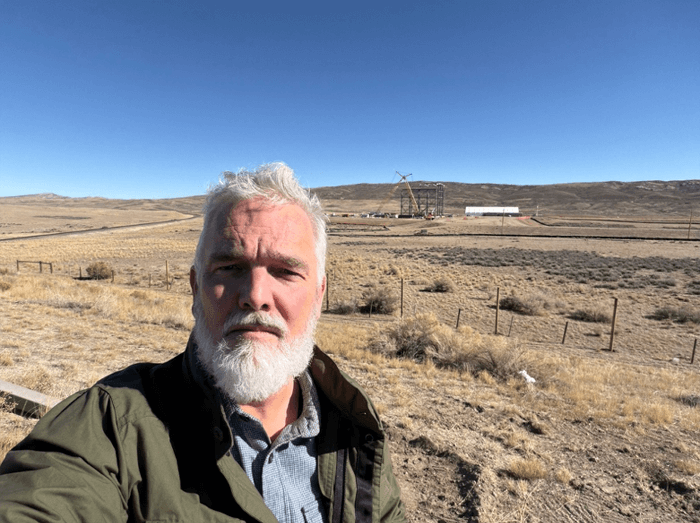
TerraPower Natrium Reactor Construction Site, Kemmerer, WY
It might not look like it in the image above, but the progress happening right now is torrid. Things that used to take a decade are now happening in periods measured in months.
It’s exciting… and it’s also not enough.
AI’s biggest bottleneck isn’t semiconductors.
It’s energy, and it isn’t even close.
Even with the industry moving as fast as it is, we still can’t build nuclear fission and nuclear fusion reactors fast enough.
We still have a massive gap… measured in 100s of gigawatts.
Which is why talk of the sun’s power has suddenly become all the rage.
But the framework for thinking about this problem has been inverted.
The industry isn’t talking about more solar panels on Earth positioned next to data centers or beaming electricity from space to Earth to feed the AI factories.
No sir.
They are now talking about the opposite.
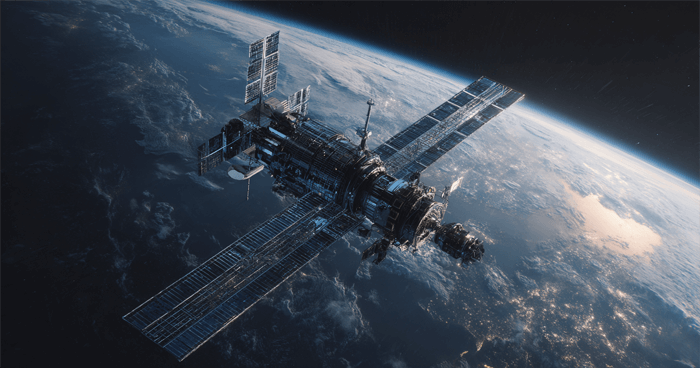
They want to send the data centers into space.
It’s absolutely nuts, right? Crazy? Impossible?
Think again.

Google just announced its latest moonshot project earlier this month – Project Suncatcher.
Its recent research was aptly named – Exploring a space-based, scalable AI infrastructure system design.
Suncatcher is exactly what it sounds like.
Google wants to launch solar-powered satellites into orbit that contain Google’s own tensor processing units (TPUs), which are Google’s equivalent of GPUs for training and running AI applications.
Google accurately states that in the right orbit, a solar panel can be eight times more productive in space than it can be on Earth with continuous power.
And because of the availability of continuous power due to sun synchronous orbits, there is no need for heavy backup lithium-ion batteries in the satellites (less weight means lower launch costs).
And just like SpaceX has already proven with Starlink satellites, Google envisions that its TPU-based satellite constellation will have optical links – so that they can transmit data and operate with synchronicity.
Google has teamed up with Planet Labs (PL), a data and imaging-centric satellite company, to work on Suncatcher to do something seemingly crazy…
… to launch data centers into space.
And I know it does kind of sound far out. Until we understand the economics.
Google’s own research suggests that launch costs will decline to $200/kilogram by the mid-2030s.
And at that level, the cost of launching and operating a space-based data center would be comparable to the electricity costs of an equivalent data center here on Earth, on a per-kilowatt/year basis.
But Google is wrong in its underlying assumptions.
My own analysis shows that SpaceX will enable roughly $100/kilogram launch costs to low Earth orbit (LEO) by the end of 2027.
That means that the economics will be more compelling than ground-based data centers here on Earth. And not by the mid-2030s. In the next 24–36 months.
Not only is a sun-synchronous orbit better – as it provides “free” and continuous clean energy – because of the near absolute zero temperatures in space, there is natural cooling.
Just yesterday, Elon Musk and NVIDIA CEO Jensen Huang were on stage talking about a new 500-megawatt data center deal in Saudi Arabia, as well as the topic of AI data centers in space.
Musk posited, “Perhaps in the four- or five-year time frame, the lowest-cost way to do AI compute will be with solar-powered AI satellites.”
Yes, there are engineering challenges to solve, but they are far easier than the challenges I listed above concerning solar power here on Earth.
And as long as you believe that Musk and his team at SpaceX will be successful with the Starship, then the future of AI data centers in space is inevitable.
In fact, I would argue that SpaceX is already building the foundation for doing precisely that with Starlink, right under everyone’s noses.
I’ve long argued that the real objective of Starlink is to build a literal world wide web – a web of internet infrastructure – around Earth in space.
And to state the obvious, it is a hell of a lot easier, and proven, to transmit data from space to Earth than it is to beam energy from space down to Earth.
So beam them up.
Beam up the data centers into space.
Free cooling. Free energy. Clean as a whistle.
It won’t just be intelligence “in the cloud,” it will be orbital intelligence.
Jeff
Add Brownstone Research as your preferred source on Google to see our latest stories in your feed.
 Add as a preferred source
Read the latest insights from the world of high technology.
Starlink Mobile is coming, and it can’t arrive soon enough.

Most Bitcoin predictions are not about being right... They're about grabbing a headline.

The fundamental relationship between man and machine has remained largely unchanged… Humans gave machines instructions, and the machines followed...