

Luddites vs. Effective Acceleration
Warning for anyone who has anxiety over the impact of AI on work, this is bound to cause convulsions....


It appears that Boston Dynamics is ready to deploy its “superhuman robot”…
Managing Editor’s Note: We’re just hours away from Larry Benedict’s Get Rich Slow event…
Tonight at 8 p.m. ET, Larry’s revealing his strategy for making quick profits in choppy markets.
Now, smaller gains like 10% or 20% won’t make you rich overnight… but with Larry’s strategy, these kinds of smaller gains can be a consistent income source that can make a significant difference in your account.
Most people are missing out on these opportunities because they think they are too small to make any real money from. But that’s a mistake…
Which is why, in a few hours, Larry will reveal how the increased volatility he sees coming in 2026 can put you on the path to financial freedom, no matter which way markets swing next.
To get on the attendee list, simply go right here to RSVP with one click…
“Superhuman robot.”
That’s the language that Boston Dynamics used to describe its new and improved Atlas humanoid robot, announced on January 5.
It is a radical improvement compared to past versions of Atlas, which were big, bulky, and lacked any form of intelligence.
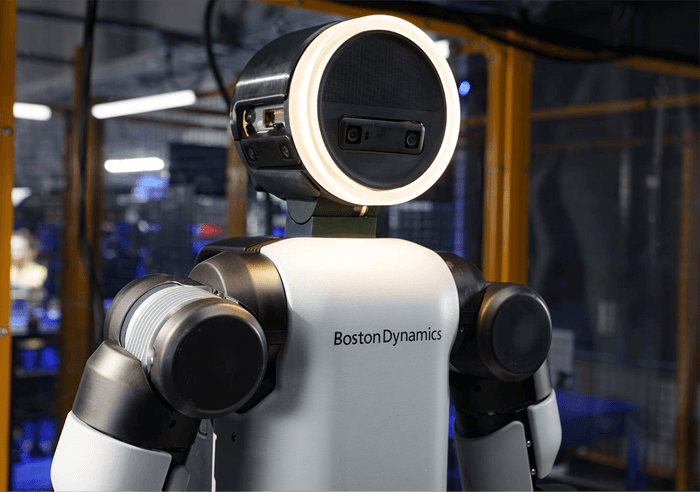
The new Atlas humanoid robot | Source: Boston Dynamics
This latest version of Atlas is the culmination of more than three decades of robotics research and development, spearheaded by the Boston-based robotics firm.
It’s the kind of product that they could have only dreamed of decades ago.
Finally, it has arrived…
And it appears that Boston Dynamics is actually ready to deploy it.
The company announced this month that it will “begin manufacturing [the] product version of its humanoid robot immediately.”
Immediately.
Hyundai Motor Group is preparing to deploy tens of thousands of its own robots in its own facilities.
As a reminder, Hyundai acquired Boston Dynamics from Alphabet in 2021 for $880 million, so it makes perfect sense that Hyundai would look to employ the available production of Atlas in its own facilities first.
The automotive industry is turning out to be one of the initial sectors to adopt humanoid robots.
Automotive manufacturers have long used industrial robots in the manufacturing process to improve safety, reduce costs, increase production levels, and ensure quality in manufacturing.
So, the employment of intelligent humanoid robots makes perfect sense.
Figure AI has been partnering with BMW at its South Carolina plant, with the expectation that the use of Figure 02 or Figure 03 becomes more widely deployed across the company.
And of course, Tesla has already been using its current production of Optimus in its own factories and offices.
Just last year, Hyundai announced that it would invest $26 billion in the U.S. between 2025 and 2028 to expand its U.S. domestic automotive production, as well as to build a robotics manufacturing facility with the ability to produce 30,000 Atlas humanoid robots a year.
Humanoid robots are no longer a science project.
2026 is the year that they go into large-scale production.
Figure AI, Agility Robotics, and Boston Dynamics should all manufacture more than 10,000 units each this year.
And Tesla’s production of its third generation of Optimus should easily exceed 50,000 units.
This new-and-improved version of Atlas is unique and a major improvement from previous models.
Visually, it is more compact and ready for production.
Boston Dynamics reduced the number of unique parts in Atlas and designed every component to be compatible with automotive supply chains.
This makes a lot of sense, considering Hyundai’s ownership of Boston Dynamics, and this approach will also improve economies of scale for production.
Atlas now has 56 degrees of freedom, fully rotational joints, and the ability to lift up to 50 kilograms (110 pounds).
In the short video clip below, we can see the capabilities of the fully rotational joints.
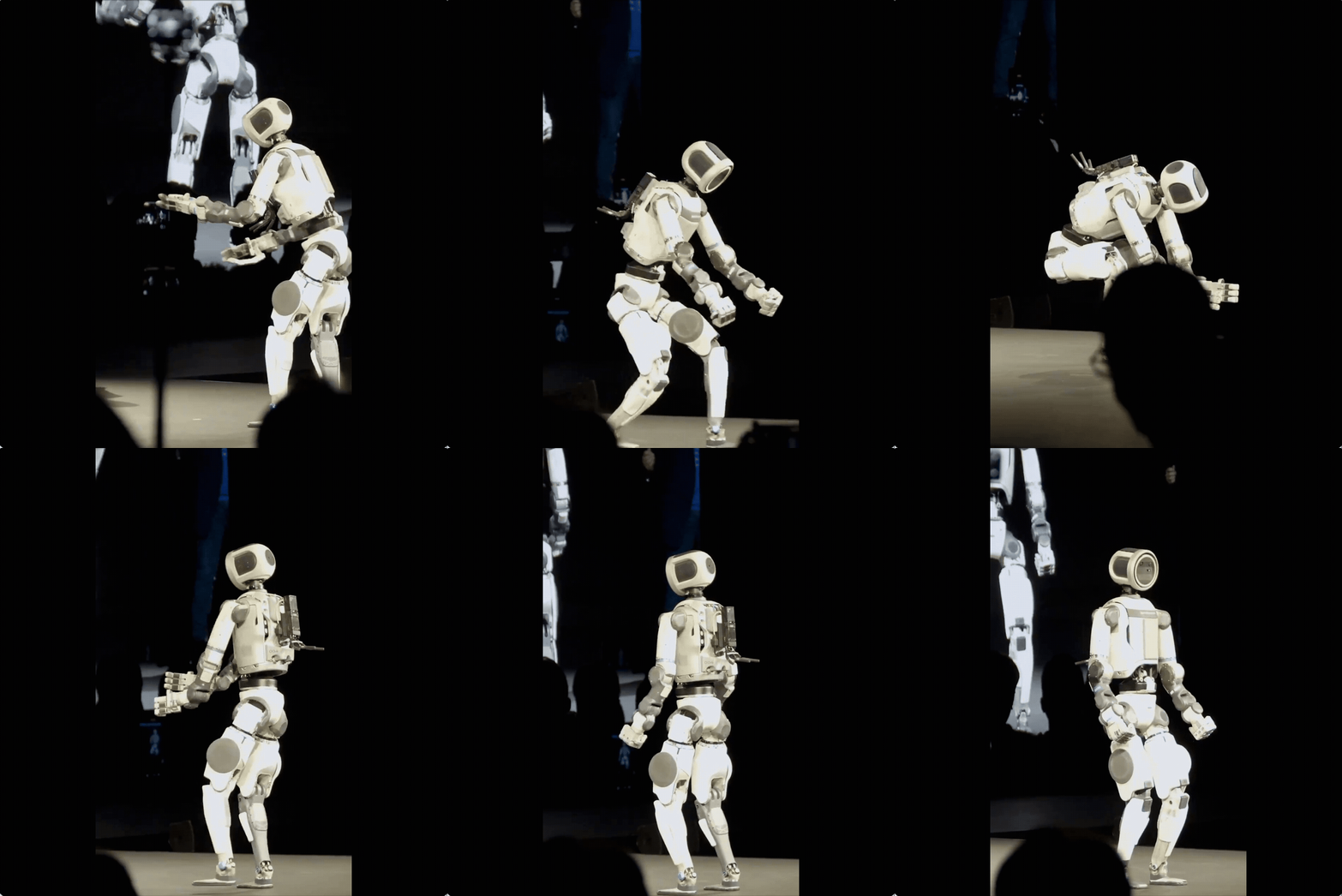
Boston Dynamics’ Atlas Robot at CES | Source: Carlos E. Perez @IntuitMachine
All the joints can rotate a full 360 degrees, which gives Atlas the ability to simply swivel its joints to change direction, rather than needing to pivot and turn its whole body around.
In the words of Zachary Jackowski, General Manager of Boston Dynamics, “We can pick the best parts of what nature has to offer and do better in others.”
This approach for the whole humanoid robot is unique to Boston Dynamics.
Hardware has always been Boston Dynamics’ strength.
Years ago, its videos of Atlas performing parkour and doing backflips with incredible agility caught the imagination of many, despite all the movements being pre-programmed and lacking any form of intelligence.
The intelligence would come later…
Boston Dynamics decided to partner to solve Atlas’s lack of intelligence.
Also announced in parallel with the new Atlas product is a partnership with Google DeepMind.
DeepMind will bring its foundational AI model for robotics… and Boston Dynamics will provide the hardware, which should enable a general-purpose, intelligent humanoid robot.
Boston Dynamics is the second company to partner with DeepMind to solve this intelligence gap.
The first was Apptronik, with its Apollo humanoid robot.
Apptronik was early to team up with Google DeepMind. In fact, Google decided to invest in Apptronik in a $350 million funding round about a year ago.
This is an exciting development.
Now that Boston Dynamics has a production-ready hardware design and has a solution for intelligence with its partnership with DeepMind, its robots will be able to learn economically valuable tasks in industry to address both labor shortages and difficult, physically draining tasks that the human labor force is not best suited to perform.
And while the video clip below is computer graphics, what is shown in the video will become reality – this year.
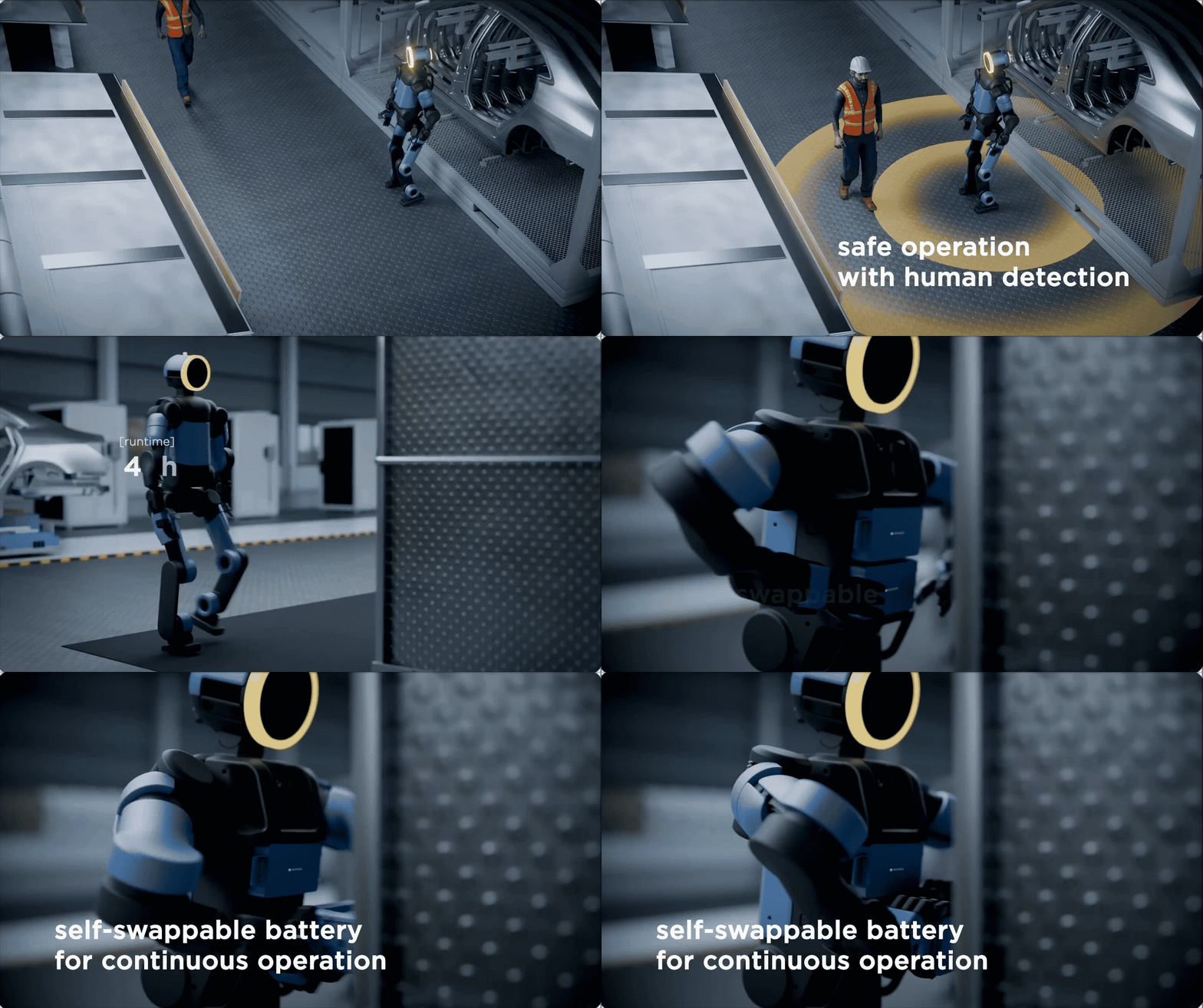
Rendering of Atlas at Work | Source: Boston Dynamics
Atlas stands 6’2” tall, is fully electric, and has about four hours of runtime before needing a recharge.
It is even capable of swapping out its batteries by itself, which will result in continuous operation without the need for human support.
And not surprisingly, its “brain” runs on NVIDIA (NVDA) semiconductors.
We can expect a flurry of robotics announcements and developments this year, as each company tries to gain a lead in this race to a multitrillion-dollar market.
First to market with general-purpose intelligent robots at large volume production will have an incredible competitive advantage in capturing the majority of this massive market.
Every company knows this, which is why they are all moving as quickly as they can.
Jeff

Read the latest insights from the world of high technology.
Warning for anyone who has anxiety over the impact of AI on work, this is bound to cause convulsions....

Last week, Block CEO Jack Dorsey announced that the company would be cutting its organization almost in half…

We can’t provide any personal investment advice, but we can use a question as an example of how to...
Thanks for signing up for The Bleeding Edge — we’re glad you’re here!
Want updates sent straight to your phone too? Sign up for SMS alerts to get the latest delivered via text.
Brownstone Research: By submitting your phone number, you agree to our SMS Terms & Conditions, Terms of Use, & Privacy Policy, and give express written consent to receive marketing text messages from BSR. Messages are recurring & frequency may vary. Reply STOP to 94703 to opt out. Reply HELP to 94703 for info. Consent is not a condition of purchase. Message and data rates may apply. For additional information, you may contact Customer Service at 888-512-0726 or smssupport@brownstoneresearch.com.