


Further Than Anyone Has Gone Before
We’re on the cusp of the most extraordinary productivity boom in the history of the world.


This may very well be the most advanced AI-powered drug development breakthrough in history…
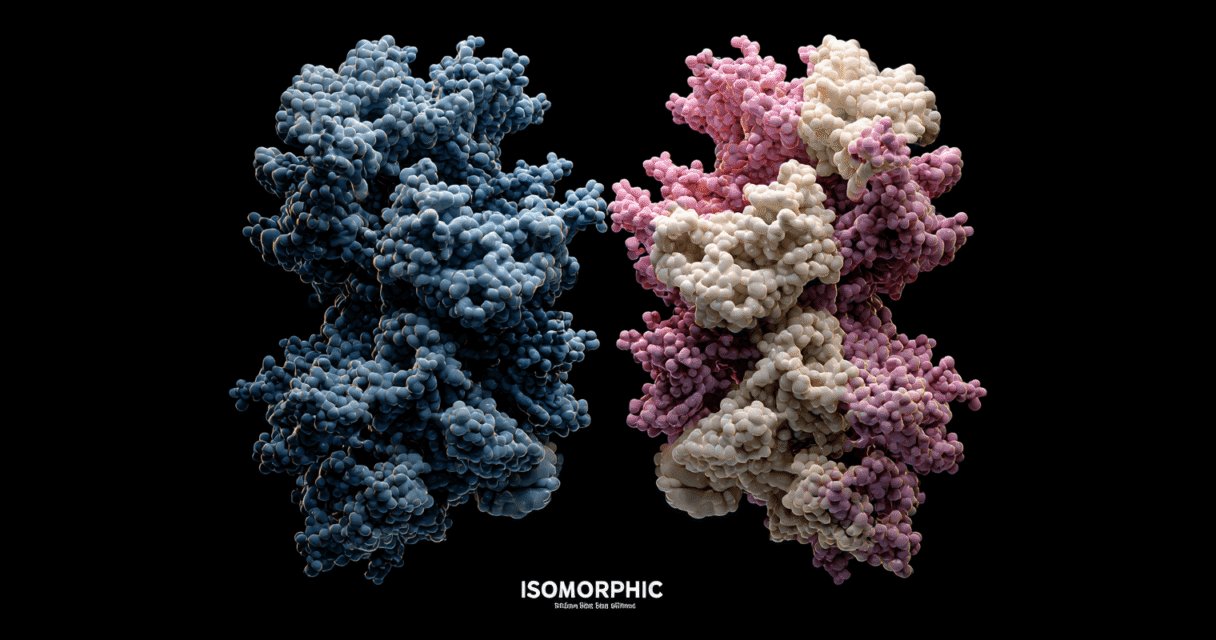
Managing Editor’s Note: The big night has arrived…
Our colleague, Larry Benedict, just kicked off his Wall Street Money Calls event…
It’s not too late for you to tune in to hear from Larry about the phone calls that the CEOs of America’s biggest companies are required to hold where they answer tough questions from Wall Street analysts… and the eight key, market-moving signals Larry listens for when he “eavesdrops” on these calls.
Just click right here and it will bring you straight to Larry’s broadcast.
To many, the acquisition made no sense…
Why would an advertising giant like Google spend $500 million on a tiny tech startup that was, at the time, leveraging early forms of artificial intelligence technology to learn from and master Atari-era games like Breakout, Pong, and Space Invaders?
After all, what did that have to do with advertising? And this was in 2014… several years before artificial intelligence would begin to dominate headlines and transform the landscape of high tech and biotech.
Most couldn’t have imagined how that tiny tech startup, DeepMind Technologies, would turn the life sciences industry on its head just five years later.
By 2020, the company had migrated to board games with varying levels of complexity – like chess (too easy), shogi (Japan’s version of chess), and Go (China’s version of chess) – mastering these games and achieving levels of skill far greater than any human master.
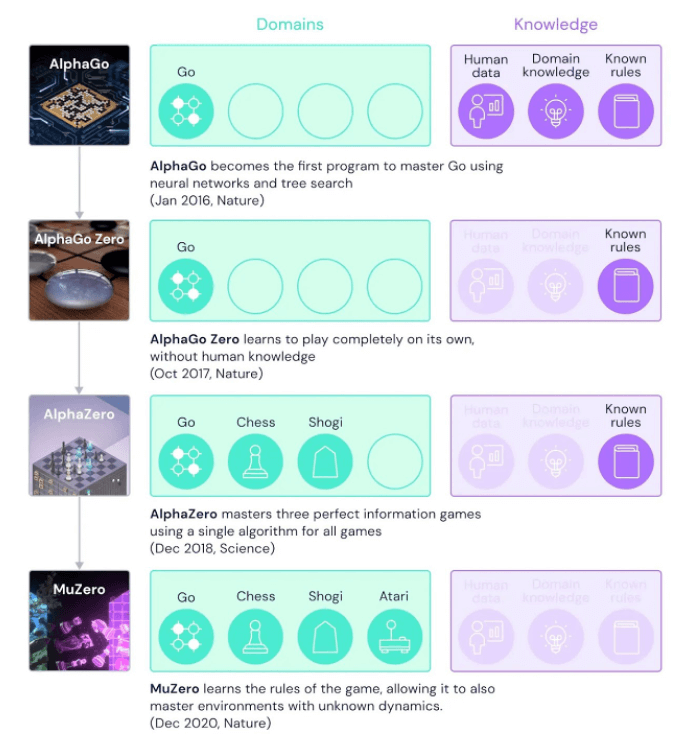
Source: Google DeepMind
It was around that time that the team at DeepMind began to lean into grand challenges in life sciences with its AlphaFold AI model, with the goal of understanding the structure and mechanics of life itself.
Those efforts eventually earned DeepMind’s CEO, Demis Hassabis, the Nobel Prize in Chemistry in 2024.
Commercialization, on the surface, appeared to be an afterthought for Google. But that was never the case.
Any time Google’s DeepMind team makes an announcement, it’s important to pay attention…
This is a team Bleeding Edge readers know well. I have chronicled every major development released by the team since shortly after Google acquired it in 2014.
Google has been playing the long game in developing artificial general intelligence (AGI). And what better way to do so than to develop AI models that understand the nature of life itself?
This was certainly the motivation for Google spinning out a team from DeepMind into Isomorphic Labs in 2021.
The team at Isomorphic remained closely intertwined with DeepMind until last year, when Isomorphic raised $579 million from Alphabet (GOOGL), Google Ventures (venture capital arm of Google), and Thrive Capital; its first institutional funding round.
Isomorphic is meant to be the commercialization arm of DeepMind’s life sciences breakthroughs, which is why every biotech investor needs to pay attention to Isomorphic’s latest developments.
Just yesterday, Isomorphic announced it has released its unified computational platform for drug development – referred to as its Isomorphic Labs Drug Design Engine (IsoDDE).
And it may very well be the most advanced AI-powered drug development breakthrough in history.
The IsoDDE built up the incredible progress made by Google DeepMind and Isomorphic Labs over the last couple of years on AlphaFold 3, which we explored most recently in The Bleeding Edge – How DeepMind Made History.
But the IsoDDE platform is not an incremental improvement over AlphaFold 3. This is something very different.
IsoDDE…
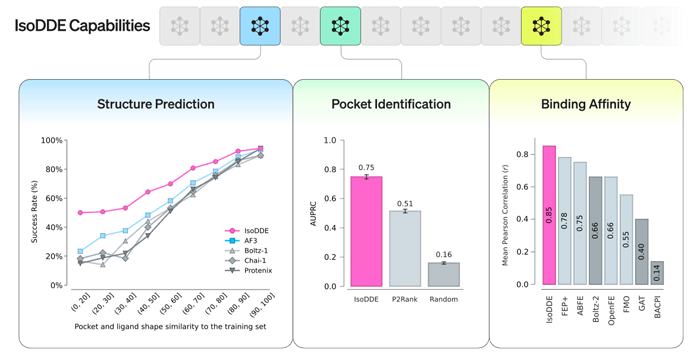
Source: Isomorphic Labs
And it can do all of these things for a tiny fraction of the time and cost compared to traditional methods of drug discovery and development.
The ability to scale the use of IsoDDE is only limited by computational power and electricity, of which there is plenty. This is transformational for the biotech sector.
As powerful as AlphaFold 3 (AF3) has been, it was far from perfect. One of the key areas of weakness of AF3 was the limited accuracy in predicting structures that were significantly different than what the AlphaFold 3 model was trained on.
This is where IsoDDE has excelled. It can generalize protein-ligand structures well outside of anything similar to what the model was trained on. This, in itself, is an incredible breakthrough.
Shown below is a chart that shows how IsoDDE has more than doubled the accuracy compared to AlphaFold 3 (AF3) for the most difficult kinds of predictions.
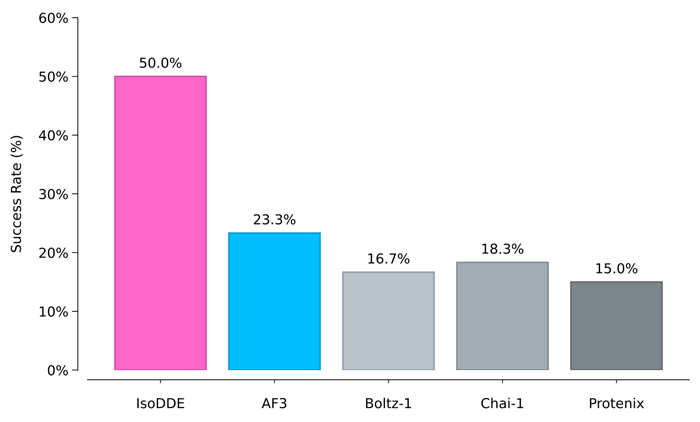
Source: Isomorphic Labs
To help visualize how significant the improvement is, the image below provides a useful comparison between the previous best in performance prediction (far left column)… versus the ground truth (middle column) – the proven structure from the Protein Data Bank (PDB)… versus the IsoDDE prediction entirely done by Isomorphic’s AI model (the far right column)…
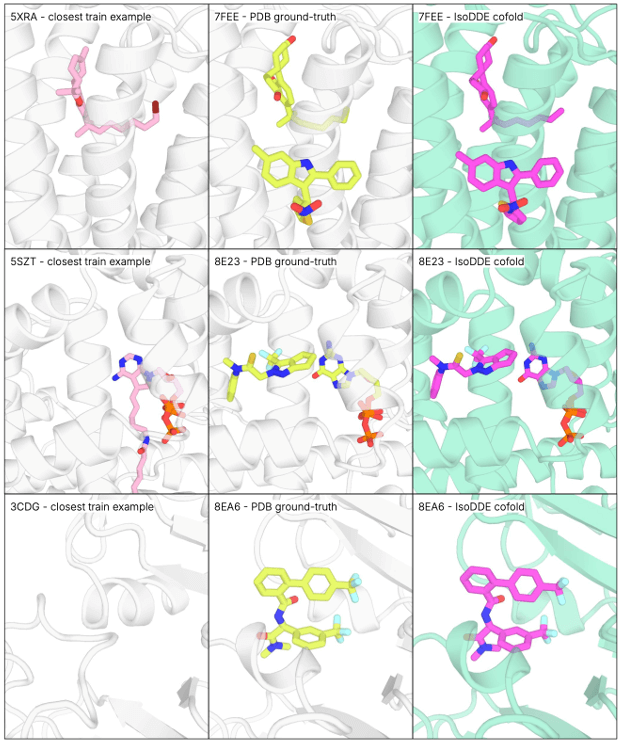
Accurate Predictions of Novel Biomolecular Interactions with IsoDDE | Source: Isomorphic Labs
The sheer accuracy of the IsoDDE in the far right column compared to the ground truth in the middle is just stunning.
Understanding protein structure in itself was a breakthrough of historic proportions.
But IsoDDE takes it one step further by accurately predicting how proteins bind to other proteins, as well as how they bind to other molecules. This is critical for accelerating drug development.
Shown below are the dramatic improvements in IsoDDE (in pink) compared to AlphaFold 3 (in blue). It excels in antibody-to-antigen, protein-to-ligand, and protein-to-protein predictions.
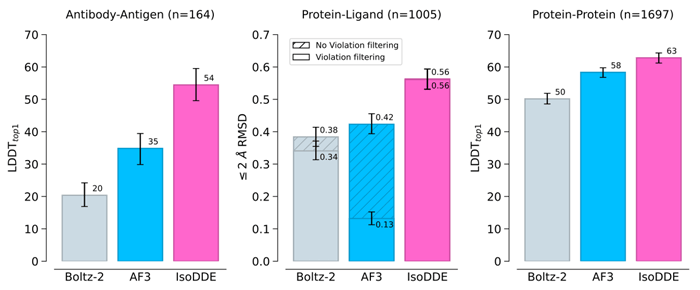
Accurate Predictions of Novel Biomolecular Interactions with IsoDDE | Source: Isomorphic Labs
To more easily visualize the accuracy of IsoDDE, we can view the image below from Isomorphic’s research, which shows AlphaFold 3 predictions on the top row and the corresponding predictions made by IsoDDE for antibody-antigen structure predictions on the bottom row.
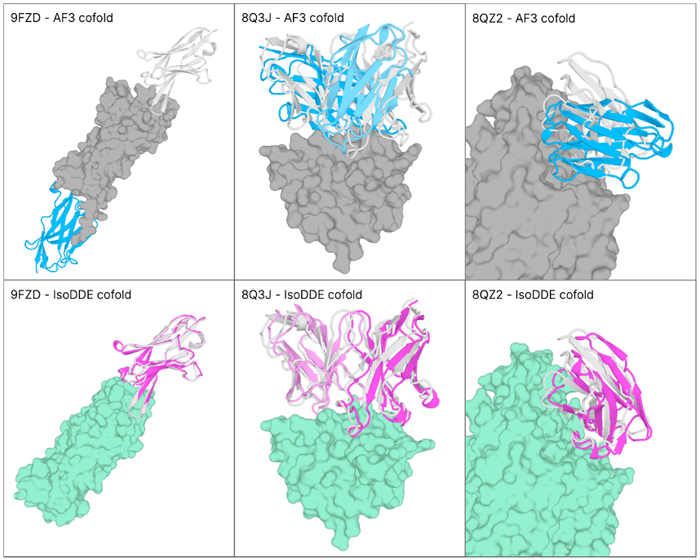
We want to focus on the very light gray portion in both rows. That’s what the structure should be (i.e., ground truth). That’s what AlphaFold 3 (AF3) and IsoDDE are trying to predict.
We can see in the top row that the AF3 predictions – represented by the blue ribbons – are clearly not in sync with the light gray structures. Oversimplified, they aren’t accurate predictions.
But if we look at the IsoDDE predictions (bottom row), we can see the pink and the light gray colors are basically entwined directly with one another. The prediction aligns with reality.
What are the implications of this breakthrough?
In Isomorphic’s own words:
IsoDDE’s ability to predict binding affinities and novel pockets with high accuracy provides critical tools to design novel molecules, empowering drug designers to navigate the vast chemical space with unprecedented accuracy.
I don’t know what to say other than that my jaw dropped when I read the research early this morning. This level of predictive accuracy for molecule and protein interactions is unheard of in biotech.
The ramifications for the entire industry are hard to overstate. And it’s safe to say that Isomorphic Labs will have taken an even greater leap forward by the end of this year.
In silico drug development is here today, in full force, and will radically change the drug development process for the benefit of humanity.
Jeff

Read the latest insights from the world of high technology.
We’re on the cusp of the most extraordinary productivity boom in the history of the world.

A mistake like this would typically result in job losses, the loss of future funding, and the loss of...

The time to harden blockchain technology is right now.
Thanks for signing up for The Bleeding Edge — we’re glad you’re here!
Want updates sent straight to your phone too? Sign up for SMS alerts to get the latest delivered via text.
Brownstone Research: By submitting your phone number, you agree to our SMS Terms & Conditions, Terms of Use, & Privacy Policy, and give express written consent to receive marketing text messages from BSR. Messages are recurring & frequency may vary. Reply STOP to 94703 to opt out. Reply HELP to 94703 for info. Consent is not a condition of purchase. Message and data rates may apply. For additional information, you may contact Customer Service at 888-512-0726 or smssupport@brownstoneresearch.com.