




Google’s Nuclear Deal Reveals the Scale of AI’s Power Problem
Google’s recent agreement reveals the scale of the AI power shortage and why supplying power is such an important...



This is a landmark deal and the most significant initiative in shipbuilding and defense technology since World War II.
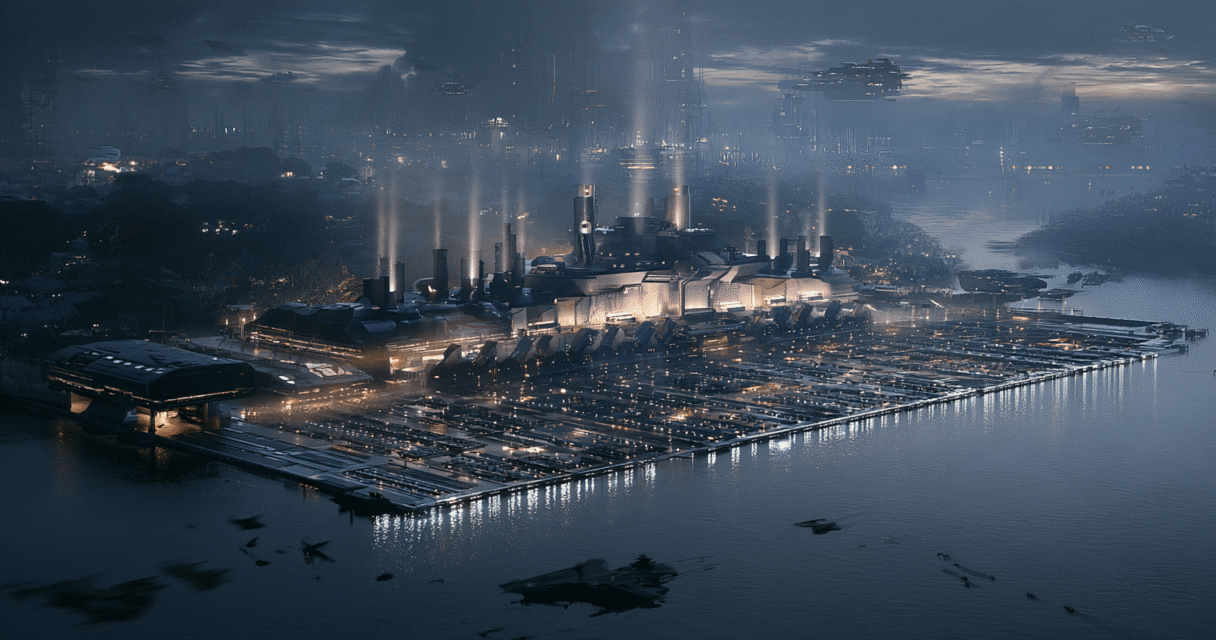
Waking up to views of the Northwest Harbor in Baltimore this morning got me thinking about both the past and the present.
For more than a century, Baltimore was central to United States shipbuilding.
While the waters that grace the harbor are still the same as hundreds of years ago, the development of the waterfront – with its modern architecture – has naturally transformed what it looked like more than 150 years ago.
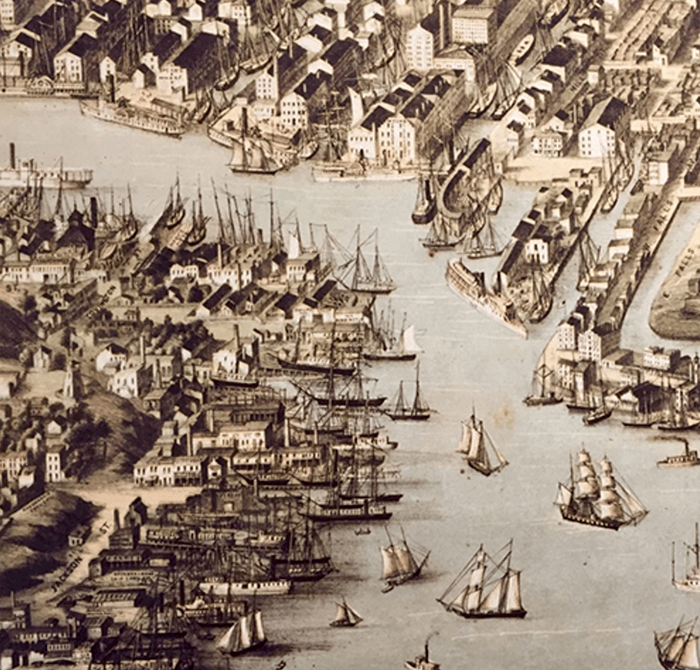
Baltimore Harbor circa 1869 | Source: Maryland Historical Society
Today, the Inner Harbor of Baltimore has experienced a rebirth of hotels, office buildings, apartment buildings, and restaurants…
Baltimore’s shipbuilding prowess has long since decayed.
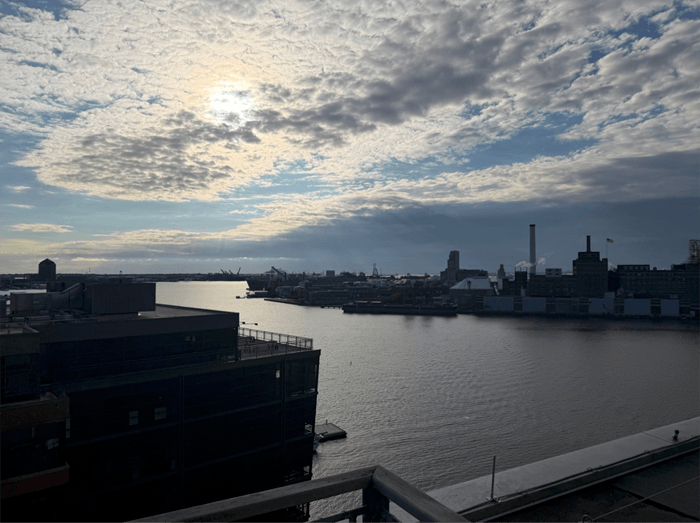
Looking Southeast to Northwest Harbor | October 15, 2026
As early as the 1790s, Baltimore led the nation in shipbuilding.
It was the home of the design of one of the most famous ships in history, the Baltimore Clipper, known for its two-masted, sharp-hulled design, resulting in large, fast sailing ships.
You can still see them sailing today, offering rides around the harbor to tourists in the city.
During the World Wars, Baltimore’s shipyards were synonymous with America’s maritime power.
Key shipyards were the Key Highway complex, the Fort McHenry yard, the Fairfield yard, and Sparrows Point, which was founded in 1891 by Maryland Steel and was eventually acquired by Bethlehem Steel in 1916.
What made Sparrows Point unique is that it was co-located next to what became the world’s largest steel mill, providing the most critical feedstocks for shipbuilding for the U.S. Navy.
Combining steel production with shipbuilding in a single location provided for efficiencies in production that were unmatched.
It reminds me of the vertical production ethos that Elon Musk has built into both Tesla (TSLA) and SpaceXAI (SPCX) to improve efficiencies, increase production, and have control over its own supply chain.
Baltimore’s shipyards, particularly Sparrows Point and the wartime emergency Fairfield yard, built hundreds of ships for the war effort. Its absence would have been devastating for the United States.
Sadly, by the 1960s and ‘70s, Baltimore shipbuilding simply couldn’t be cost competitive with foreign shipbuilders, many of which were heavily subsidized.
By the 1980s, the decline was rapid.
In 1982, Bethlehem Steel closed the Key Highway yards, and the last new ship at Sparrows Point was launched around 1990.
And that was pretty much the end.
Sparrows Point was sold in 1997, and its successor went bankrupt in 2003.
Foreign competition and the failure to adopt new manufacturing approaches, new product design processes, and advanced technology to become more competitive sounded the death knell of Baltimore shipbuilding.
But I’m happy to say that’s not the end of the story.

Larry Benedict managed more than $900 million and went 20 years without a losing year. Now he’s found a ticker that could give you multiple chances to profit when this major event hits. See which ticker it is, free.

Some of these AI assets are already taking off for gains of 200%, 318%, and 467%, all in 30 days or less. One returned 46 times more money than the #1 AI stock of the year… Which is why Jeff is now recommending his TOP FIVE plays (click here to see the details).
Sparrows Point is about to be reborn.
And in a way that addresses its previous failings.
Announced earlier this month by the State of Maryland, the Department of War (DoW), and Anduril Industries, a $6.6 billion investment from the U.S. Navy and Anduril will rebuild Sparrows Point into something never seen before.
The new shipyard will be called Arsenal-2, and it will be built at Sparrows Point.
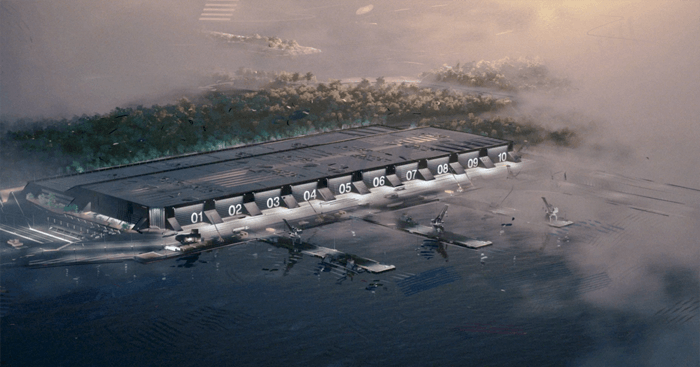
Arsenal-2 rendering | Source: Anduril
This will quickly become the largest shipyard of its kind in the United States. And it will be responsible for producing submarines, components, and autonomous underwater vessels.
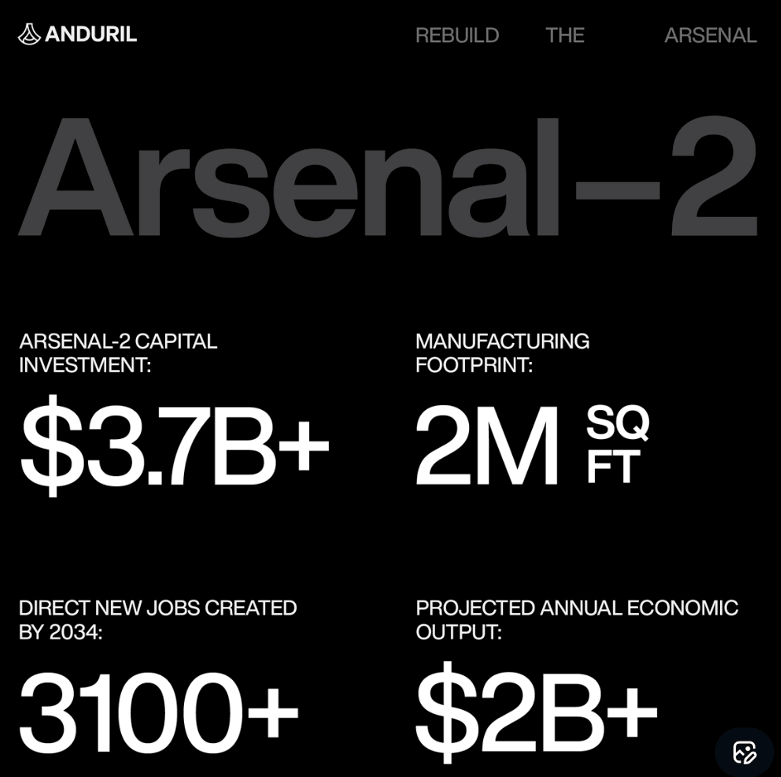
Of the $6.6 billion investment, $3.7 billion (minimum) will be made by Anduril.
Two million square feet of manufacturing, at least 3,100 direct jobs, and more than $2 billion of economic output will result from this investment.
Source: Anduril
The state of Maryland expects more than 14,000 direct and indirect jobs resulting from the investment, and more than $312 million of wages a year for residents.
This is a landmark deal and the most significant initiative in shipbuilding and defense technology since World War II.
This Navy-Anduril deal is also symbolic of the inflection point in the United States in its effort to reshore manufacturing and supply chains, rebuild industrial might, and rapidly employ advanced technologies to improve productivity and efficiency, fueling economic growth.
I have to say, I really like these kinds of public-private joint investment projects.
Naturally, the U.S. Navy has to have a stake in a project like this…
But rather than just contracting incumbent defense contracts and overpaying for the end products, it took in $3.7 billion of private investment, reducing the impact to the U.S. taxpayer by more than half.
Making this project even more interesting is that it wasn’t shipbuilding incumbents like Huntington Ingalls Industries (HII) or General Dynamics (GD) stepping up to invest $3.7 billion to restore U.S. shipbuilding prowess.
It was a private company, Anduril, which raised $5 billion this May at a $61 billion post-money valuation.
Now we know what a large chunk of that money will be used for.
I’m certain more capital will be raised at an even higher valuation within the next 12 months.
Anduril has reimagined what a modern defense technology firm looks like.
It was designed with a Silicon Valley ethos, embracing advanced technology and manufacturing techniques, an innovative mindset, a fail-fast, iterate, improve mindset, and the kind of sense of urgency needed to turn a ship around.
Sparrows Point is being reborn in a modern, advanced-technology image.
So is the U.S. industrial base.
It’s being rebuilt with advanced technology, robotics, artificial intelligence, advanced materials, and the willpower to usher in a wave of economic growth, opportunity, and a world where big ideas can become reality.
Jeff
Add Brownstone Research as your preferred source on Google to see our latest stories in your feed.
 Add as a preferred source
Read the latest insights from the world of high technology.
Google’s recent agreement reveals the scale of the AI power shortage and why supplying power is such an important...

There is something very special happening right now. A bloom of autonomous driving, and Austin is the epicenter.
The idea of a matter compiler has been a science fiction dream for decades. Not any longer.