




Opportunity in the Photonics Bottleneck
The technology connecting the world's fastest computers may be one of AI's most underestimated opportunities…



Yet another stunning deal in artificial intelligence…
Yesterday brought another stunning deal in artificial intelligence…
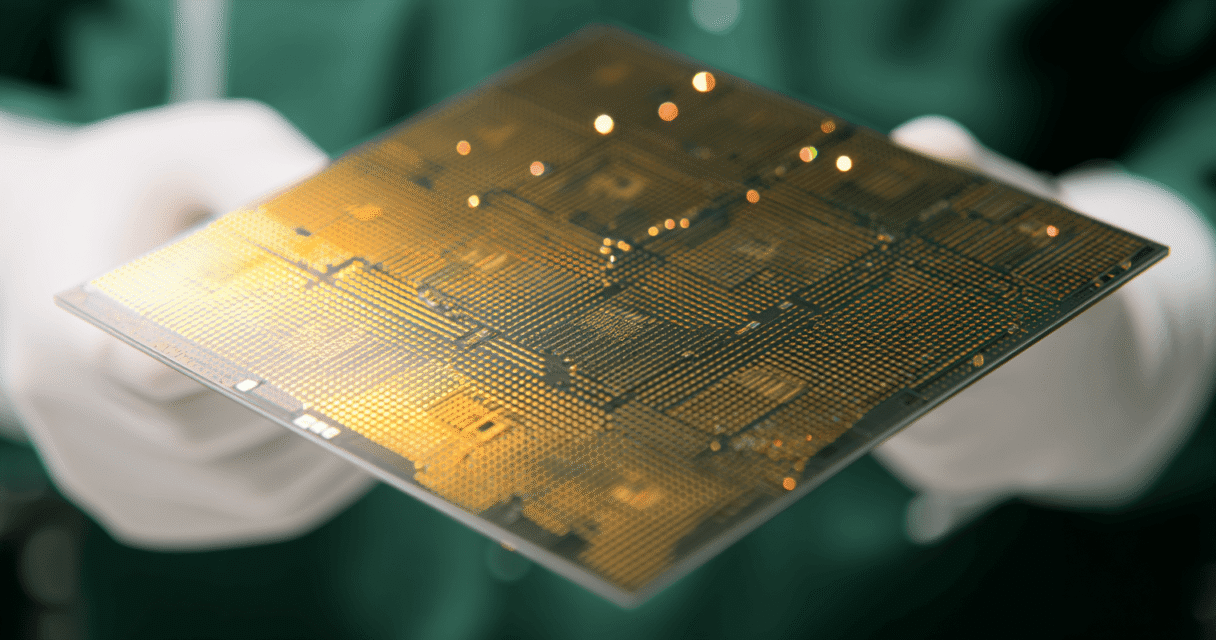
OpenAI announced that it will pay $20 billion to Cerebras over the next three years to gain access to its wafer-scale inference semiconductors.
What makes the deal so remarkable is that Cerebras is a little-known private semiconductor company that designs semiconductors for inference. Its unique wafer-scale design is unlike anything in the industry. And this $20 billion deal is the largest semiconductor procurement deal from a private company is the largest in history.
In addition to that, OpenAI will pay Cerebras $1 billion to fund the building of its data centers.
But there is a twist. OpenAI will receive warrants in Cerebras for up to 10% of the company over the next three years. This deal structure mirrors deals done by AMD (AMD) with both OpenAI and Meta (META), giving the AI companies large equity upside as part of the purchase agreements.
The size of the purchase deal is incredible, though. Cerebras was last valued at $23 billion this January in its last venture capital round. This is a $20 billion deal over the next three years, which tells us that Cerebras’ valuation is now multiples higher than where it was in January.
This is an exciting deal that follows on the back of NVIDIA’s $20 billion “acquisition” of Groq, another leading AI inference semiconductor company.
Full steam ahead,
Jeff
I was wondering how we laypeople should extract the truth from all these social apps, etc. It is very difficult to vet what is true and what is false. Who is real and who are bots, even bad actors from other countries trying to disrupt and influence or propagandize our population? Could you give us maybe some steps that you go through in your analysis or research to determine if the source is credible? Thanks for your time.
– John G.
Hi John,
I completely share your frustration. This is such a difficult problem to solve, especially for those who are limited in the time needed to be a detective.
To your point, something as simple as a web search using Google is not to be blindly trusted. Depending on the topic, the truth can be intentionally buried 10 pages deep in the search results (where no one bothers to look), and what “they” want us to think is presented on the first page.
Search, most social media applications, and now generative AI models have extreme bias on many topics.
Three simple things to do that will dramatically reduce your exposure to false information are…
The above is the easiest solution to your query.
The hard solution requires an immense amount of time, detective work, fact-checking, source-checking, and analysis of sources over a number of years.
For any piece of research that I write and send to my subscribers, you wouldn’t believe the number of footnotes that I have in my draft documents. My team and I check every fact and every source to confirm that what we believe is as accurate as possible.
I never blindly trust an internet search or a generative AI search. I always confirm the sources of the information, and then I check those sources. And once I’ve done that, I look for additional sources to triangulate what is factual whenever possible.
I follow and track sources of information and authors for years before I can discern the quality and veracity of their information. And whenever I see bias in writing, or unsubstantiated claims, it is always a warning sign.
Brownstone Research also spends hundreds of thousands of dollars every year to access proprietary sources of information, which are all behind paywalls. Naturally, that’s impossible for any one person to do, but as an organization, I have to ensure that we have access to the most accurate data and information, and the reality is that you usually have to pay for it.
After all, if any organization makes its money from advertisers, then we can know that what is being presented to us is likely to be biased.
And it goes without saying that when I can speak with people knowledgeable about a subject or their companies, it is a great way to figure out if they are credible and trustworthy or not.
Countless hours go into ensuring accurate information on a daily basis, and more than a decade of mapping out trustworthy sources. For anyone who is working full-time, it is an impossible task. And even for those who aren’t, it’s not that much fun to have to check every single piece of data.
My team and I do our best to do that work for you and all of our subscribers. Day in and day out. Year-round.
I hope that is helpful.
Hi Jeff,
I have been a life member for quite a few years and really enjoy your insights and advice.
I recently read about a documentary called “Drone Hunters of Kherson” and watched it on YouTube. It is very interesting [to see] how the war in Ukraine has evolved.
It also points out that the US may be very well behind the power curve when it comes to drones. I served 20 years in the Army and retired in 1999. Back when I was in the Army, there was always a discussion about how our military was fighting the previous war and not preparing for the next. It appears that it may not have changed much. Plus, the military acquisition system is often slow, cumbersome, and costly, much like you mentioned in your article about the Artemis program.
My question is, are you aware of any drone companies that may be working on offensive or defensive capabilities that could prepare our country for what the documentary calls, “when trench warfare meets Terminator.” And would any of these companies present any investment opportunities?
Always thanks for your advice.
– Daniel P.
Hey Daniel,
When I think back to a decade ago, I would definitely agree that the U.S. was way behind in the development and implementation of advanced drone technology in the U.S. military.
Defense tech was highly unpopular in Silicon Valley. Entrepreneurs and investors who wanted to build and invest in the technology were often ostracized publicly. As a result, there was a lack of innovation in unmanned aerial systems (UAS) and counter-unmanned aerial systems (C-UAS).
The turning point for the industry was the first Trump administration, where this technology saw a large jump in terms of spend in this area. The growth in spend by the U.S. government continued each year through the Biden administration, which was further catalyzed by the Ukraine/Russia conflict.
The current budget for this fiscal year for UAS/C-UAS technology is at the highest point ever at $13.4 billion, and we should expect this to continue to grow given the dramatically changing form of warfare.
Well-known small-cap companies like AeroVironment (AVAV), Kratos Defense & Security Solutions (KTOS), Red Cat Holdings (RCAT), Ondas (ONDS), and Unusual Machines (UMAC) are all publicly traded companies that are suppliers or are connected to related technologies. One of these companies is already in the model portfolio of Exponential Tech Investor, so you can review that research through your subscriber portal.
Larger defense companies like Northrop Grumman (NOC), Lockheed Martin (LMT), RTX Corp (RTX), and L3Harris (LHX) also have exposure, but the UAS/C-UAS related business is a small percentage of overall revenues.
Whether or not any of these companies represents a good investment or not completely depends on the specific circumstances of each company and its valuation.
Equally interesting is what is happening in the private company space with regard to these developments. The most well-known company infusing artificial intelligence (AI) with drone technology is Anduril, which had its seed round in 2017. Back then, it was worth only about $100 million. Today, Anduril is worth $60 billion and has become one of the most critically important defense technology companies for the U.S. and its allies.
Given Anduril’s size, success, and maturity, it is one of the top tech companies that is expected to go public this year or next.
Mach Industries is also another exciting up-and-comer founded in 2020 that’s building something similar to Anduril.
I can also say from my personal experience that defense technology, particularly UAS/C-UAS technology, has been particularly hot in the venture capital space in the last year and a half.
Some incredible early-stage companies are building amazing technology with a Silicon Valley ethos of fast iterations and accelerated development time scales to ensure the U.S. has the most advanced technology available.
And a lot of emphasis is being placed on U.S.-based supply chains, no-China-made components, and/or supply chains with companies from U.S. allies.
There has been a very large and positive shift in the last decade. The result has been a radical improvement in the speed and capabilities of UAS/C-UAS technology, and procurement has accelerated as well, largely out of necessity.
This is definitely a sector that we continue to monitor for great investment opportunities. As an Unlimited member, you’ll be sure to have access to it all.
[I read] your comments in Bleeding Edge on Quantum Computing and breaking encryption.
There are those like James Altucher who say Quantum Computing will never be able to break encryption because the QBTS(?) needed would be 500 times the amount than the maximum amount available. (Forgive me if I am wrong about the technical jargon.) He believes the answer is in Optical to get the amount needed to break encryption. Can you comment?
– Daniel A. H.
Hi Daniel,
I’m not sure what to say about what you read, other than it is completely wrong.
Not only is quantum computing hardware improving at an exponential rate, but so is quantum error correction technology, which is improving even faster than the hardware. And quantum error correction is the key to requiring significantly fewer quantum bits (qubits) than previously thought in order to crack a modern standard for encryption like AES-256.
I’d like to encourage you to review my Bleeding Edge – Blockchains to Be Hacked by Quantum Computers issue. I published it on March 31, and it’s relevant because I shared some exciting and concerning research recently published by Google’s Quantum AI division.
While the research was specifically written about elliptic-curve cryptography (ECC), which is widely used in blockchain technology, the research is just as relevant to AES-256 and other modern standards for encryption.
The key finding in Google’s research was that it will take a lot less quantum computing resources to crack modern encryption than originally thought. Google is now estimating that it will only require around 1,200–1,450 logical qubits, which can be established by a superconducting quantum computer that has 500,000 physical qubits.
That may sound like a lot, but it’s really not. Every Google Willow superconducting quantum semiconductor has 105 physical qubits. That means Google only needs 4,792 Willow semiconductors to attain 500,000 physical qubits. Yes, they need to be networked together, but just like quantum error correction technology, quantum networking is also improving at an exponential pace.
And because superconducting quantum semiconductors can be made using pretty standard semiconductor manufacturing equipment, manufacturing 4,792 of them is not difficult. The real work is in making them all work together as a coherent unit and to have quantum error correction technology good enough to have 1,200–1,450 logical qubits.
A logical qubit is formed by a number of physical qubits. It is a stable form of information that results from several physical qubits thanks to quantum error correction technology.
Google believes that its own superconducting quantum computer will be capable of breaking today’s most advanced encryption no later than 2029. From my perspective, the timeline is likely a year earlier than that.
After all, Google is not the only player. And what’s in the lab is more advanced than what is known to the public. And there are several legitimate players that are pursuing different forms of quantum computing technology other than superconducting quantum computers, some of which have higher natural fidelities (lower errors).
One of those forms is photonic quantum computing, which, as the name implies, uses photons to encode and process information. The two most prominent players in photonic quantum computing are PsiQuantum and Xanadu.
I wrote a bit about both of these companies in The Bleeding Edge – The Answer to “What’s Next” in Computing in February 2025.
This shift in computing is happening right now, and a lot faster than almost everyone expects. The entire internet needs an upgrade to the newly established post-quantum computing standards that have already been established by the National Institute of Standards and Technology.
Jeff
Add Brownstone Research as your preferred source on Google to see our latest stories in your feed.
 Add as a preferred source
Read the latest insights from the world of high technology.
The technology connecting the world's fastest computers may be one of AI's most underestimated opportunities…

What’s coming will look like what AI did to software companies – rapid disruption in a sector that investors...