




Redefining Our Idea of “Money”
Money will no longer be the dollars in your checking account or the billfold in your pocket...



Wednesday night, NVIDIA (NVDA) delivered another baller of a quarterly earnings announcement…

The doubters of the sustainability of this AI infrastructure boom have been disappointed once again.
Wednesday night, NVIDIA (NVDA) delivered another baller of a quarterly earnings announcement for its second fiscal quarter of the 2027 fiscal year (ending July 26, 2026).
These are year-on-year numbers comparing the current quarter to the quarter a year ago. More than 100% growth year on year for the world’s most valuable company. Just outstanding and incredible growth for a company of this scale, never seen before in history.
Better yet, NVIDIA guided for the current quarter an increase to $108 billion (+/- 2%). The stock responded accordingly, up as high as 9.5% on the next trading day.
NVIDIA remains the most valuable company in the world, sporting a ~$5 trillion valuation. It generated $21.4 billion in free cash flow last quarter and will generate about $56.4 billion this current quarter in free cash flow. This is in addition to the $99.3 billion in cash currently on its balance sheet.
NVIDIA continues to throw off cash, which allows it to both invest heavily in each successive generation of semiconductor technology, as well as invest in the AI infrastructure ecosystem in ways that help accelerate this once-in-a-generation technological boom that we’re all part of.
And the most incredible part? NVIDIA isn’t at all overvalued or in “bubble” territory. It is currently trading at 19x EV/EBITDA for its current fiscal year, and just 12x its forecasted fiscal 2028 EV/EBITDA. Not only is that not overvalued… it’s cheap.
Despite these incredible growth numbers, NVIDIA is expected to grow 70% next fiscal year, which begins February 1, 2027.
Seventy percent year-on-year growth for a company that size. Just remarkable.
Jeff
How is the Stargate Project doing? This joint venture by Oracle, OpenAI, SoftBank, and the US Government announced plans for some giant data centers. How are those proceeding?
Thanks.
– Bobby W.
Hi Bobby,
I’m so glad you asked this question.
We haven’t recently revisited the latest status on the Stargate Project, which was announced in January 2025 with great fanfare.
Some of us might remember the huge announcement made with President Trump. The CEOs of OpenAI, Softbank, and Oracle announced that they would invest $500 billion over the next four years on AI infrastructure in the U.S.
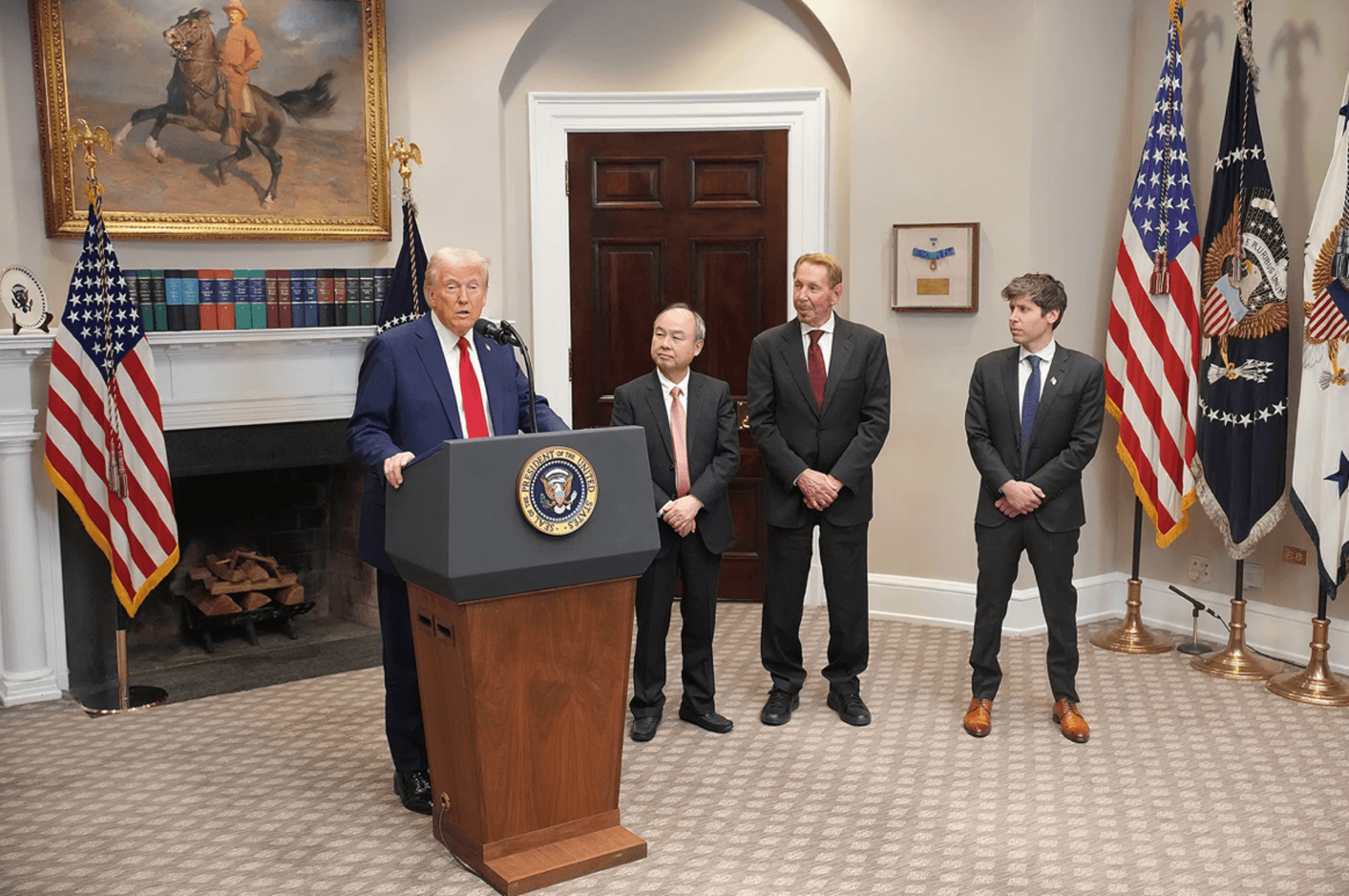
As of now, they’re not even two years into the project. The four-year mark will be January 2029. What an incredible world we’ll be living in when that date rolls around.
The Stargate Project was originally envisioned as a new company with the primary equity owners being Softbank, OpenAI, Oracle, and MGX. The idea was to invest, build, and operate a multi-gigawatt-scale AI infrastructure spread out over several massive data center facilities.
When the original announcement was made, it was a frantic time.
President Trump had just taken office and was radically changing both economic, industrial, and energy policy, leaning into a pro-growth economic agenda.
The industry responded quickly with trillions of dollars of committed investment in the years to come to re-industrialize the U.S. and, of course, build out the AI infrastructure needed to ensure that the U.S. would continue to lead the world in frontier AI model development.
With three huge, powerful companies like OpenAI, Softbank, and Oracle, I didn’t expect a perfect collaboration. And it was clear at the time of the announcement that the three parties hadn’t figured out all the details of the collaboration.
What hasn’t happened is that the partnership hasn’t moved forward as its own operating entity in the form of an LLC. What has happened is that OpenAI has been striking business deals and investing heavily, working with Softbank and Oracle to build out a number of AI data center campuses that were originally envisioned in the original Stargate Project announcement.
The most advanced project is the OpenAI Stargate data center in Abilene, Texas (shown below).
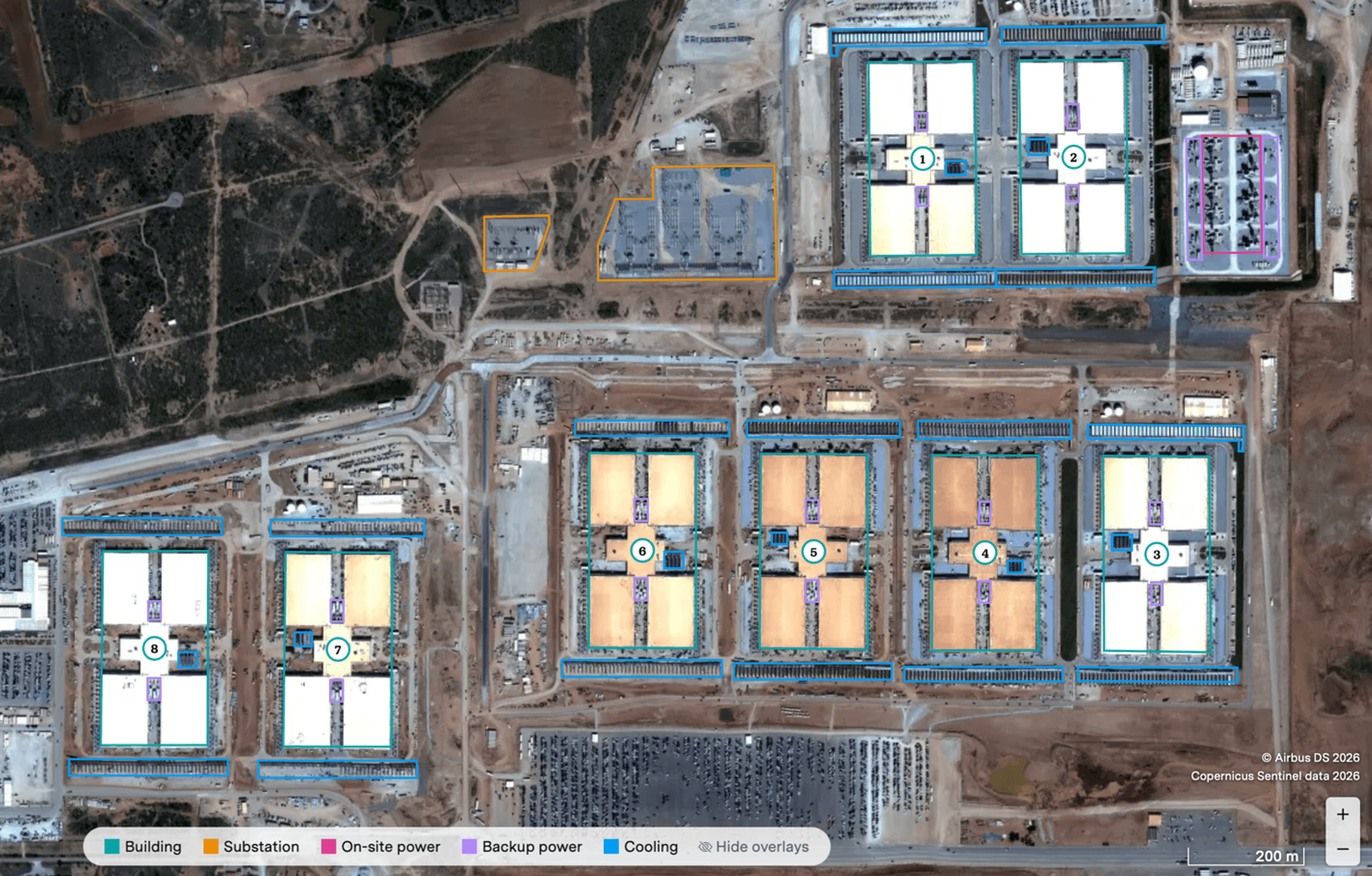
OpenAI Stargate Abilene, Abilene, Texas | March 24, 2026 | Source: Epoch AI
This data center is already fully operational, and it continues to expand. As of this month, it is being powered by about 420 megawatts. The forecast is to almost double the power to 840 megawatts by November, ultimately aiming to reach 1 gigawatt by the end of this year.
How Stargate Abilene got built, however, is not as straightforward as the original announcement may have implied. Private AI infrastructure company Crusoe AI actually built it, and Oracle owns and is operating it, and OpenAI is leasing the computational resources.
The business structure of Stargate Abilene is indicative of OpenAI’s shift in its business strategy away from owning and operating data centers to just leasing them from others who build them. This is a more desirable business model for OpenAI as it reduces the company’s upfront capital expenditure (CAPEX) requirements and enables it to just lease additional computational resources as they become available from its partners Softbank and Oracle.
Other Stargate sites that are currently under construction are:
Critics are saying that the Stargate Project has fallen apart and won’t ever be completed, but that’s definitely too simplistic a take.
True, the structure of the three-party business relationship wasn’t as originally planned, and it’s also true that the investment and buildout is still moving forward.
As shown above, which party is owning and operating each data center might be different, but OpenAI is clearly paying for the compute.
Early this year, OpenAI reiterated its goal of reaching 10 gigawatts of compute by 2029. It also has publicly announced that it has already secured that level of energy production to make that a reality.
OpenAI’s deal with Oracle alone is for 4.5 gigawatts of compute, which is roughly $300 billion of investment. If we throw in Softbank and the other partners, it is not unrealistic to get above $500 billion of investment by 2029.
So, while Stargate isn’t proceeding as originally planned, it is proceeding. The raw computational power will get constructed over this four-year period, and even more will follow.
IPO expert, Jason Bodner, spent nearly two decades helping companies go public… and he’s learned the truth about IPOs. Today, he’s revealing a counterintuitive way to set your portfolio up for a better chance at success as OpenAI and Anthropic go public. Click here to find out more.
Nvidia has jumped about 500% in the last four years, which is a phenomenal return. But Jeff Brown found a little-known AI stock that jumped 515% higher… in just 24 hours! Click here to see the details because this is part of a strange phenomenon that has been delivering some of the fastest gains we’ve ever seen.
Jeff, you may be jumping the gun with your ‘landmark moment’ enthusiasm. Granted, you did qualify it by saying could instead of will in your statement, “This week’s announcement from Moderna and Merck could become an important milestone not only for cancer treatment, but for biotechnology as a whole.”
Here’s the link to what Robert Malone said about it, and there’s no one more qualified than he to comment on it.
It basically boils down to let’s reserve judgment until we see the underlying numbers.
– Bob K.
Hi There
Been with Jeff for a looong time. But your review and Dr. Malone’s review on the same product are miles apart??
– Barry M.
Hello Bob/Barry,
I appreciate you both writing in.
And Bob, thanks for picking up on my qualifier “could.” It was intentional. There are some promising indications with the news that Merck and Moderna shared, but we are still waiting for the full data readout.
Moderna will still have to publish a complete analysis of the full clinical data so that the industry can review it. If I had to guess, we’re going to see results that are far less positive than what has been implied.
From the very beginning, I was very critical of the COVID-19 mRNA “vaccines.” The clinical trials were a joke. More patients died who took the shot than the control group (the “unvaccinated”), and then after 60 days they made the control group take the shots (thus eliminating the control group).
They are not vaccines. Rather, they are experimental drugs with severe side effects that include death. They do not stop the recipient from catching COVID-19. They do not stop replication of the virus. They do not stop transmission of the virus.
Even worse, they have been proven to increase the likelihood that the recipient will catch COVID-19 again, because they have been proven to weaken the human immune system.
As of the end of July, in the U.S. alone, 39,205 deaths from the COVID “vaccine” have been reported along with 1,677,770 severe adverse events. And what has been reported by health care professionals is only a fraction of what has actually happened. The numbers are simply horrifying.
Making matters worse, just last month, peer-reviewed research was published showing that the mRNA “vaccine,” DNA contaminants, and the resulting COVID-19 spike protein that the body manufactures from the “vaccine” have persisted for 3.5 years in the human body after the original “vaccination.”
The “experts” originally told us that it would only be in the body for a few days, which we now know to have been a complete lie, amongst so many other lies.
One of the major issues with mRNA technology is controlling dosing levels. Manufacturing quality can vary widely as well. One dose of mRNA can produce varying levels of the desired protein(s) in different people.
For some, the levels may be toxic. For others, the levels may be insufficient to affect the desired result.
This information is only to highlight that there are many challenges to mRNA technology that have still not yet been solved. It does not, however, mean that there isn’t great potential for mRNA technology. If the challenges can be overcome, there is incredible potential. We’ll see.
On a very related note, I had the great pleasure of spending quite a bit of time with Dr. Malone over a weekend in Charleston, South Carolina, during the pandemic. We had a long discussion about how the COVID “vaccines” repress the human immune system, weakening the body’s ability to fight cancer.
My discussions with him deepened my understanding of the mechanisms of the COVID mRNA vaccines that have now resulted in turbo cancers and excess deaths for years following the rollout of mRNA “vaccines” in every country that had widespread uptake of these experimental drugs.
This is a long way of saying that I share Dr. Malone’s position that it is too early to claim victory.
We still need a lot more data. And we should absolutely be skeptical of what Moderna is pushing and the media shills are amplifying.
We’re on the same page.
P.S. For a bit more detailed response to your questions, Feruz Kurbanov – my senior biotech analyst – and I will be digging a bit deeper in our weekly Early Stage Trader update. So please also read that for some additional context.
Emerald AI has an interesting approach for making data centers work with the grid better. What do you think?
Thanks.
– Bobby W.
Hey Bobby,
I have mixed feelings about what Emerald AI is doing.
For everyone’s benefit, Emerald AI is a software company founded in late 2024 that has raised about $220 million to date and is currently valued at $1 billion.
It has one of those marketing explanations on its website with a bunch of marketing speak that tells us nothing about what the company actually does…
Emerald AI makes AI’s power demand flexible, transforming data centers into valuable grid partners, protecting energy affordability and reliability for local communities, and unlocking massive capacity on existing grid infrastructure to power the AI revolution today.
Reading that doesn’t inform us at all what its product/service is or does. In fact, it’s really hard to find information on the company’s website to answer that question.
Emerald AI has a software platform called Emerald Conductor. It’s like an orchestration system that sits between the utility and the data centers, AI program schedulers, available GPU resources, and any onsite battery backup and power generators.
The image below is a simple example of what the software does. This was a study that Emerald AI did in Phoenix, Arizona, that it refers to as a demonstration of “power flexibility.”
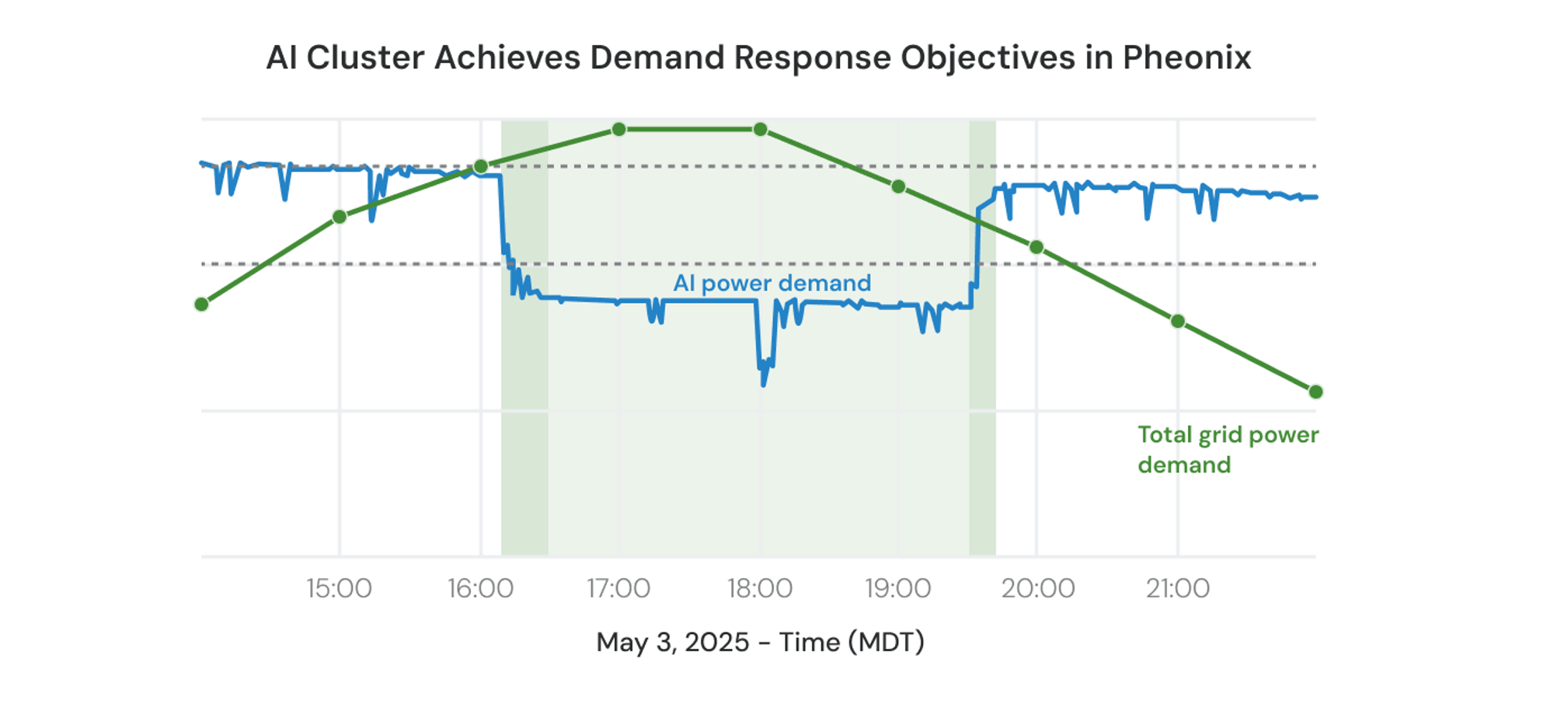
Source: Emerald AI
The above graph shows that when grid power demand is high in Phoenix, it reduced the AI power demand at the data center by 25% for a few hours to reduce the burden on the utility.
Emerald has other examples of reducing or shifting power demand to times when electricity is cheaper. Or moving AI workloads to other data centers when there isn’t enough available power at a location.
That’s about it.
It’s not very exciting, but it is an important tool for managing AI power consumption in areas where available power from the local utility is constrained.
Obviously, data center operators always try to build where they have the necessary power to keep their data centers working at full capacity around the clock. But in power-constrained environments, the loads have to be managed.
Emerald AI has received some attention due to a long list of well-known investors, including: Chase Lochmiller (CEO of Crusoe), Fei-Fei Li (well-known AI researcher from Stanford), Jeff Dean (former Chief Scientist at Google DeepMind), John Doerr (Chairman of Kleiner Perkins), former Secretary of State John Kerry, and NVIDIA.
There is definitely a need for this kind of technology. Emerald AI is targeting the market, hoping to provide this orchestration software to data center operators so that they don’t have to do it themselves. But companies like SpaceXAI are just building their own custom software to perform these functions.
Given how advanced AI software is already, the obvious competitive threat for Emerald AI is that simply using AI to create software to manage these AI loads and power supply/demand issues is the most likely outcome for the industry.
That’s it for this week’s AMA. As always, you can reach my team and me right here. I can’t respond to every email I get, but I always enjoy hearing from you all. Feel free to send us your questions here.
Jeff
Read the latest insights from the world of high technology.
Money will no longer be the dollars in your checking account or the billfold in your pocket...
Amazon needs power for its AI infrastructure… And it would rather bring its own power plant than wait years...

The stablecoin market is gearing up for the tokenization trend to play out...