



Stablecoins Are Writing the Banks’ Obituary
What’s coming will look like what AI did to software companies – rapid disruption in a sector that investors...



Amazon needs power for its AI infrastructure… And it would rather bring its own power plant than wait years for permission to plug into the grid.
The most impressive feature of Amazon’s newest AI campus isn’t the data center itself.
It’s the 7.65-gigawatt (GW) power plant going up beside it.
If fully built, the 35 natural-gas turbines would give it more generating capacity than the Grand Coulee Dam, which is currently America’s largest power station. And the site also includes plans for 750 MW of solar power and 1.8 GW of battery storage.
Amazon recently acquired the GW Ranch site in Pecos County, Texas, where it plans to build a massive data center powered by a private generation system developed and operated by Pacifico Energy.
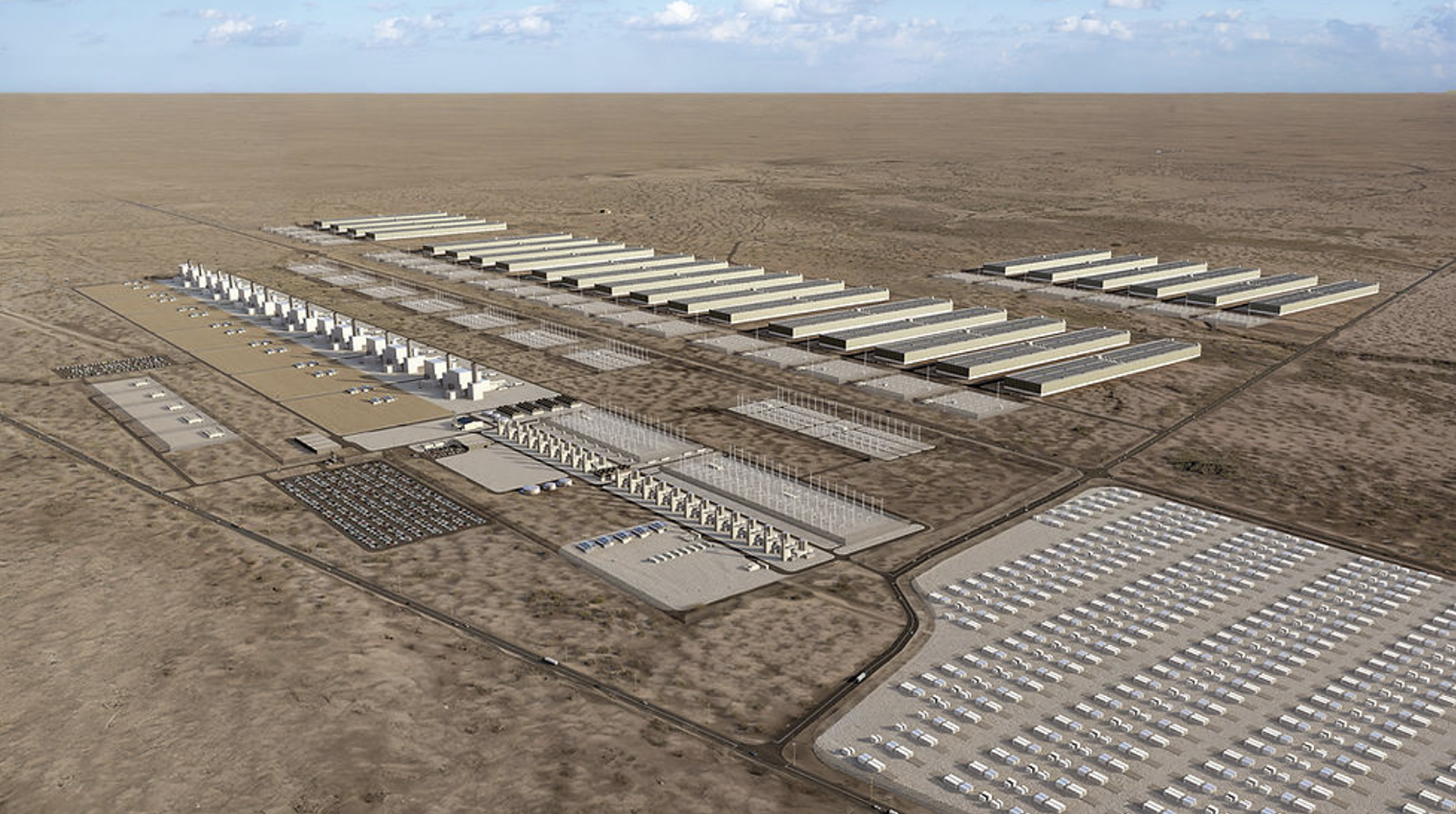
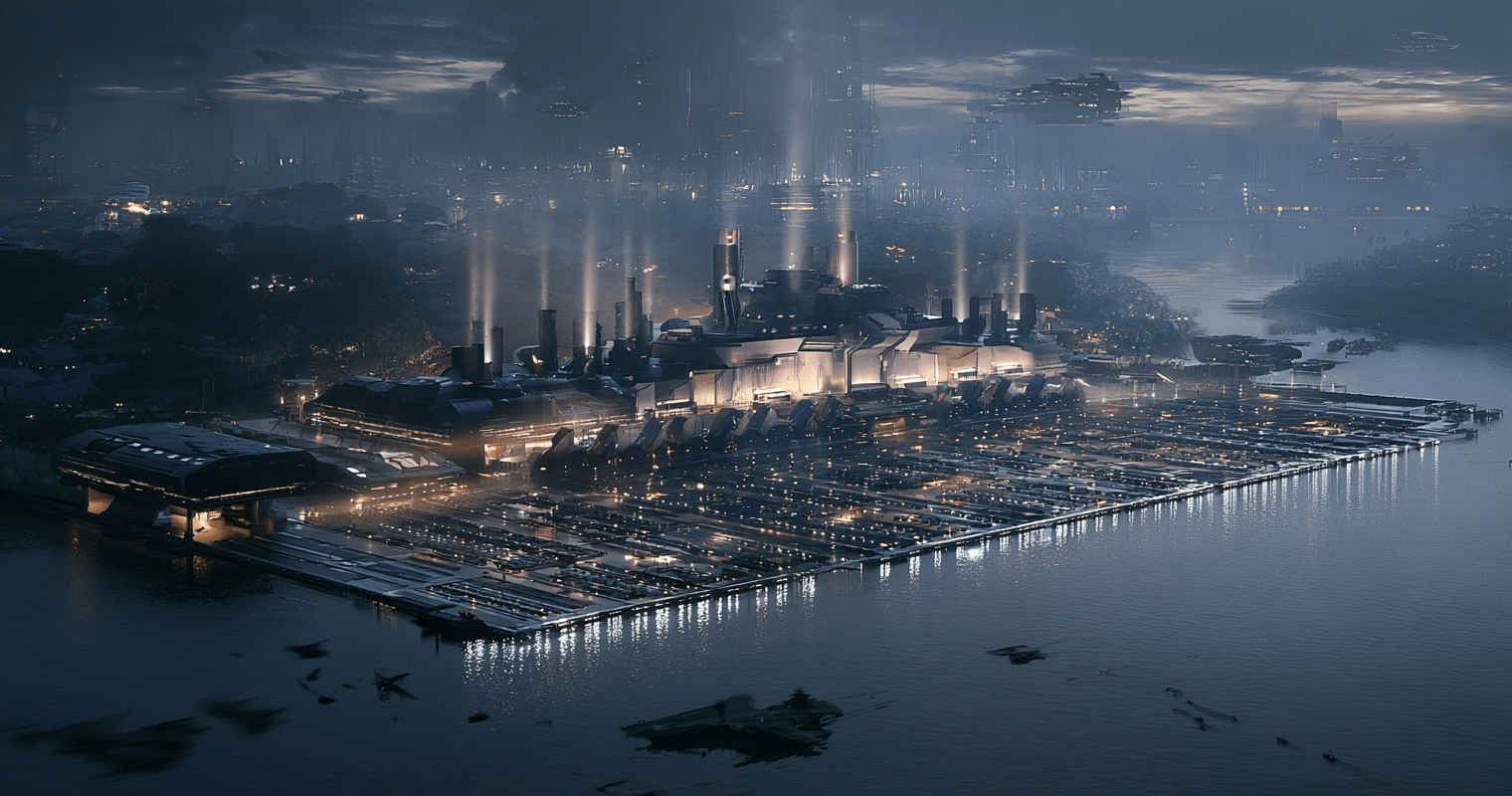
Rendering of the proposed site | Source: Pacifico Energy
At least initially, Amazon will buy all of the power from this plant. And none of the electricity for this data center needs to come from the Texas grid. Amazon will purchase power directly from the on-site plant and potentially transition to a grid connection later, as interconnection timelines allow.
Now one of the largest companies in the world has decided that waiting for the electric grid is no longer an acceptable business strategy. Amazon needs power for its AI infrastructure. And it would rather bring its own power plant than wait years for permission to plug into the grid.
This is how AI gets around some of the restrictions being put on it by regulators, politicians, and slow-moving utility companies. And it also shows that the AI movement is so big and so important that it is beginning to create its own energy system.
And it comes just as two of America’s largest data center markets are rewriting the rules for how this buildout will be powered…
Virginia is the original data center capital of America. This is where “Data Center Alley” has served as the backbone of the internet for decades. The state has more data centers than any other state.
But that success has created an enormous demand for electricity, transmission lines, and substations. And Virginia’s political leaders want to shift the burden of paying for this new infrastructure completely off ordinary households and onto the companies building the data centers.
Earlier this month, the Virginia State Corporation Commission ordered data centers to pay for transmission infrastructure used exclusively by their facilities. Utilities will no longer spread those dedicated costs across their wider customer base. And that was a month after Virginia put a new tax on data center electricity consumption.
The political logic is easy to understand.
Residents see enormous buildings consuming huge amounts of electricity. Then they see new transmission projects and rising utility bills. Fairly or not, the narrative quickly becomes that big tech gets the compute while local families get the bill.
Now Virginia isn’t trying to end the data center boom. Nor put a harmful moratorium on building new ones. It is trying to force developers to pay more of the cost.
And they aren’t alone.
Two days before that, Texas went even further.
On August 3, Governor Greg Abbott directed the Public Utility Commission and the Electric Reliability Council of Texas (ERCOT) to conduct an audit of pending data center projects before allowing additional facilities to move forward.
ERCOT is considering 474 gigawatts of new connection requests. About 90% are associated with data centers.
That is more than five times the record peak demand ever placed on the Texas grid.
Though Abbott has been a vocal supporter of AI development in the past, that hasn’t extended to risking overexerting the Texas grid with new data center construction.
Just this week, Abbott strongly cautioned the AI industry from further pressing forward with new builds in the face of local opposition, saying data center companies have “dug their own grave” and deserve the community backlash.
Now, it’s likely many of these proposed projects won’t get built. Developers often submit multiple requests while evaluating different sites. But the number still reveals there are far more proposed data centers than the grid could possibly support under its current configuration.
The message from both Texas and Virginia is clear. They’ll allow more data centers, but they need to bring more of their own power and pay more of the electrical grid costs.
The industry refers to private power plants as “behind the meter.”
It means the data center generates electricity on its own side of the utility meter. Instead of relying entirely on a public utility, power flows directly from an on-site plant to the servers.
The facility may eventually connect to the wider grid. But it can begin operating without waiting for every transmission upgrade and interconnection study to be completed.
Amazon has said the campus will use new on-site generation that will not raise electricity costs for Texas families. Amazon has heard the political message.
And this isn’t just a one-off project.
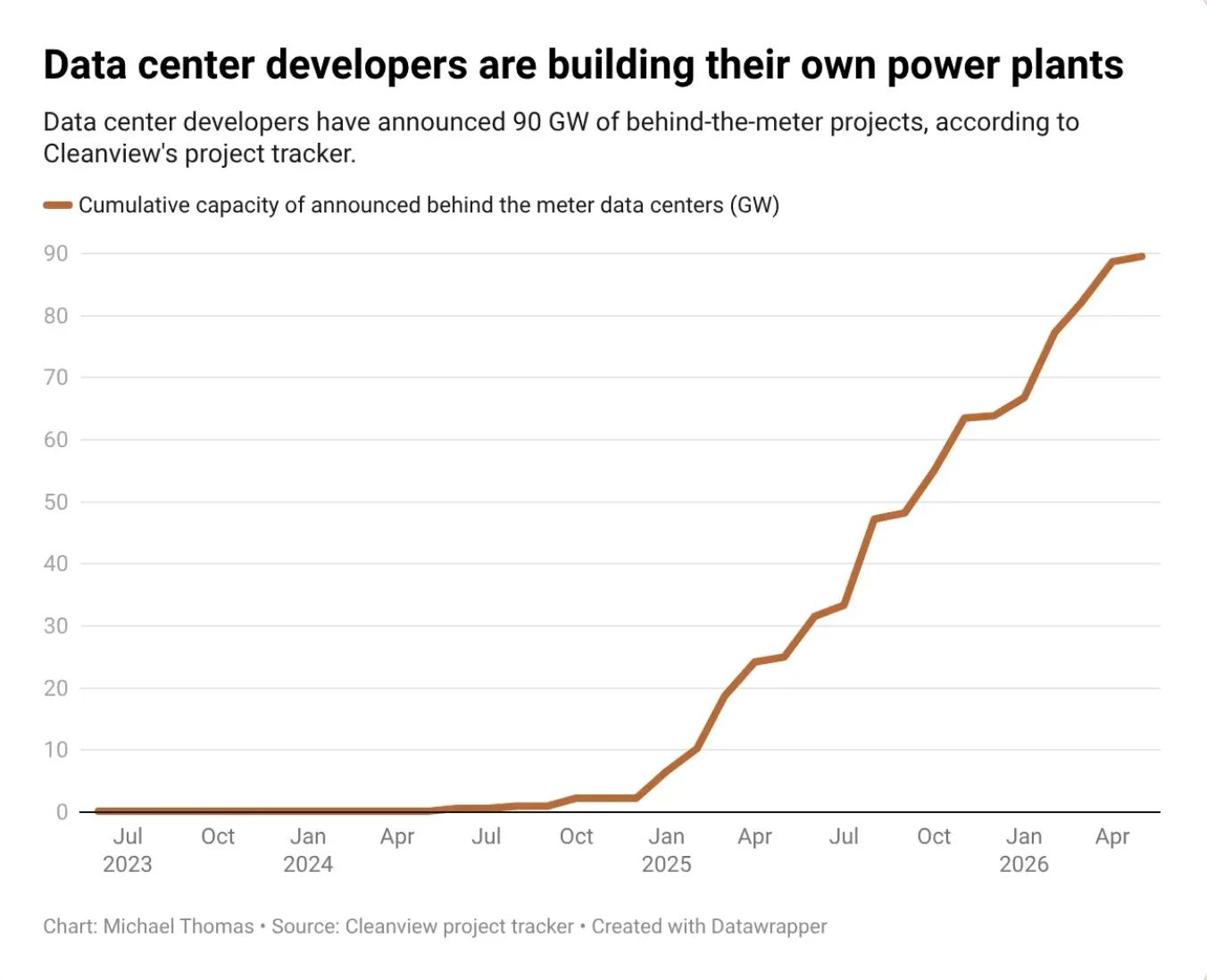
At the beginning of 2024, only 4 GW of proposed U.S. gas-fired generation was earmarked for data centers. That figure is now over 90 gigawatts.
That’s nearly a 25x increase in less than two years.
Microsoft recently worked with Chevron to develop a 2.7 GW natural gas power complex for an AI campus in West Texas to operate behind the meter.
Google and Meta each have just under 1GW each of behind-the-meter gas generation plants planned for their data centers.
And SpaceX recently said its massive Terafab semiconductor factory will contain behind-the-meter natural gas power.
Behind-the-meter generation doesn’t eliminate every constraint. These projects still require turbines, pipelines, air permits, water systems, batteries, and local support… All of which are in short supply.
But it changes part of the timeline the developer can control. And in the race for bringing compute online, control of the schedule may be worth billions of dollars.
This shift creates two clear groups of winners. The first is the companies building these private power systems.
Multi-gigawatt AI campuses are becoming self-contained utilities in addition to stringing together thousands of server racks. This new demand is driving up growth rates of electrical infrastructure quicker than waiting for the incumbent utility companies to build the new capacity themselves.
And companies that can provide power generation at speed will be major beneficiaries. Currently, natural gas turbines are mostly sold out until 2030. So anyone able to come in and offer other solutions will benefit.
The second group of winners is the data center operators that already have permitted power. This brings attention not only to the large hyperscalers, but to the smaller neoclouds.
Every regulation and delay makes existing power more valuable. A facility that is already permitted, connected, and capable of powering new servers has an asset competitors can’t quickly replace.
A megawatt available today is worth more than a promised megawatt in 2030.
These new rules aren’t destroying demand for AI infrastructure. This trend is too powerful and too important for that. But it is changing where the capital gets spent.
More money will go toward on-site generation. And a larger premium will be placed on projects that already control their own power.
Artificial intelligence is here. And it’s getting smarter and more useful every day. That’s driving more organizations to implement and increase their AI usage.
The chips are still coming. Workloads are still increasing. And now the power generation is increasing with them.
Stay focused. Stay invested.
Regards,
Nick Rokke
Senior Analyst, Brownstone Research
Add Brownstone Research as your preferred source on Google to see our latest stories in your feed.
 Add as a preferred source
Read the latest insights from the world of high technology.
What’s coming will look like what AI did to software companies – rapid disruption in a sector that investors...

This is a landmark deal and the most significant initiative in shipbuilding and defense technology since World War II.