



Google’s Nuclear Deal Reveals the Scale of AI’s Power Problem
Google’s recent agreement reveals the scale of the AI power shortage and why supplying power is such an important...



This will be looked back on as the most significant breakthrough in medical imaging in more than 50 years.
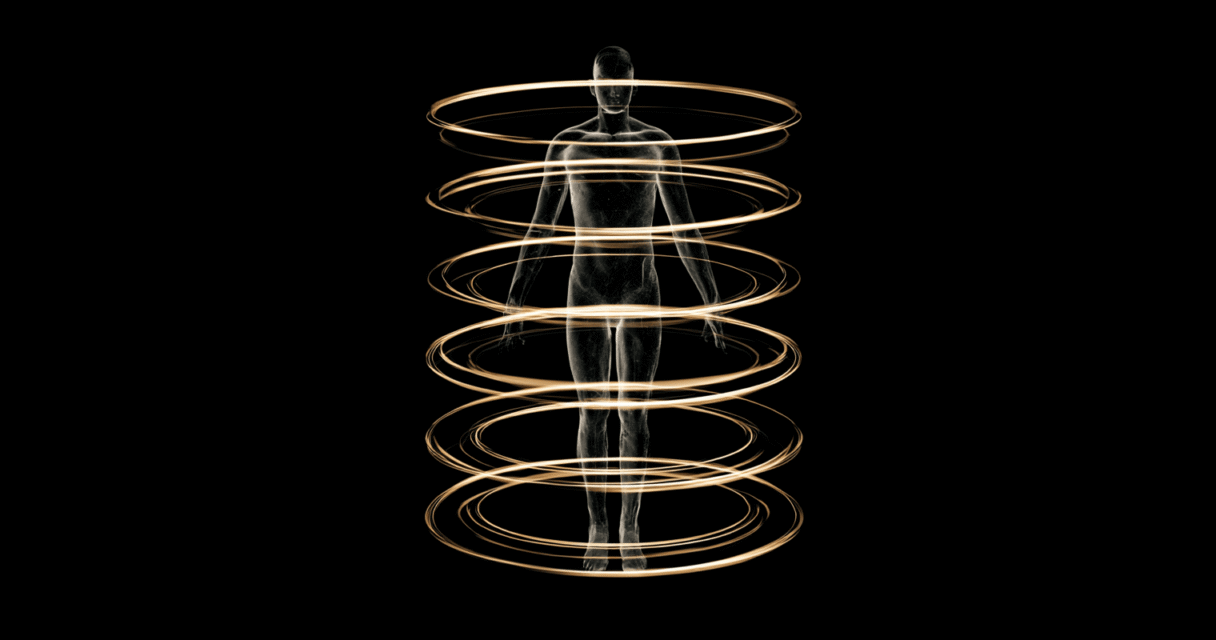
Last month, one of the most significant tech announcements of the year was made and largely overlooked.
And it came from a completely unexpected place…
Midjourney – the generative AI company focused on text-to-image generation, founded in 2020 – announced that it had established a new division called Midjourney Medical.
And the breakthrough announcement came in the form of a completely novel and new full-body imaging device, the Midjourney Scanner.
What makes this so unexpected is that Midjourney has no technical background in medical imaging or medical technology, for that matter. Up until the announcement, most probably thought of it as simply another AI image generator.
But I believe the Midjourney Scanner will be looked back on as the most significant breakthrough in medical imaging in more than 50 years.
Midjourney Medical has invented an incredible imaging machine that can transform healthcare and make predictive and preventative medicine highly accessible to all.
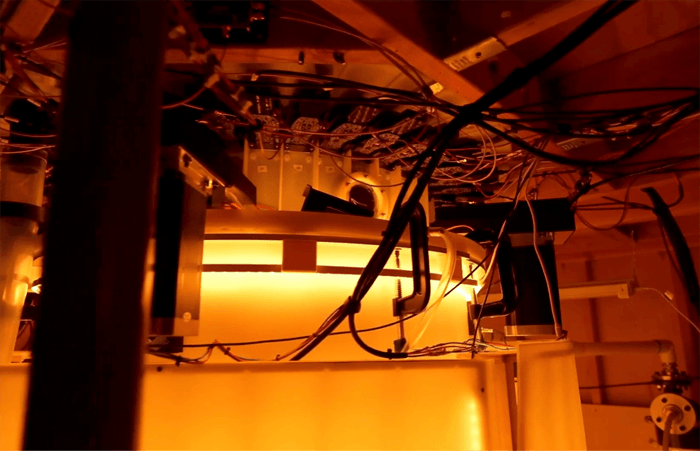
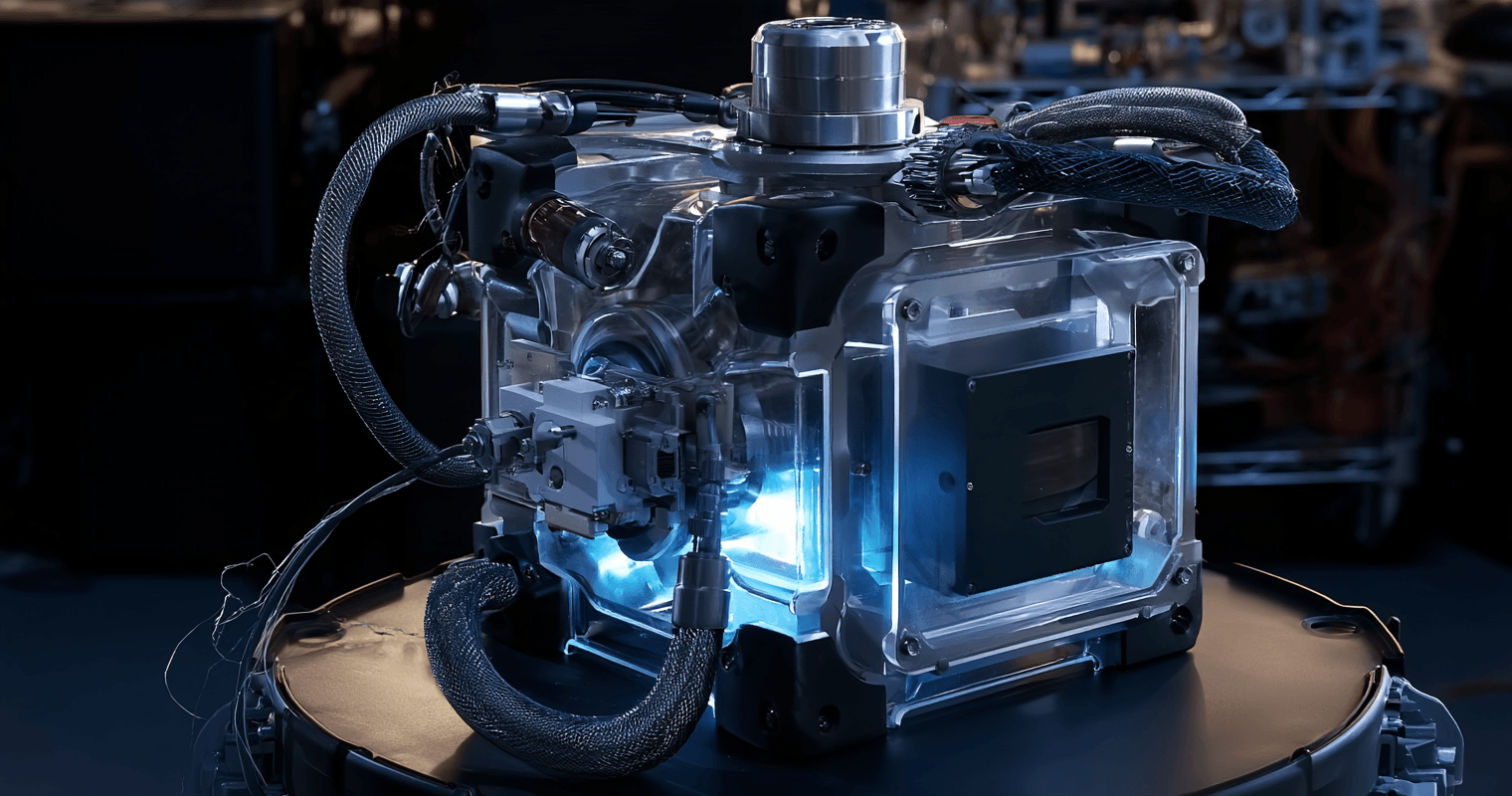
Exterior of Midjourney Scanner | Source: Midjourney Medical
The device is remarkably easy for a patient to use.
Simply step onto the platform in the center of the machine, into a shallow pool of warm water. The machine will slowly submerge you up to your neck. After it completes the scan, you re-emerge. You can watch a brief demo on Midjourney’s website right here under the video “Midjourney Medical.”
The machine is an extremely sophisticated imaging device that uses ultrasonic sound waves that travel through the body from every possible angle.
The underlying technology is based on transducers built from semiconductors that act as both speakers and microphones. The transducers send sound waves through the body and receive the waves after they have passed through the body, all in about 1/20,000 of a second.
Ultrasound imaging relies on high-frequency sound waves, which is why Midjourney uses water as the medium.
Ultrasound propagates efficiently through water with low attenuation. Air is the opposite, causing reflection, scattering, and energy loss, resulting in poor imaging quality.
Midjourney designed a “ring” of 358,000 transducer elements that are capable of transmitting about 1,000 waves a second. This produces about 17 gigabytes of raw data a second, which amounts to the equivalent of 500 hours of HD video.
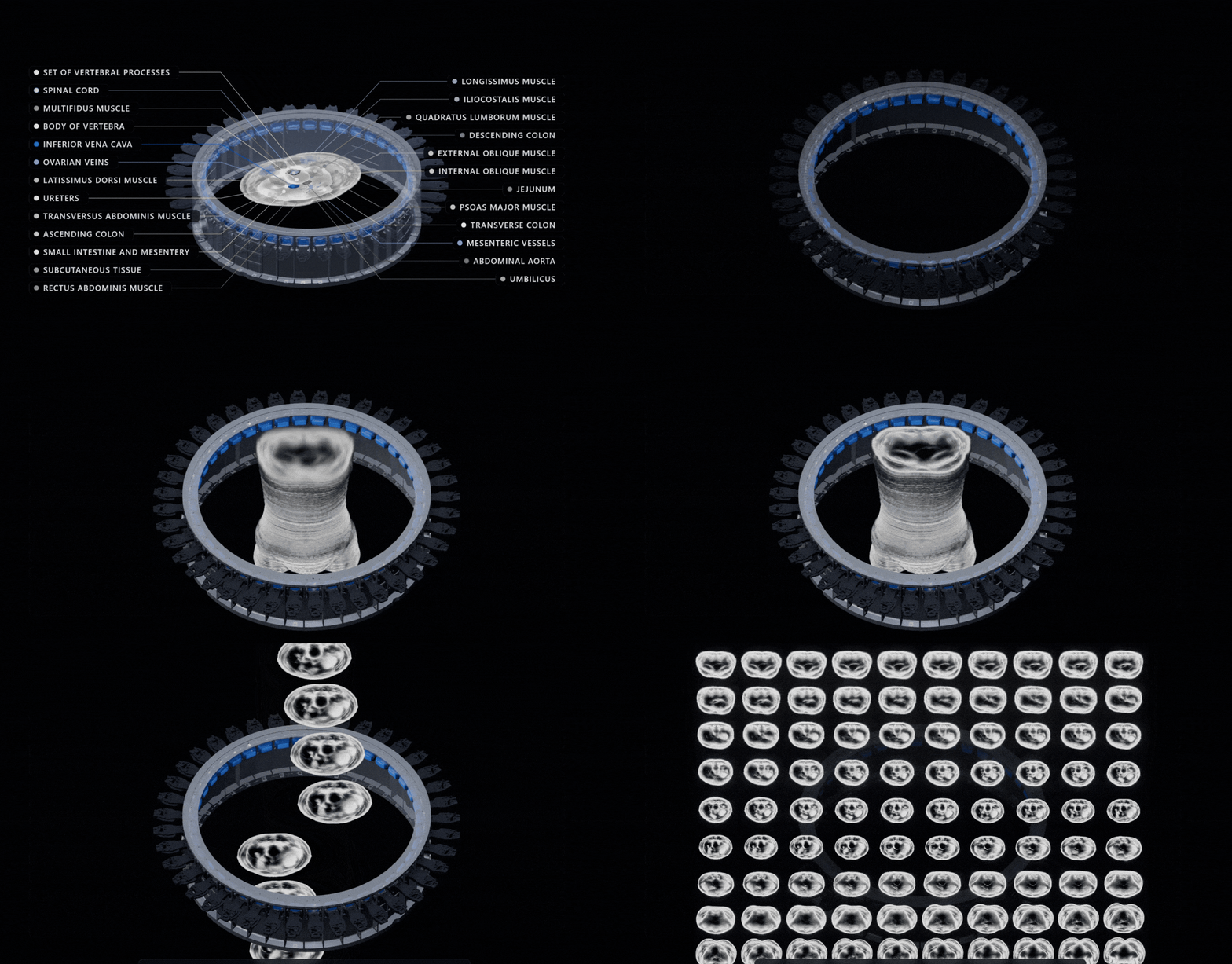
Midjourney Scanner in Action | Source: Midjourney Medical
While the scan currently takes about 20 minutes, it should drop to just 60 seconds by next year. It will be capable of capturing several hundred “slices” of our bodies in just a minute, producing a raw data file of about 806 terabytes.
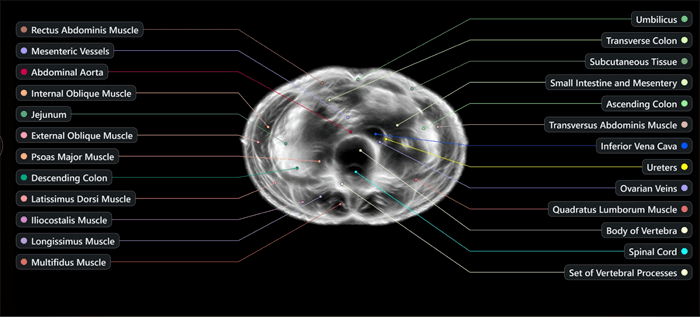
The result will be high-resolution images like the one below, allowing a physician to see inside our bodies in remarkable detail.
The standard for highly detailed full-body medical imaging has been the MRI for decades, going back to the first magnetic resonance imaging (MRI) machines of the 1970s…
But particularly in terms of accessibility and comfort, it’s hard to overstate how significant Midjourney Medical’s breakthrough is.
The Midjourney Scanner is expected to be an order of magnitude cheaper than today’s MRI machines, which can cost between $1 million and $3 million. And having an MRI performed costs anywhere in the range of $500 to $10,000, depending on what imaging needs to be performed.
Aside from being prohibitively expensive for many, it’s also, for many, quite uncomfortable. As I’m sure many of us have experienced, having an MRI done is not pleasant, especially for anyone claustrophobic. It can take anywhere from 20 minutes to more than an hour, especially if you are having a full-body MRI scan done, including brain imaging.
And in the case of the Midjourney Scanner, even if you have some metal in your body, there is no problem having the imaging done, unlike an MRI.
Midjourney still has to take its new scanner through the clinical trial process so that its output can be used as a clinical diagnostic tool, but that process is well defined. And as there will be strong clinical benefit and no side effects from the 60-second scan, I expect the Midjourney Scanner to move quickly through the FDA process.
That’s especially the case given the latest changes that have been made by the FDA to incorporate AI in its daily workflow, as well as the agency having provided the regulatory framework for the use of AI in health sciences. High-quality drug therapies and medical devices are already starting to move through the FDA faster than at any time in history.
Midjourney plans to open a Midjourney Spa in San Francisco in late 2027, where people can go to get a full-body image and relax at the sauna, hot tub, or other services it will provide.

Midjourney Spa | Source: Midjourney Medical
It’s an interesting approach. I don’t expect that it will be approved by the FDA within the next twelve months, but it will produce high-resolution 3D body scans that could be interpreted by medical professionals.
The whole purpose is to image regularly to catch any medical issues early, so individuals can be proactive about their health.
This is the foundation of predictive and preventative medicine, something I am very passionate about, having discovered my own prostate cancer very early during a full-body MRI scan back in 2020. Discovering a medical condition early can be the difference between life and death. It’s empowering for the patient.
Midjourney’s scanner would radically simplify full-body imaging, making it a simple, quick, cheap, and perhaps even pleasant experience, given the concept that Midjourney envisions, shown above.
By 2028, Midjourney plans to commercialize its third-generation scanner, which will be manufactured with custom semiconductors. The image quality will be “night and day” compared to what the company is demonstrating today.
And by 2031, the goal is to have 50,000 scanners around the world capable of producing 1 billion scans every month. This compares to somewhere between today’s 100-150 million MRI scans a year due to accessibility, cost, and discomfort for many.
And imaging is only one application of this kind of device. I’m speculating, but I don’t see any reason that this technology couldn’t advance to treating cancer. Ultrasonic waves can be concentrated and precisely directed to heat up a tumor and cause the cancer cells to die.
The healthcare industry has been so corrupt and so slow to innovate over the last few decades.
There has been so much regulatory capture by large pharmaceutical companies pushing drugs and expensive therapies. And they largely control the medical licensing boards and medical schools, resulting in an environment where doctors’ hands are tied and they are restricted in what they can prescribe.
This is why technology outsiders are delivering some of the largest breakthroughs in healthcare and life sciences.
Google’s DeepMind solved the grand challenge of accurately predicting how hundreds of billions of proteins fold. AI is being used to accelerate drug development and optimize clinical trials
And now, Midjourney, a generative AI company, has invented the Midjourney Scanner, which I believe will be regarded as the most significant imaging breakthrough in half a century.
We need a whole lot more of this tech innovation in healthcare. The legacy players are largely decels as it is in their best financial interests. But of course, that’s completely the wrong mindset and produces the worst outcomes for patients.
It’s time to accelerate. We need more Midjourney’s and Google DeepMind’s thinking outside the box to bring breakthrough technologies. With our radically new and improved FDA in the U.S., there couldn’t be a better time to do so.
Incredibly, Midjourney is a private company that has been completely bootstrapped. It has had no external funding and is owned by its founder, David Holz. Midjourney was an early standout in this AI boom as it was early to reach profitability, and it has grown to about $500 million in revenue in 2025.
It used its free cash flow generation from generative AI to invent the Midjourney Scanner. And apparently that is just the beginning. Midjourney Medical has six products in development, and the Scanner is only one of them.
I can’t wait to see what comes next.
Imaging and genetic sequencing are the two most critical steps to enabling a future of predictive medicine. Full genome sequencing has already dropped to around $200, and the Midjourney Scanner is the answer to cheap, high-resolution imaging.
We have so much to look forward to,
Jeff
Add Brownstone Research as your preferred source on Google to see our latest stories in your feed.
 Add as a preferred source
Read the latest insights from the world of high technology.
Google’s recent agreement reveals the scale of the AI power shortage and why supplying power is such an important...

There is something very special happening right now. A bloom of autonomous driving, and Austin is the epicenter.
The idea of a matter compiler has been a science fiction dream for decades. Not any longer.