


Will OpenAI Go Bankrupt?
In today’s AMA, we explore the true utility of full self-driving vehicles… what to do when markets crash… and...



The trillionaire story is fascinating. The infrastructure story may be far more profitable.
Editor’s Note: Today, we’re sharing a guest insight from our colleague Jason Bodner, founder of Outlier Intel. As Jason puts it, investors can’t stop talking about the SpaceX IPO. But in all the excitement, the market is missing the bigger picture. Read on.
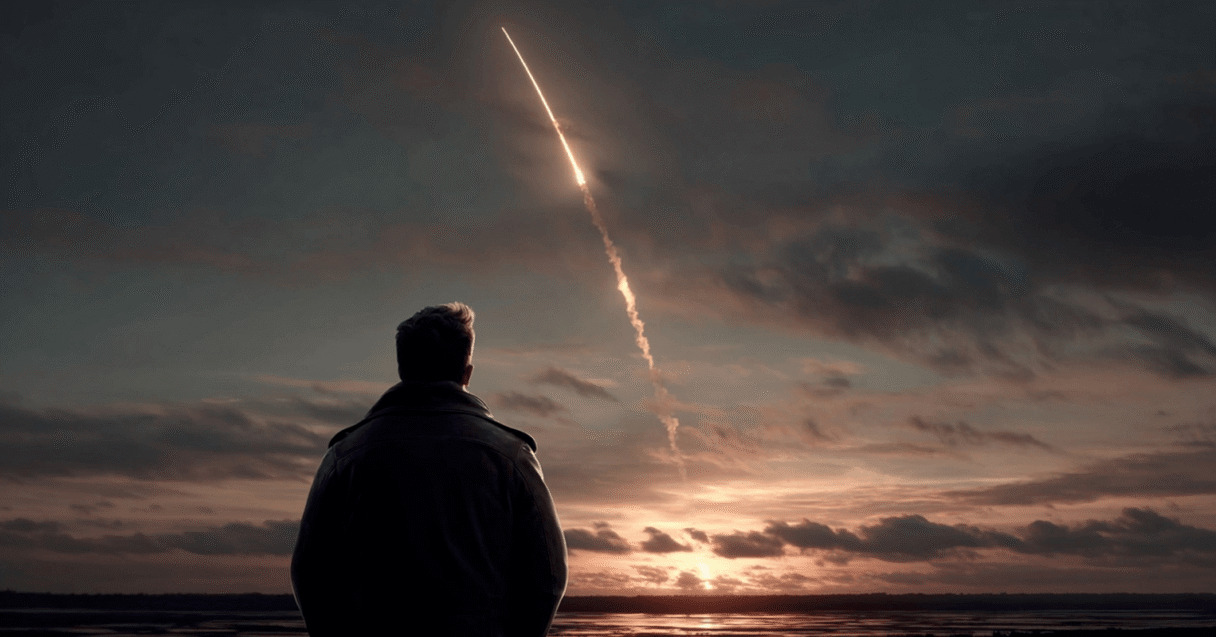
Last week, investors couldn’t stop talking about SpaceX.
The biggest IPO in history. A $1.77 trillion valuation. Elon Musk becoming the world’s first trillionaire.
The headlines were impossible to ignore.
But, amid all the excitement, I think investors are asking the wrong question.
The question isn’t whether SpaceX is worth $1.77 trillion.
The question is this: What happens when access to space becomes cheap?
That question may sound like a strange place to begin an investment thesis. But history shows that whenever transportation costs collapse, entirely new industries emerge.
Railroads created national commerce. Commercial aviation created global tourism and distribution. The internet created digital commerce.
Each time, the beneficiaries weren’t always the companies themselves. More often, they were the businesses built on top of the infrastructure.
One of the best examples is one of the least exciting. It’s something so mundane that most people never think about it—the shipping container.
Before containerization, cargo was loaded and unloaded by hand. Shipping was slow, expensive, and inefficient.
Then, standardized containers transformed global logistics. Transportation costs plunged. Distribution accelerated. Supply chains became international. Factories moved across continents. Global trade exploded.
Few investors became excited about shipping containers.
But the opportunity came from understanding what cheaper transportation would enable.
I believe SpaceX may be creating a similar moment.
For decades, space was the exclusive domain of governments. The Apollo program cost the equivalent of hundreds of billions of today’s dollars. The Space Shuttle program consumed hundreds of billions more.
Launching anything into orbit was so expensive that only governments and a handful of large contractors could realistically participate.
Imagine if every airline ticket cost a few hundred thousand dollars.
Modern aviation would never have existed.
That’s why SpaceX changed the equation.
Reusable rockets transformed launch economics. Falcon 9 boosters now routinely launch, land, and fly again.
What once cost enormous sums now costs a fraction of what it did only a generation ago. And if Starship succeeds, launch costs could fall much further.
Every major technological revolution follows a similar path. At first, a technology is expensive and exclusive. Then costs fall. Then adoption explodes.
Computers once filled entire rooms and cost millions of dollars. Air travel was once reserved for the wealthy. Cell phones were luxury products. GPS was originally a military technology. Even the internet began as a government-funded research network connecting a small number of institutions.
As costs declined, these technologies moved from exclusive to ubiquitous.
That’s the real lesson.
The invention is important.
The affordability is transformative.
Apollo proved that humanity could reach space.
SpaceX may prove that humanity can afford it.
And nowhere is that opportunity more compelling than artificial intelligence.
Today, AI is colliding with physical limits.
The world’s largest technology companies are spending hundreds of billions of dollars building data centers, yet power availability is becoming one of the industry’s greatest constraints.
These facilities consume staggering amounts of electricity. They require enormous cooling systems. They compete for land, water, and access to the electrical grid. In many regions, utilities are already struggling to keep pace with projected demand.
The AI revolution increasingly looks less like a software challenge and more like an infrastructure challenge.
Now imagine a different future.
Imagine solar-powered data centers operating in orbit. Energy is abundant and free…
At first glance, the idea sounds like science fiction.
But so did reusable rockets.
Longtime readers of The Bleeding Edge already know this.
Unlike facilities on Earth, orbital data centers could receive near-continuous solar energy without clouds, weather, or nighttime interruptions. They would not compete for valuable land. They would not strain local water systems. They would not require years of permitting battles to connect to an already stressed electrical grid.
Most importantly, they could help address one of AI’s biggest challenges: heat.
Every AI calculation produces heat. Every server rack produces heat. Every data center spends enormous amounts of money removing heat. Cooling has become one of the largest expenses associated with large-scale AI infrastructure.
Space offers a unique advantage.
The vacuum of space is extraordinarily cold. Excess heat can be radiated away without many of the constraints faced by terrestrial facilities. What sounds futuristic today may eventually become economically rational if launch costs continue to decline.
And the implications extend far beyond data centers.
Cheaper access to space could eventually mean lower communication costs, faster global connectivity, more powerful AI systems, and entirely new industries that haven’t yet been imagined.
Just as the average person benefits from GPS, satellite communications, cloud computing, and the internet without understanding the underlying infrastructure, future generations may rely on space-based computing without giving it a second thought.
That’s what makes this opportunity so interesting.
The real story isn’t rockets.
The real story is infrastructure.
Most investors see SpaceX and think about launches or Musk’s trillions.
I see falling transportation costs.
And history teaches us that when transportation costs collapse, innovation accelerates. New markets emerge. Entire industries are born.
The biggest opportunities created by SpaceX may not be inside SpaceX at all.
They may belong to the companies building advanced power systems, next-generation semiconductors, orbital communications networks, high-efficiency solar technology, and the infrastructure required for a space-based economy.
Today, that sounds futuristic.
Twenty years from now, it may sound obvious.
That’s why investors should look beyond the IPO.
The trillionaire story is fascinating.
The infrastructure story may be far more profitable.
Regards,
Jason Bodner
Founder, Outlier Intel
Add Brownstone Research as your preferred source on Google to see our latest stories in your feed.
 Add as a preferred source
Read the latest insights from the world of high technology.
In today’s AMA, we explore the true utility of full self-driving vehicles… what to do when markets crash… and...
Only one form of transportation has felt futuristic for decades… like a mirage always on the horizon. Never close,...
We’ve been waiting for future forms of commercial transportation for decades, and finally that time has come.