



The Tokenization of Everything
We’re moving from the “walled garden environments” to public blockchains. It’s a major shift, and it’s picking up momentum...



It’s prying open the door. And once it opens, it won’t close.
Editor’s Note: We’re in the midst of the biggest IPO season in history …
SpaceX (SPCX) held the world’s largest IPO in June. Anthropic is expected to be next and could come out of the gate with a $2 trillion to $4 trillion listing. OpenAI, maker of ChatGPT, should be close on its heels. Plus, more than 100 tech IPOs have already filed.
According to Jeff Brown, this is shaping up to be a “Super IPO Season,” and most investors don’t have the first idea of how to play it.
That’s why, on Sept. 16, Jeff is hosting the Super IPO Summit, where he’ll share his preferred strategy to make the most of this time in the markets. During the event, Jeff will share three free stock recommendations, including his top pre-IPO trade for the Anthropic IPO. You can learn more and reserve your seat with one click right here.
When friction disappears, billions begin to flow.
Look no further than Nov. 18, 2004. That’s the day SPDR Gold Shares (GLD) began to trade as the first gold ETF in the U.S.
Before that day, owning gold meant incurring layers of costs.
Monthly payments to store bars or coins in a safe or vault, the cost of confirming purity, not to mention getting whacked by dealer fees—all of it added up for the would-be gold investor.
Prior to GLD, bypassing those costs meant speculating in the COMEX futures market… A market where the minimum contract was 100 troy ounces or roughly $44,000 of notional value at the time, our roughly equal to the median salary in the United States that year.
That path came with its own cost. Mostly, that cost was the time spent to manage positions daily.
GLD changed all that. It represented the democratization of gold. Anyone with a brokerage account could gain exposure for just $44 a share.
Success followed. GLD gathered $1 billion in its first three trading days.
The ETF turned gold from a physical, fragmented market to one that was highly liquid and traded in massive volume. For the first time, a commodity was trading like any other share of stock. Same asset, same purity… The only thing that changed was the ETF wrapper.
But what’s really interesting is the tsunami of products that followed.
iShares Gold Trust (IAU) launched in January 2005. A year later, Invesco launched a commodity index tracking fund (DBC) that was based upon a basket of sectors like energy, agriculture, and industrial metals.
That was followed a few months later by the United States Oil Fund (USO), which was the first single-commodity energy ETF. Then came silver via the iShares Silver Trust (SLV)… Then platinum… palladium… And more.
By the late 2000s, the trend went further with complex structures coming to market like leveraged, inverse, and volatility-based ETFs.
It was all thanks to the SEC, which had approved the Securities Act of 1933 grantor trust structure. This allowed ETFs to no longer be barred from holding raw physical assets.
What also helped make this asset innovation possible was the interagency alliance between the SEC and CFTC. Commodity and futures-based ETFs meant the two needed to cooperate more than ever before.
This regulatory expansion allowed a commodity and synthetic/derivative-based ETF sector to grow from nothing to nearly $60 billion, or roughly 12% of the entire ETF market, in only a few years.
All of this is good context for what’s happening today.
Like the commodities ETF boom of the early 2000s, a new asset class is coming online that promises to reduce friction. The CFTC and SEC are once again in close cooperation to bring these products to market.
Half a century of friction is being quietly deleted. And it will result in asset innovation that’s so fast, it will make the commodity ETF trend look tame by comparison.
While Trump’s approval is plummeting over Iran… hedge fund legend Larry Benedict says it's a huge opportunity. One ticker has given folks a chance at payouts like $2,482, $7,623, and $8,704… All in under eight days. Click here to get the ticker for FREE.

Three reasons:
It all happens Wednesday, September 16, at 8 p.m. ET, on an exclusive website. The event is free – but access is limited. Save your seat here.
ARK Investment Management is an asset management firm founded in 2014 by Cathie Wood.
Its focus is on disruptive innovation and giving investment solutions to investors typically barred from certain assets.
One newer offering from the team is the ARK Venture Fund. It’s an investment vehicle that grants regular investors access to private companies like OpenAI and Anthropic, among many others.
But what it is gearing up to do will be even more disruptive…
ARK has filed with the SEC to create a tokenized class of the ARK Venture Fund.
Ownership would be recorded on a blockchain, tradable on SEC-registered trading systems, and transferable peer-to-peer between KYC-approved wallets.
It’s quite remarkable. And sorely needed…
Today, the fund’s shares are unlike regular stocks or ETFs. A holder cannot sell shares on demand. There’s virtually no liquidity.
If holders want to exit, they must wait until the quarterly repurchase window. That’s when the fund will buy back a limited percentage of shares. Which means, even then, investors have no guarantee they’ll be able to exit their positions.
Which is why ARK’s plan to tokenize shares of this fund is such a big deal…
It can now compress settlement to same day and generate a liquid market for what has historically been a very illiquid one—private investments.
The SEC’s hearing-request window closes Sept. 18. After that, the order can be granted. Which is just about the time we’ll learn more on the CLARITY Act.
It’s a timeframe that makes another seemingly unrelated piece of information connected.
ARK’s filing comes just as the SEC issues its first major overhaul of transfer agent rules since the late 1970s.
Commissioner Hester Peirce dropped the news with a fitting statement, “Time to Transfer.”
Transfer agents are the least glamorous entities in finance. They keep the master securityholder file, which keeps track of who legally owns a stock.
We’ve written about this before in Freeing $100 Trillion in Assets.
The bombshell is that this master file can now be a blockchain. Not a copy of the record, not a shadow ledger reconciled nightly…
The authoritative, legal record of ownership itself can live onchain.
Commissioner Peirce framed the stakes plainly:
When the Commission first adopted the rules governing transfer agents, holding paper share certificates was the norm … transfer agents and other market participants are looking to a future in which many shares will be tokenized.
Read that last part again: “A future in which many shares will be tokenized.”
She even asked whether holders should be identified by “email and digital wallet addresses” instead of names and street addresses.
This is a new wrapper coming to market. One that reduces friction more than ever.
The ARK Venture Fund being tokenized is not a direct result of the transfer agent rules; it’s just part of the vision Peirce showcased to the market as the rules were proposed.
This is proof that the tokenization trend is about to start, and it’s only weeks away. We’re coming up to the last checkpoint now.
In fact, in a Franklin Templeton no-action letter last month, the SEC blessed a blockchain-integrated shareholder file.
The recordkeeping is set. Products like the ARK Venture Fund will be tokenized. Next will be the innovation exemption that allows stocks to flow freely onchain.
The pressure is mounting. And, in some ways, it’s thanks to the sluggish pace of the CLARITY Act.
The failure to get CLARITY over the line (for now) forced the SEC to get creative and move faster than the legislative process would have allowed. That’s what’s happening. It’s prying open the door. And once it opens, it won’t close.
You can’t simply put trillions of dollars back into a jar once it’s trading freely across public blockchains.
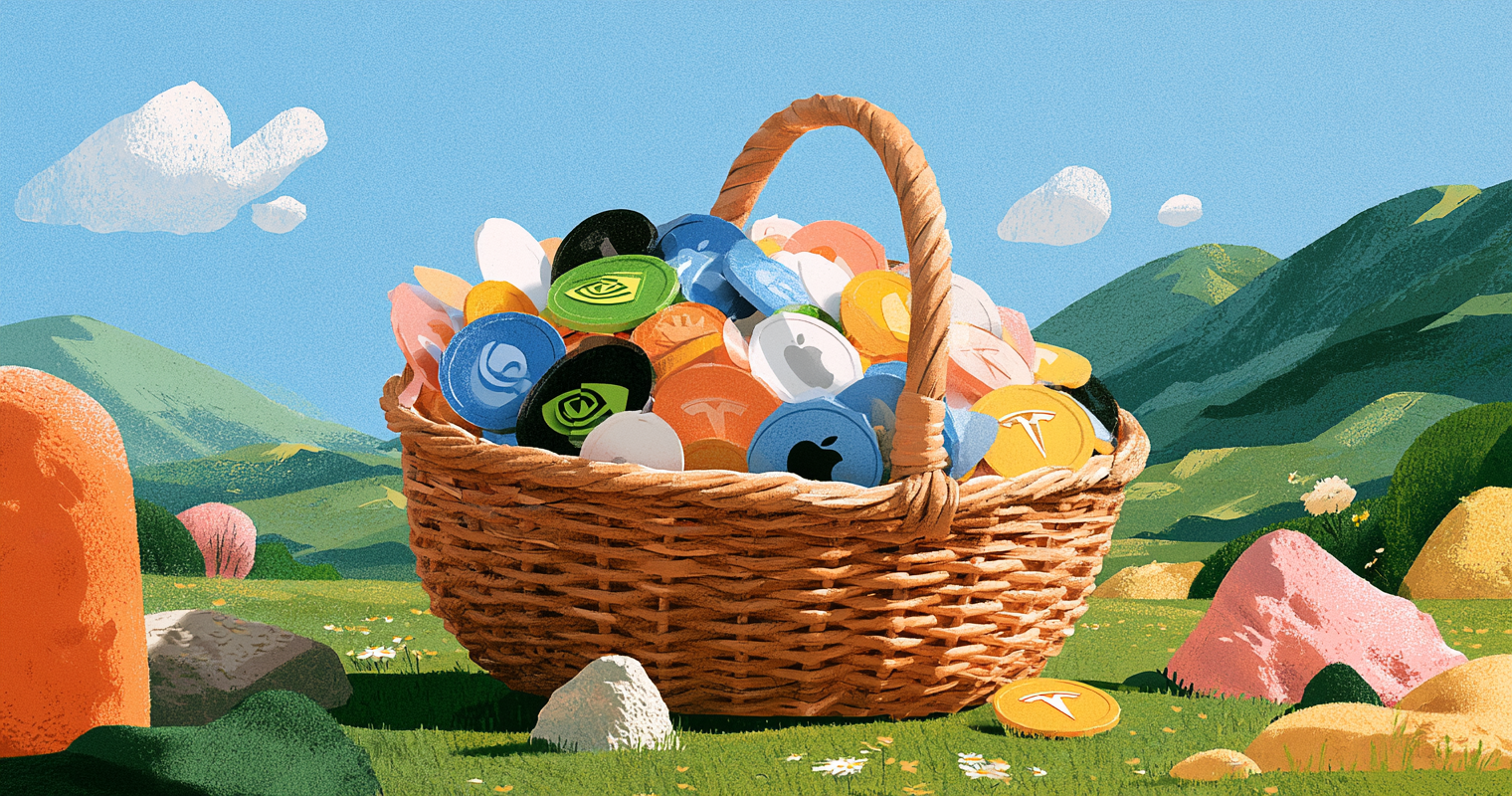
Commodity ETFs in the 2000s erased friction and brought liquidity to a highly illiquid market. They created tens of billions of dollars’ worth of market value and gave investors new options. The tokenization of assets like the ARK Venture Fund will do all that and more.
What is a $2.5 billion market today will grow faster than what we saw two decades ago. In all likelihood, tokenized assets will be greater than a $100 billion market in just a few years.
And the repricing of the rails that these new markets run on will be impressive.
More on that later.
Your Pulse on Crypto,
Ben Lilly
Editor, Chain of Thought
Read the latest insights from the world of high technology.
We’re moving from the “walled garden environments” to public blockchains. It’s a major shift, and it’s picking up momentum...
By now, investors have learned the “don’t fight the Fed” rule. Very soon, they might have to learn a...
New business models will spring up, and old models will not survive.