




Wall Street’s “Blockbuster Moment”
JPMorgan can keep both pieces of infrastructure as long as it likes. But customers will decide where to do...



The trend is inevitable and only accelerating...

Managing Editor’s Note: According to our colleague, Larry Benedict… NVIDIA’s August 26 earnings could trigger a historic shift in the market… Potentially sending more than $1 trillion flooding into an overlooked part of the market.
And Larry has identified one ticker that sits directly in the path of that $1 trillion. At first glance, it looks like an ordinary, old-economy stock. It has nothing to do with chips, robots, or software.
At least, that’s what Wall Street seems to think.
But Larry believes it could become the first major opportunity of this shift. He’s getting into all the details next Wednesday, August 26, at 8 p.m. ET. Just go here to sign up with one click.
Price heals all wounds.
The digital asset market just had a stellar week… Bitcoin gained 23% while Ether ran 31%.
The surge had less to do with progress on the legislative front via the CLARITY Act and more to do with U.S. Treasury Secretary Scott Bessent entering the limelight.
Bessent’s department announced its intention to increase the amount of bond buybacks in longer-duration Treasury bonds from $2 billion to at least $4 billion per auction.
Analysts were split on what this meant. Many were saying this was a way for the Treasury to start controlling the yields for various Treasuries (which I believe is mostly the case). Others were calling this quantitative easing, a policy measure from the Federal Reserve that can produce more favorable market conditions.
Still others suggested that the dollar values behind the buybacks were too insignificant to matter or that this could be the start of a larger intervention by the Treasury.
The interesting part is none of these. But to explain why, we need to take an inventory of recent 30-year Treasury auctions.
The Treasury needing to purchase its own Treasuries made it sound like demand is dropping fast.
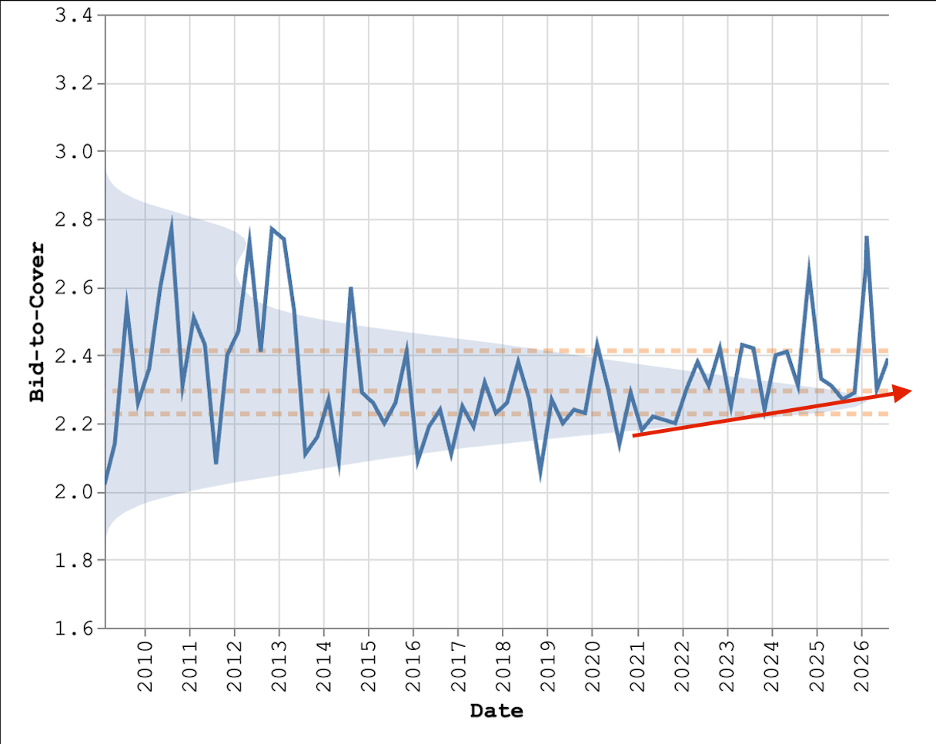
When we look at a metric called bid-to-cover, we see that’s not quite the case.
The bid-to-cover ratio is simply the dollar amount of the bids received in a Treasury auction versus the amount sold. The higher the ratio, the stronger the demand.
Looking back at the last 72 auctions, the average bid-to-cover ratio is 2.33. But last week’s auction created a bid-to-cover of 2.39, meaning the dollars bid were 2.39 times the $25 billion worth of debt issued.
And when we look at auctions over the last couple of years, we see a pattern of strength at auctions…
Source: Yieldcurve.pro
This implies the Treasury wants to simply bring the yields down ever so slightly at auction. This isn’t a demand issue, but more about tamping the yields down and reducing the long-dated debt in the market.
Bessent made comments this morning about using the Treasury Government Account to buy back bonds. It’s likely just lip service to help bring the price at which those bids are submitted closer to where the Treasury wants them.
The news last week was not about hundreds of billions of dollars entering the market.
To put this all in perspective…
During the COVID-19 pandemic, we saw the U.S. Federal Reserve announce its intention to buy $500 billion in Treasuries and $200 billion in mortgage-backed securities. Its easing plan swelled to trillions before long.
In 2009, the Federal Reserve purchased well over $1 trillion in assets that included mortgage-backed securities, Treasury debt, and debt from various agencies.
And the two other auctions in 2010 and 2012 were similar in size.
The extra $2 billion per month is not even a blip on the radar. Not to mention that Bessent is buying those longer dated bonds and selling them back at a short duration. It means there’s essentially zero impact.
Which might explain why equity indexes hardly cared last week, as all were down.
Is the market saying Bessent needs to act with greater urgency? Is it saying the buyback program isn’t material?
It remains to be seen.
What we do know is that the crypto market responded violently…and we should look at why.
The Depository Trust & Clearing Corporation (DTCC) hit a milestone this past July.
It executed trades using tokenized equities, ETFs, and U.S. Treasuries with over 30 major financial firms taking part.
This included names like BlackRock, JPMorgan Chase, Goldman Sachs, NYSE, Nasdaq, and many others.
It was a test before the system goes live in October… when I expect we’ll see a deluge of stocks come onchain.
And what many take for granted when it comes to having tokenized stocks onchain is the asset used to purchase the tokenized stock. There’s typically a U.S. dollar stablecoin involved in one leg of the transaction.
This is important to consider.
As more tokenized assets such as stocks come onchain, there will need to be more stablecoins to help facilitate their trading. It’s a liquidity concern.
If there’s not ample liquidity around these markets, then issues like slippage or wide spreads may materialize.
I’m quite sure the largest banks, exchanges, and brokers—all of which are involved with what the DTCC is doing—are aware of this. And the very successful hedge fund manager and macro investor, Secretary Scott Bessent, is well aware of this.
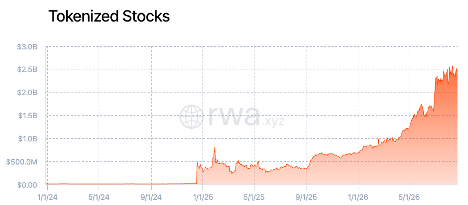
This is all to say public blockchains will realize substantial growth as tokenized stocks begin to proliferate onchain. It’s a package deal.
Their growth is already turning parabolic. This year alone, that amount has grown from under $700 million to more than $2.5 billion.
Source: RWA.xyz
The growth is something the DTCC wants for itself… It’s likely why we see the same entities involved in what the DTCC is doing also involved with threatening to sue the SEC for legitimizing onchain stocks two weeks ago.
The biggest in the game don’t want others to front-run their October date.
The trend is inevitable and only accelerating.
Bessent knows this.
This is what Project Crypto is about… The initiative being touted by the White House, SEC, and CFTC to bring our financial markets onchain.
Stablecoins are one of the most integral parts of this initiative’s success. And Bessent just gained greater control over the very asset used to back U.S. dollar stablecoins… short-term Treasuries.
This is all just about ensuring the plumbing is set ahead of time. Whether the market needs a few billion or more each month, the Treasury is now ready to accommodate.
And the consequences are pretty incredible when it comes to cryptocurrencies.
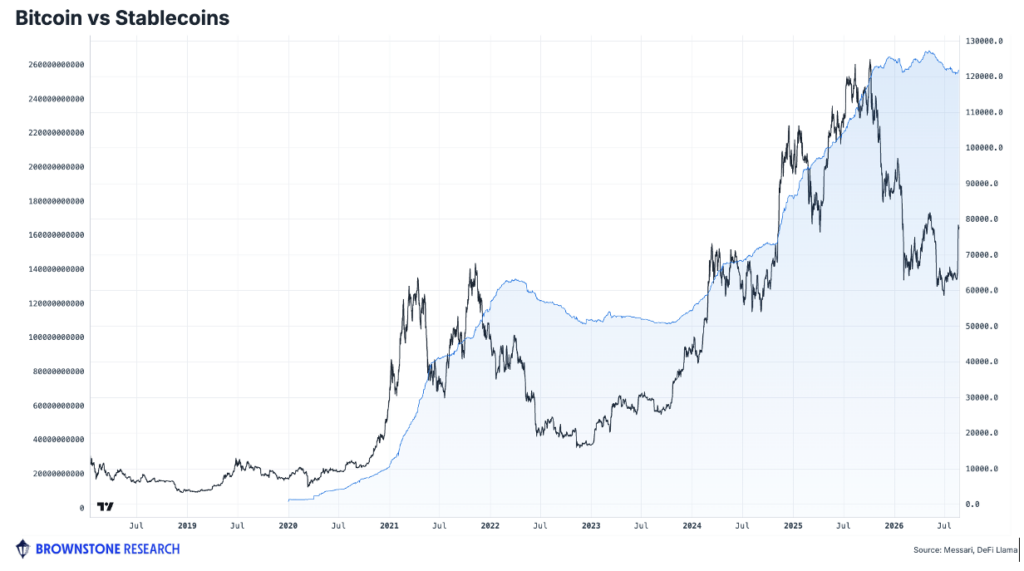
We wrote about this relationship before in The Treasury Needs Crypto To Go Higher. That relationship is the growth in stablecoins and the price of Bitcoin, and the rest of the digital asset market.
Here is a chart with the price of Bitcoin in black and the amount of Circle’s USDC and Tether’s USDT stablecoins in circulation. Stablecoin growth follows price.
Which is what makes the timing of this recent market move so exciting.
Bitcoin and Ether made a major move higher. We expected the market to make a “knee-jerk reaction higher,” as we laid out a week ago.
We just didn’t anticipate what the specific catalyst would be…
And now we have it with the Treasury’s latest move.
The stablecoin market is gearing up for the tokenization trend to play out. And if the market needs more stablecoins, then timing it up with Bitcoin’s next bull run is a great coincidence.
We’ve been hitting on the fact that many signals are suggesting that we are at or near Bitcoin’s bottom…
It seems the market is now pricing that in.
What an exciting Q4 we have ahead of us.
Your Pulse on Crypto,
Ben Lilly
Editor, Chain of Thought
Add Brownstone Research as your preferred source on Google to see our latest stories in your feed.
 Add as a preferred source
Read the latest insights from the world of high technology.
JPMorgan can keep both pieces of infrastructure as long as it likes. But customers will decide where to do...

The bank realizes it needs to compete in the future of finance, and it’s one where agents roam freely...