







Pecan Island Will Become the Largest Spaceport in History
SpaceX has announced Starbase Louisiana – a breathtaking undertaking to build the world’s largest spaceport…
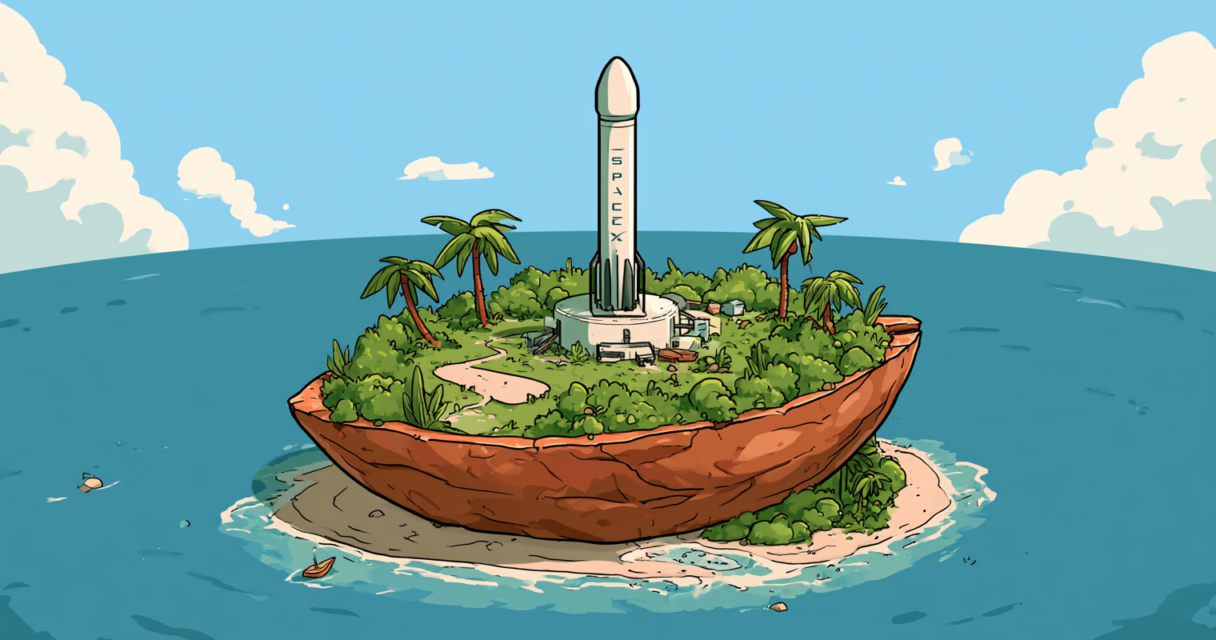
When you walk around SpaceX’s Starbase in Boca Chica, Texas, you get an immediate sense of the near future and the scale of what’s to come.
With two operational launch pads, the Gigabay – which can build up to 1,000 Starships a year – and the massive SpaceX (SPCX) offices, there is no question about how real the Gateway to Mars has become.
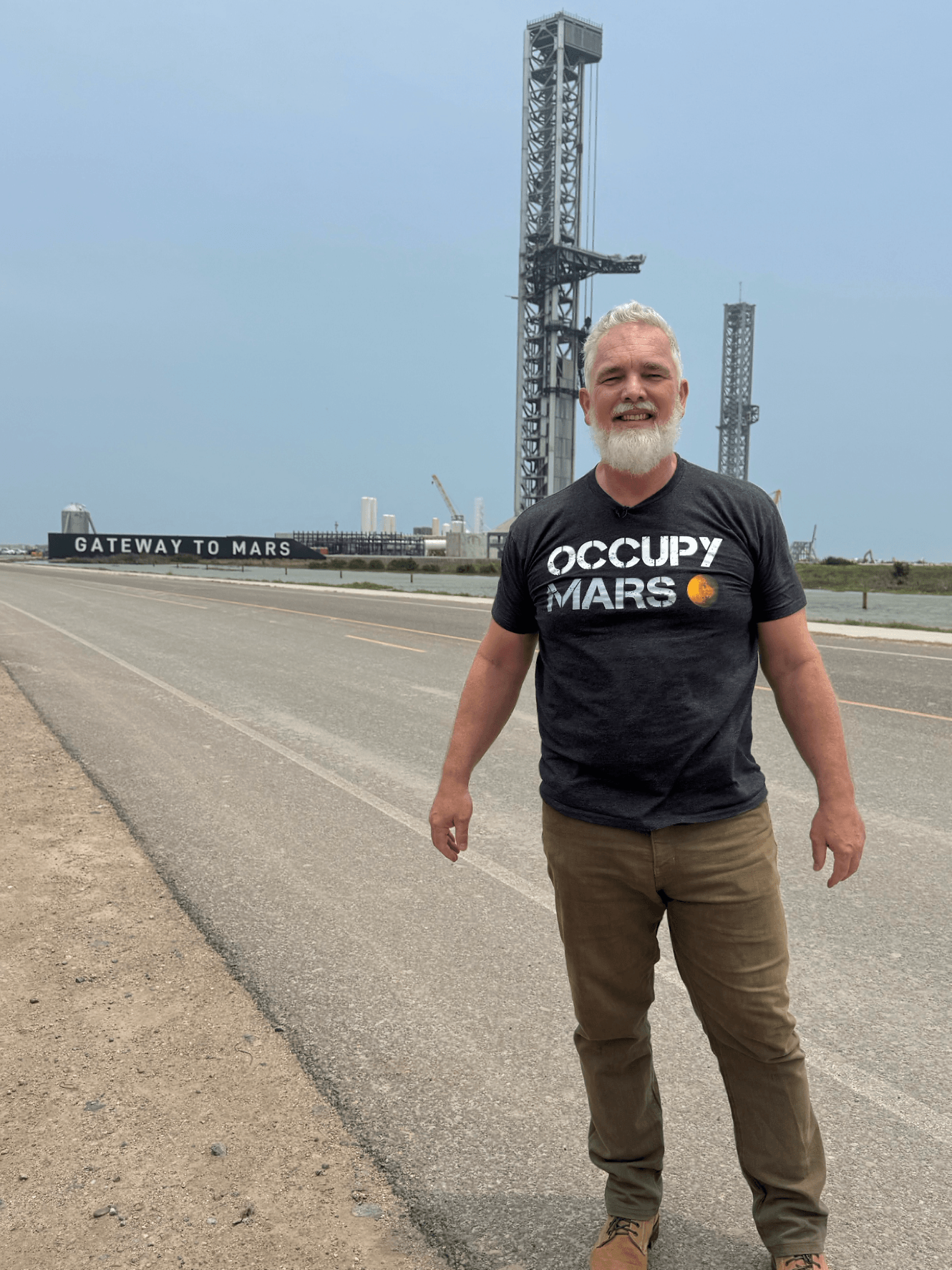
At the “Gateway to Mars,” SpaceX HQ | June 2026
But one other reality stuck out to me as I was standing just feet from one of the launch pads earlier this year…
There just isn’t enough space.
Starbase, Texas is tucked into a tiny sliver of land with the “hard” border of Mexico directly south, the Gulf of America to the east, and the South Bay to the north.
It’s currently about 1,000 acres.
And even though there is a little room for expansion, it would never be enough to support SpaceX’s operational plans to launch thousands of Starships a year by 2030.
That’s a mere four years away.
Expanding at Vandenberg Space Force Base in Santa Barbara County, California, or at Cape Canaveral, Florida, wasn’t possible either, which meant SpaceX would have to build a massive complex somewhere else.
The World’s Largest Spaceport
Objectively, the options were limited.
SpaceX needed a location in the U.S. with enough acreage to support thousands of launches a year.
It needed to be on the coast, as it is necessary to launch over water for safety purposes.
It had to be in a low-population area, and one that is geographically situated for southward trajectories that make launching payloads into orbit efficient.
And ideally, the location must be near sources of energy, specifically natural gas.
Louisiana was a strong possibility, which is why I wrote about a very large private land transaction between a third party and Exxon Mobil (XOM) earlier this year in The Bleeding Edge – The Colonization of Mars. I predicted that SpaceX was the buyer.
It wasn’t confirmed at the time, but it seemed obvious to me that the third party was indeed SpaceX, and its intentions were to build its primary launch site for its Starships.
Last week, that speculation became reality.
SpaceX announced Starbase Louisiana – a breathtaking undertaking to build the world’s largest spaceport.
It won’t even be close.
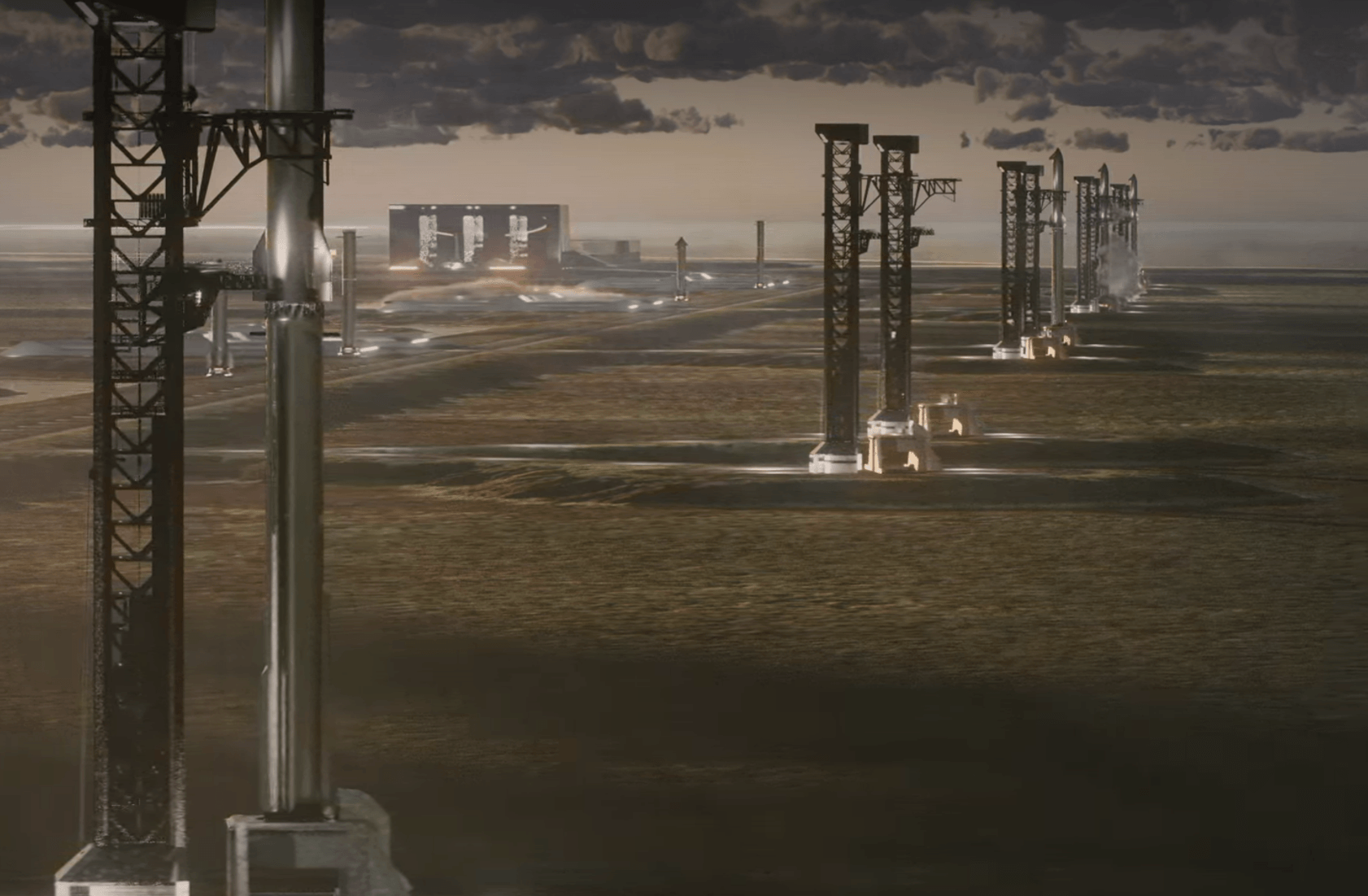
Rendering of Starbase Louisiana | Source: SpaceX
SpaceX announced that it will be investing $100 billion to build Starbase Louisiana in Vermilion Parish – specifically on Pecan Island – with southern exposure to the Gulf of America.
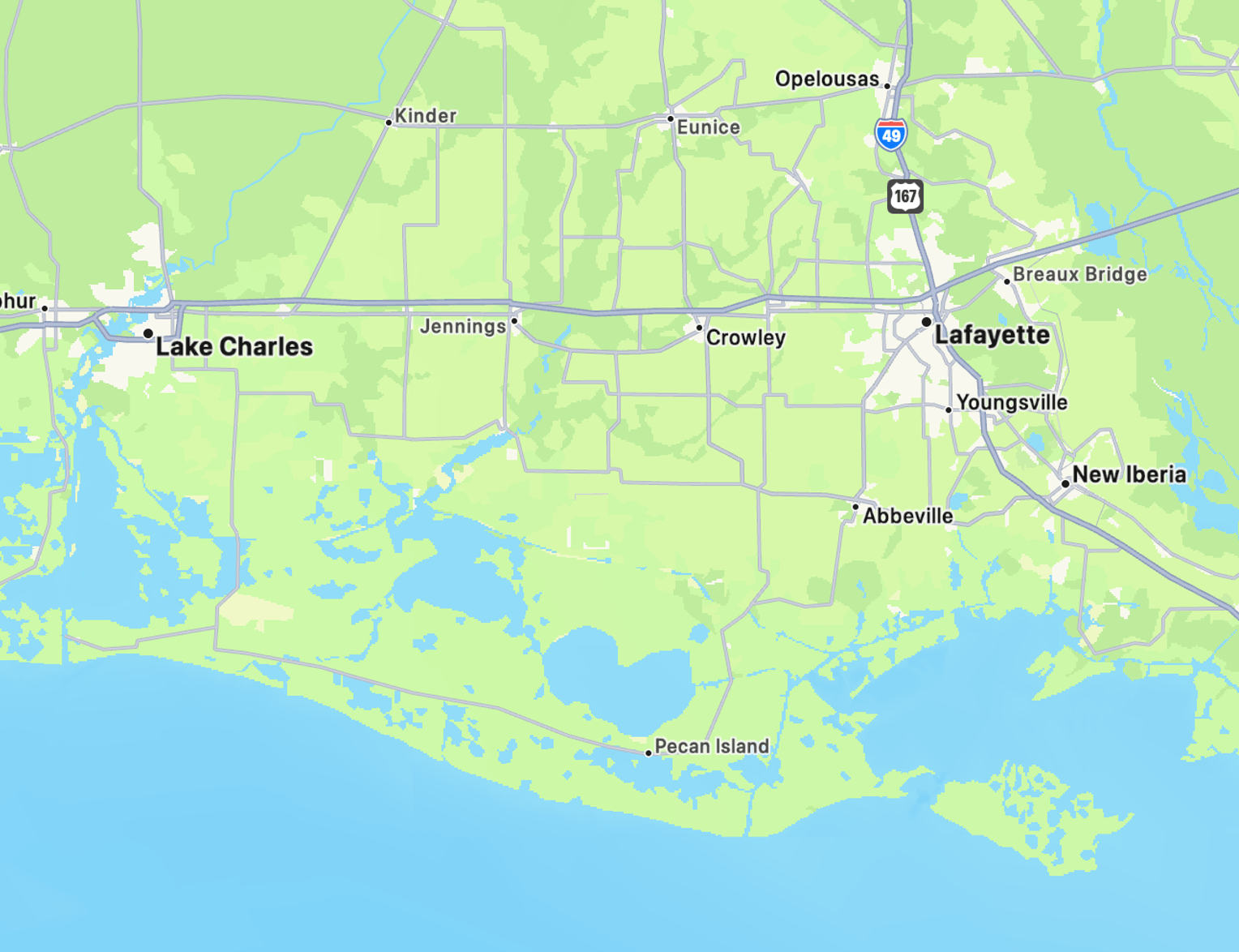
Pecan Island, Louisiana
This location is particularly interesting, given the strong natural gas infrastructure that Louisiana is particularly well-known for.
A Boon for Louisiana
Most don’t realize this, but SpaceX’s rockets are fueled by natural gas.
More specifically, SpaceX processes natural gas through a liquefaction process to produce super-chilled liquid methane – the principal propellant for SpaceX rockets.
The combination of liquid methane and liquid oxygen in a high-pressure combustion chamber creates a chemical reaction, which produces the thrust to get the Starship into orbit.
Source: SpaceX
The significance of what SpaceX is building cannot be understated.
The goal is a completely self-sustaining spaceport.
SpaceX will produce its own propellant on-site and its own power generation using natural gas.
SpaceX will also have its own deep-water shipping port, as well as an even larger Starship manufacturing facility than the one at its Gigabay at Starbase, Texas.
Perhaps they’ll call it a Terabay?
Either way, it will need to have the capability to manufacture more than 1,000 Starships a year to meet its launch cadence objectives.
The announcement was made with much fanfare with the Governor of Louisiana, Jeff Landry, who was clearly thrilled about the implications of the investment that SpaceX would bring to his state.
The economic impact for Louisiana will be material, bringing 3,000 direct new jobs over the next 10 years with an average salary of $92,600, as well as 8,100 new indirect jobs because of all the economic activity.
More importantly, this wasn’t a PR stunt.
Construction starts in 2027, with the first planned Starship launch in 2029.
Source: SpaceX
It’s important to note that SpaceX’s progress is not dependent upon the construction of Starbase Louisiana. Flight operations will continue out of Starbase Texas in Boca Chica.
The next Starship launch, Flight 14, is currently slated for mid-September.
And it’s a big one.
Attempting a Catch
Flight 14 will be the Starship’s first full-orbital flight test, which will carry and deploy an array of third-generation Starlink satellites.
In fact, on Friday last week, SpaceX conducted an engine test of the Super Heavy Booster for Flight 14, in preparation.
And there is even talk of potentially attempting to catch both the booster and the Starship itself back at the launch pad – using the Mechazilla robotic arms.
Won’t that be an incredible sight?
What makes this latest announcement of Starbase Louisiana so meaningful is that not only has SpaceX already successfully built a Starbase (in Texas), it has the capital to make this a reality in Louisiana.
SpaceX, post IPO, now has $100 billion in cash on its books.
In 2027, it will generate more than $60 billion in EBITDA, more than $125 billion in EBITDA in 2028, and exceed $200 billion in 2029.
Yes, SpaceX will be burning through cash making the absolutely massive capital investments needed to achieve more than 1,000 Starship launches a year.
But given SpaceX’s demonstrated ability to execute better than any other aerospace company in history – and the already impressive scale of SpaceX’s business with artificial intelligence, Starlink, and its launch services – Musk will have no trouble at all raising additional capital to enable his vision of making the human race a multi-planetary species.
Ad astra,
Continue following Brownstone Research
Add Brownstone Research as your preferred source on Google to see our latest stories in your feed.
 Add as a preferred source
More stories like this
Read the latest insights from the world of high technology.
-
-
Anduril’s Arsenal
This is a landmark deal and the most significant initiative in shipbuilding and defense technology since World War II.
-
Google’s Nuclear Deal Reveals the Scale of AI’s Power Problem
Google’s recent agreement reveals the scale of the AI power shortage and why supplying power is such an important...