




Anduril’s Arsenal
This is a landmark deal and the most significant initiative in shipbuilding and defense technology since World War II.



It is the most fantastic product release in history…

Musk called it on June 9, 2018…
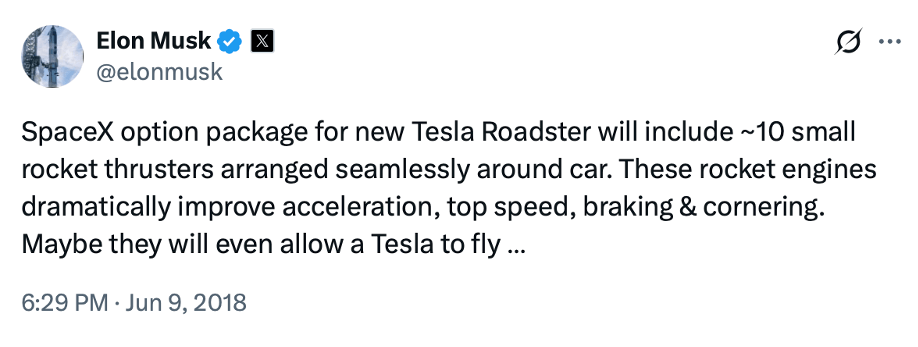
Just about everyone thought he was joking. Very few believed him. Just another ridiculous, crazy idea to create hype around Tesla (TSLA), or something along those lines.
And yet, yesterday, they were all proven wrong. Again.
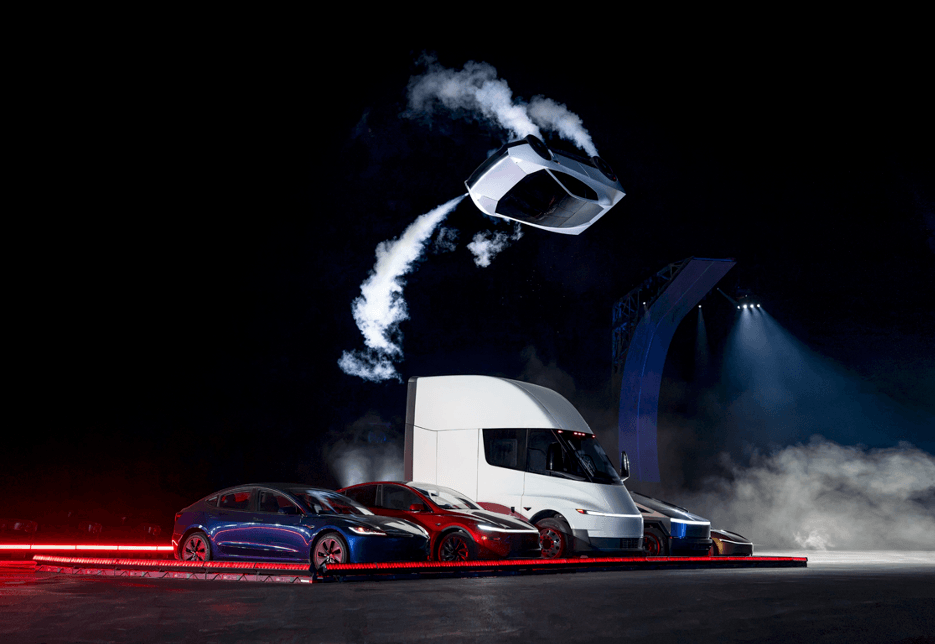
Source: Tesla
I know that it doesn’t look real. I get it. But this is not AI. And this is not some kind of studio stunt. Just watch the short video below.

Source: X @Tesla
I’m sure you might be thinking… how is this even possible? It doesn’t look real?!
The Tesla Roadster employs 10 cold gas thrusters from SpaceX around the car that enable it to take flight, jump, and maneuver in mid-air with incredible precision.
Absolutely out of this world.
And it gets better.
Have a look at this:

Source: X @Tesla
Absolutely insane, right?
Tesla developed an underbody suction fan system capable of pulling 2Gs of force into the ground (or any surface), enabling the car to literally “hang” upside down, or drive on inverted surfaces.
The clip above isn’t magic. It’s not sorcery. It’s just physics.
And Elon Musk and his team at Tesla just happened to be the first team in history to make it happen.
No, it won’t be cheap. A $250,000 deposit is required for the version with cold gas thrusters. But it is one of the most remarkable feats of engineering I’ve ever seen.
And it is the most fantastic product release in history.
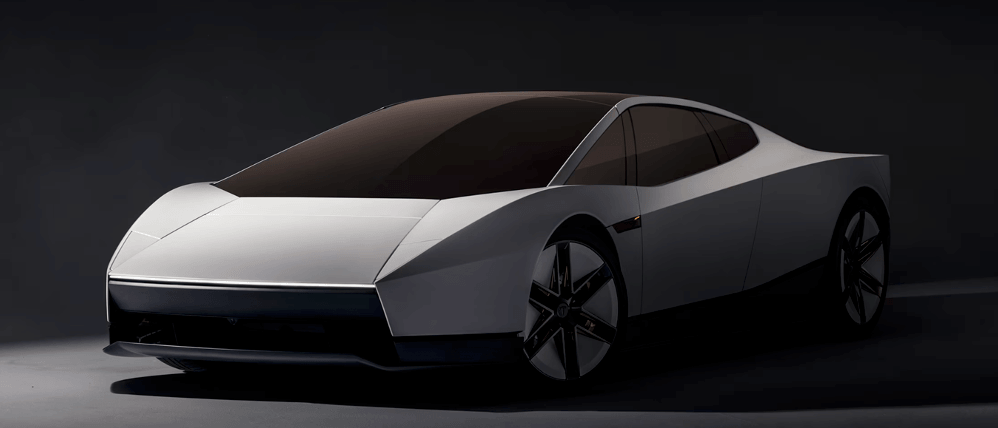
Tesla Roadster | Source: Tesla
I was just in Austin last week at the Tesla Gigafactory. Wish I could have stayed for the Roadster event. Congratulations to the team at Tesla for something truly remarkable, and for inspiring others to think big, outside of the box, and to invent the future.
We have so much to look forward to,
Jeff
Hi Jeff, is Elon going to IPO Starlink phone? Regards.
– Russ N.
Hi Russ,
I think what you’re asking is whether or not Elon will spin out its forthcoming Starlink Mobile service into its own company and take that company public.
For everyone’s benefit, SpaceX recently acquired terrestrial spectrum that would enable it to launch a mobile service in the U.S. market that would combine both space-based Starlink infrastructure with terrestrial wireless infrastructure, which would enable use indoors.
For anyone interested in more details, I wrote about these developments in last week’s AMA – SpaceX to Launch a Mobile Network in the U.S.
The background on Starlink is that the SpaceX president, Gwynne Shotwell, said in February 2020 that the intention was to spin out Starlink and take it public.
The thinking was that the business was starting to grow quickly, generate a lot of revenue, and there was a path to free cash flow. An IPO at that time could have raised a lot of capital for SpaceX.
But by March 2024, she was downplaying the possible IPO, indicating that it wasn’t a focus for SpaceX.
And obviously, since then, SpaceXSI (SPCX) has gone public.
So, to answer your question specifically, no, I do not think that SpaceX will spin out the Starlink Mobile service into its own company and take that company public.
Keeping Starlink in-house has a large benefit for SpaceX because it generates so much free cash flow that helps fund research and development for extremely ambitious projects like Musk’s plans for a 1 million AI data center satellite constellation, Starlink Mobile, the Starship, the buildout of Starbase Louisiana, the goal to be able to launch 30 Starships a day by 2030, to establish a lunar base and manufacture on the moon, and of course there is the colony on Mars.
Starlink Mobile will likely be a large cash flow generator after it scales in the same way that Starlink’s high-speed internet service did. For that reason, I suspect that Musk will want to keep it as part of SpaceX.
He has also demonstrated his desire to simplify corporate structures rather than have multiple publicly traded companies. He folded his acquisition of Twitter, now X, into xAI, and then folded xAI into SpaceX.
So, it’s no surprise that there are rumors that Tesla could be merged into SpaceX for one single high-tech conglomerate that would become the single most valuable public or private company in the world.
I’m excited for Starlink Mobile. It would radically change the competitive dynamics in any market that it launched in. I’d be one of the first to switch over. In fact, I’m working through space right now on my Starlink terminal. It’s just as good as terrestrial broadband, and it works everywhere, even on boats and planes.

This Cybercab you see in this image is taking me to Elon Musk’s new project… Which he called “the most epic AI project in history.” This is so big that I believe it will open a brand-new “generational wealth window…” And whenever Elon opens one of those windows, people get rich.

While we can’t guarantee you’ll become a millionaire, every four years, this strange market cycle creates chances to turn $1,000 into $1 million or more. Last time, one man turned $13,000 into $2 million in just one hour. A new cycle begins October 20. Click here to see the details.
I am a lifetime subscriber and appreciate the services provided. I see that Jeff is constantly adding services to the subscription, which I appreciate. However, he always emphasizes that we put the same amount into each of the recommendations.
This is wise advice. But I find it difficult to comply, as I do not know how many total holdings we will have. Is there an overarching number of holdings/recommendations that we should have in our portfolio? Also, doesn’t having “too many” holdings make it unwieldy? Thank you in anticipation.
– Ken K.
Hello Ken,
Thanks for writing in with such an important question.
I’m absolutely confident that many subscribers have thought the same thing, and we haven’t discussed it in a while.
Yes, my general rule of thumb for all my research products is that subscribers should put roughly the same amount into each recommendation. The reason for this is that it reduces risk and improves overall portfolio performance. And it ensures that everyone has an allocation to the investments, or trades, that are the outliers, which tend to have an overweighted impact on overall portfolio performance.
Now, to be overly specific, this general advice to invest roughly the same amount into each recommendation is for each individual research product model portfolio.
For example, you’d invest the same amount in each Near Future Report recommendation. However, the amount that you invest in each Early Stage Trader recommendation (early-stage biotech stocks) would likely be less than the amount invested in each Near Future Report recommendation (large-cap growth stocks).
I use this example to point out that each asset class or investing/trading strategy has different levels of risk, reward, and volatility. The amount invested in each company/trade/digital asset should differ depending on the asset class and/or trading strategy.
At the moment, my “safest” investment recommendations are in The Near Future Report, and the highest risk/reward recommendations are in my digital assets/crypto research. Smaller amounts should be invested in higher-risk recommendations.
What I can’t answer for my subscribers are questions about individual asset allocation. Determining what percent of someone’s assets should be allocated to large-cap growth versus income versus small-cap growth, versus biotech, versus crypto, versus trading, etc. is different for everyone.
It’s usually something self-directed investors decide for themselves, or they work with a financial planner or an investment bank to determine their allocation strategy.
What I want to achieve as an investment research firm is to have a wide range of investment research products that are suitable for my subscribers regardless of where they are in their life, what asset classes they are interested in, and what their financial goals are.
My goal is empowerment.
I want to give you the information, the great ideas, the fantastic investment research, and to help stack the deck in favor of my subscribers so that they can grow their wealth, learn how to become a better investor, and hopefully have some fun along the way as well.
Hi Jeff!
As I doubt you’re a subscriber to the Inside Towers newsletter, I thought I’d pass this SpaceX article along for your general interest.
Cheers!
– Rich L.
Hi Rich,
You’re right, I’m not familiar with that newsletter, but I’m very familiar with what SpaceX is planning to do. And as I worked at Qualcomm (QCOM) and worked with mobile network operators around the world, I’m very familiar with wireless technology and wireless networks.
I had a quick look at the article you sent my way, and it basically highlights the wireless operators’ skepticism that SpaceX can actually build Starlink Mobile in a way that would be competitive with their own wireless networks.
That skepticism comes from the belief that SpaceX will only use femtocells installed side by side with a Starlink terminal at someone’s house or office. A femtocell is a small, low-power base station that might have a range of 30-50 feet, hence the skepticism.
Due to the small range of femtocells, the terrestrial part of Starlink’s mobile network would look like lily pads on a lake. Sometimes pads would touch each other, and other times there would be large swaths of water with no lily pads (i.e., no terrestrial coverage).
But thinking like that is thinking like a terrestrial mobile network operator.
I don’t believe that’s Starlink’s strategy for mobile. As a reminder, anywhere outdoors on the planet, Starlink Mobile can provide connectivity. When Starlink Mobile users migrate indoors, they can fall back to a WiFi connection and continue to make/receive calls. This gives them coverage in the home/office.
The real question is what Starlink Mobile will do for coverage in urban areas and other indoor locations, like retail. How will it ensure indoor coverage?
Starlink hasn’t provided the answer to that question, but I don’t believe that it plans to deploy hundreds of millions of femtocells.
What makes more sense to me is that Starlink will, in fact, deploy large, powerful base stations in densely populated areas, taking advantage of the 800 MHz spectrum’s great range.
In a dense urban area, a single base station would have a radius of about 2 kilometers. In a suburban area, that would range to about 8 kilometers, and rural could range to 20 kilometers or more depending on the topography.
It wouldn’t take much for Starlink to rent tower space and deploy large base stations to cover the majority of the U.S. population quickly to ensure indoor coverage, and supplement that with femtocells and incentives for Starlink users to install those femtocells across the country.
This design has incredible potential and would work for most people. And if Starlink can offer a service at far more competitive price points than mobile network operators, tens of millions of subscribers will migrate onto the Starlink network.
And that is exactly what I believe is going to happen.
That’s all for this week’s AMA. Thank you to everyone for writing in. We’ll be back with more reader questions next Friday. As always, you can reach my team and me right here.
Have a great weekend, everyone.
Add Brownstone Research as your preferred source on Google to see our latest stories in your feed.
 Add as a preferred source
Read the latest insights from the world of high technology.
This is a landmark deal and the most significant initiative in shipbuilding and defense technology since World War II.

Google’s recent agreement reveals the scale of the AI power shortage and why supplying power is such an important...

There is something very special happening right now. A bloom of autonomous driving, and Austin is the epicenter.