


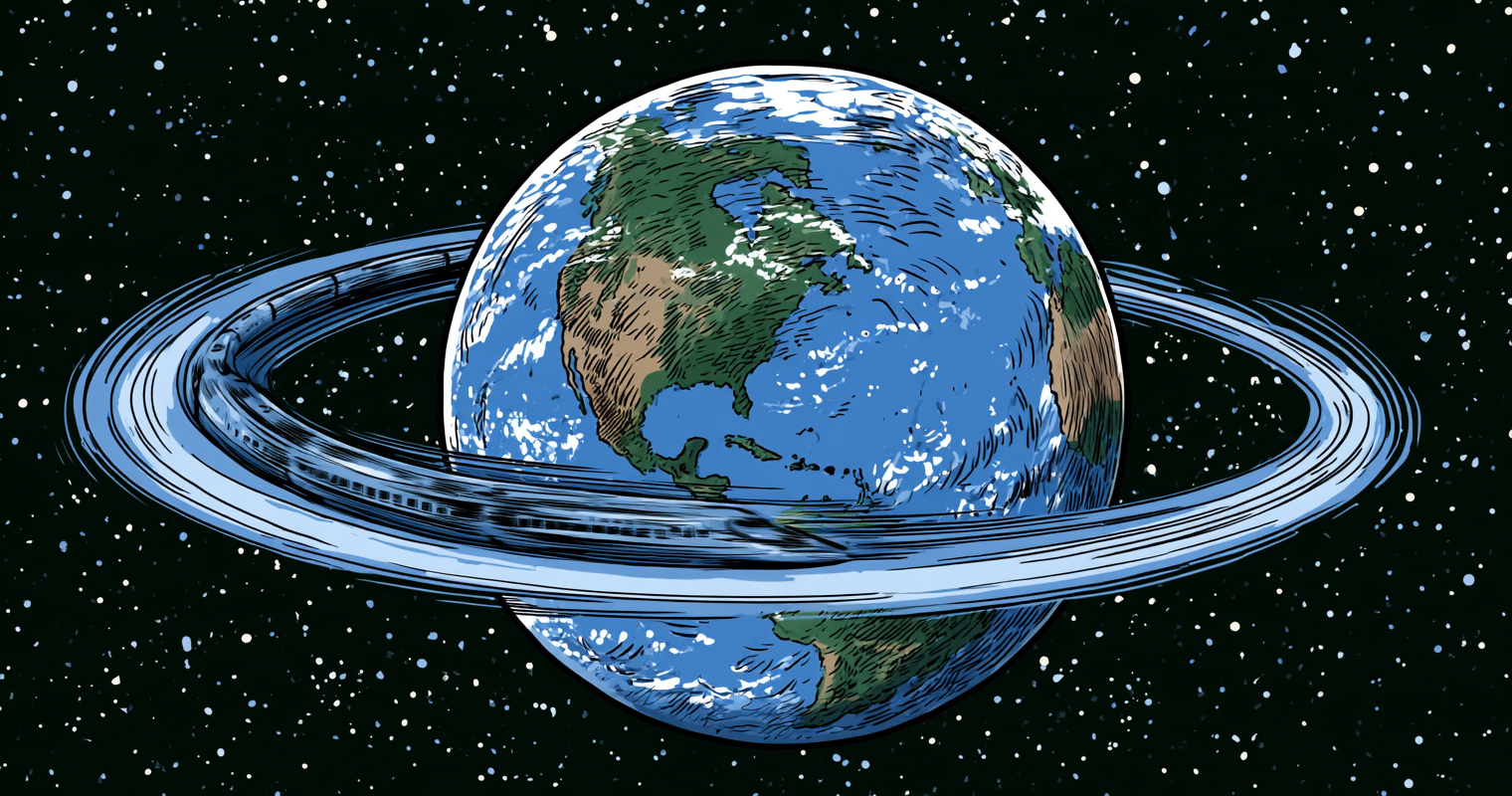
Boring Transportation
Only one form of transportation has felt futuristic for decades… like a mirage always on the horizon. Never close,...



In today’s AMA, we explore the true utility of full self-driving vehicles… what to do when markets crash… and the odds of an OpenAI implosion…
Managing Editor’s Note: Before we get to today’s AMA, don’t forget to go here to sign up with one click to join our colleague Larry Benedict at his Dollar Trap Summit next week…
On September 30 at 8 p.m. ET, Larry is sitting down with Jeff to explain something big that’s about to happen to the dollar… why it poses a threat to your money… and what you can do about it to turn the danger into a profit opportunity.
Most people assume that their money is safe. But the dynamics they see at play are creating warning signs you don’t want to miss…
To hear more about what they see coming – and how you can prepare – go here to automatically add your name to Larry’s guest list.
My favorite chart of the week, shown below, demonstrates how remarkable the pace is for the development of artificial intelligence. It compares the relative cost of a given technology over a period of time.
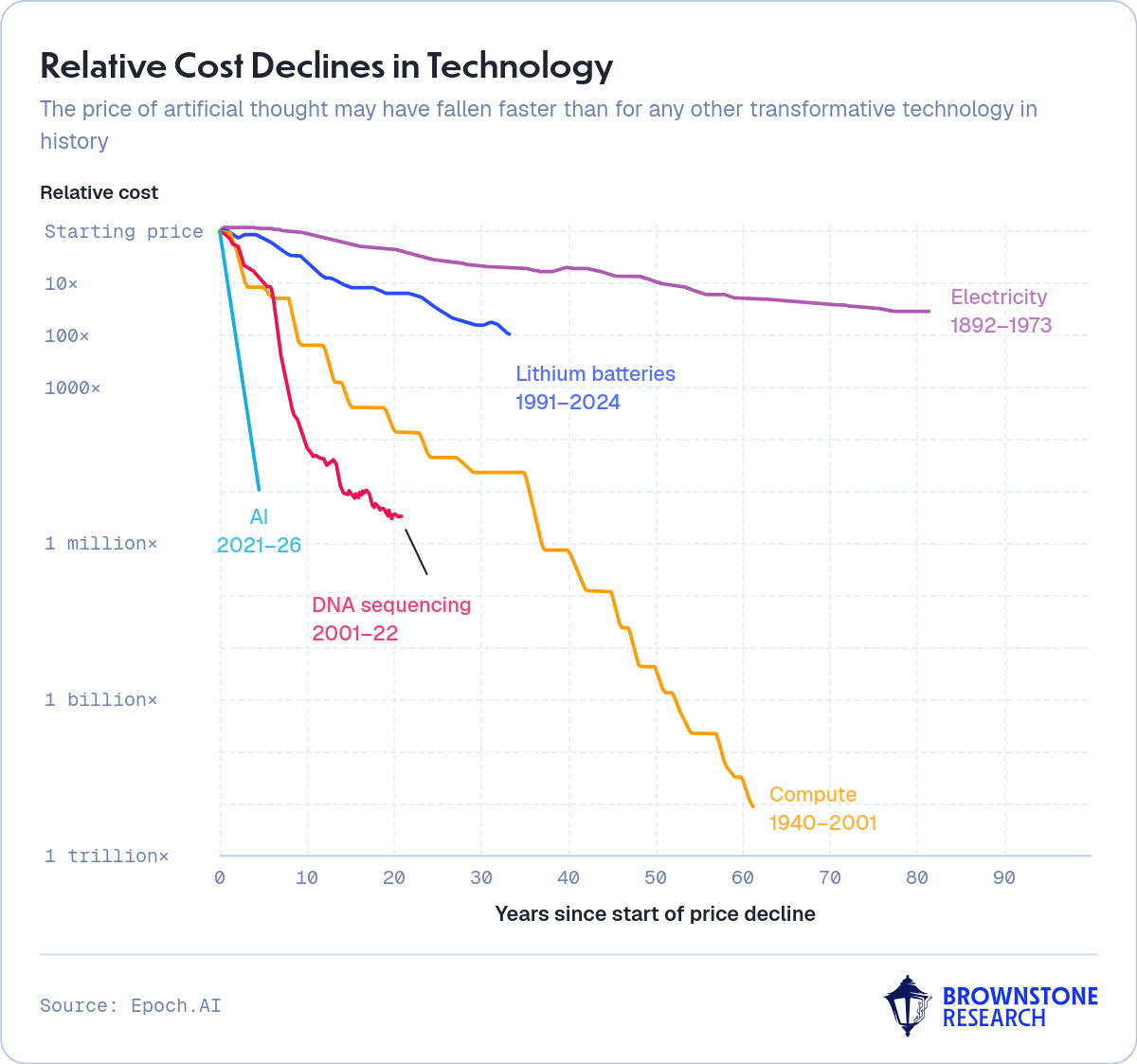
Technologies that experience accelerated development and a number of breakthroughs can expect to see their costs decline exponentially. The faster the breakthroughs and adoption, the steeper the cost declines.
Technologies that innovate slowly, with limited breakthroughs, have much flatter declines in cost over much longer periods of time.
As we can see above, electricity is the flattest cost decline. It’s unfortunate, but not a lot has changed in the technology over the last 70 years, so this comes as no surprise.
Lithium batteries, while they have become cheaper, have only seen incremental improvements in the technology over the last 30 years, with no major breakthroughs.
AI, however, is the stark standout. The exponential decline in cost is unlike anything we’ve seen before.
To put the significance of this into perspective, costs for AI have fallen 47% per quarter since 2023. That’s six times faster than compute and 54 times faster than electricity.
And even more dramatic way to think about this is the cost per unit of performance. For example, OpenAI’s o3 model was released in January 2025, and it was the first to achieve more than 25% on the Frontier Math Tiers 1–3 benchmark. It cost $0.55 to run the model.
This year’s OpenAI GPT 5.6 Luna model achieved the same score for just $0.0015. That is a 377-fold drop in cost in just 18 months. Pretty unbelievable.
We can expect these cost declines to continue in artificial intelligence. Every generation of semiconductor technology results in improved costs per unit of performance. And as AI models evolve, they will also become more efficient in their utilization of resources.
What does it all mean? It’s pretty simple… as costs continue to decline and utility improves, adoption will accelerate.
The adoption of AI on a global scale will be the fastest adoption of any technological advancement in history.
And we have a front row seat.
Have a great weekend,
Jeff
Jeff,
You frequently extol FSD as a breakthrough that the masses are apparently craving. In reality, many people drive because they enjoy it. I understand that the technology is impressive in itself, but are we truly addressing a human need here, or is it just a solution searching for a problem?
I believe the technology industry in general has done a poor job marketing itself, and this is increasingly being acknowledged by prominent individuals as well as a few AI companies. Thanks.
– Shivam S.
Hi Shivam,
Well, I enjoy driving as well, especially in a beautiful place when I am not tired and have the time to enjoy seeing the countryside.
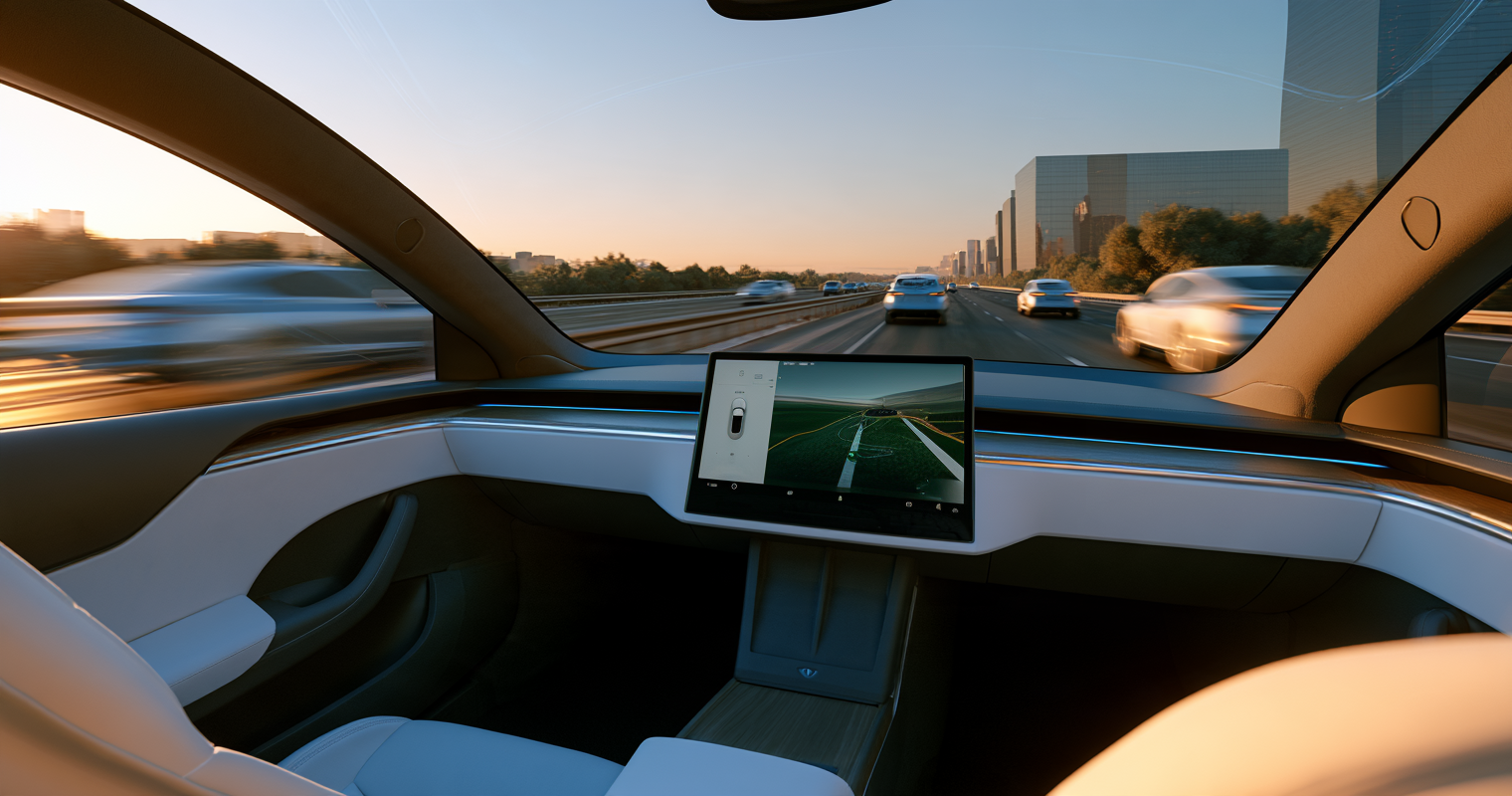
But having had a self-driving Tesla for so many years, I found that I almost always default to the Tesla when I am tired, or when I need to make a few phone calls, or a Zoom call when I am in transit. With full self-driving, it allows me to relax and/or be more focused on my calls.
More specifically to your question, I would argue yes, it definitely does fulfill a human need. Here are a few examples:
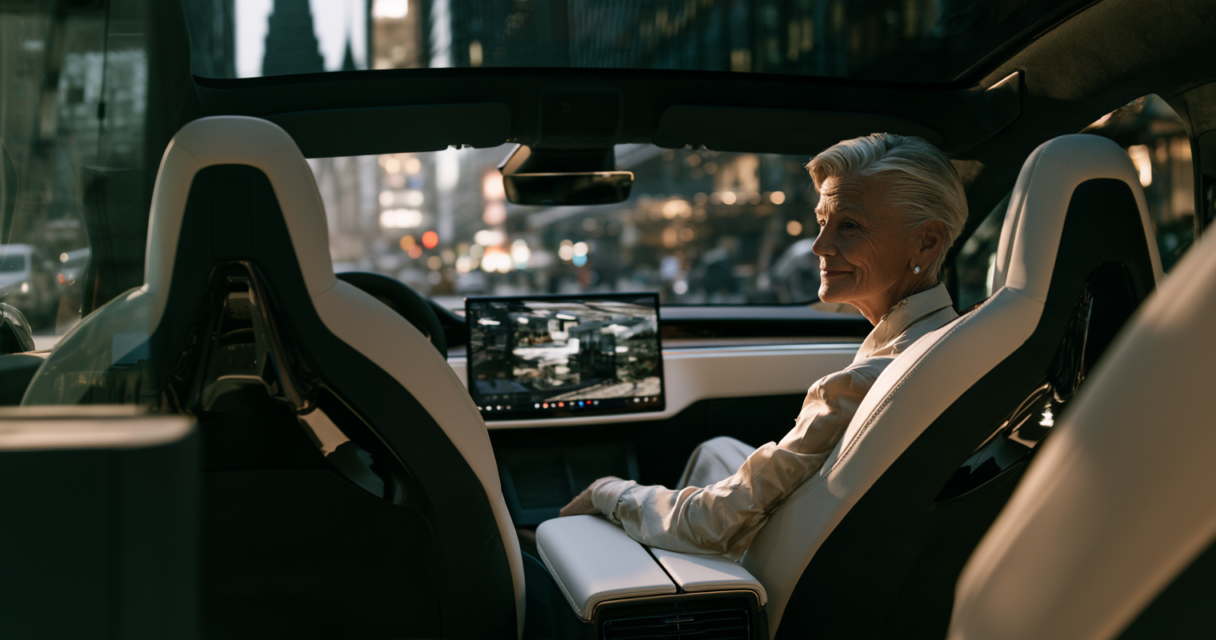
In The Bleeding Edge – Nationwide Autonomy Within a Year, I provided specific examples of a 93-year-old woman, a man with no arms, and a friend of mine who is a quadriplegic.
I would classify all of these examples as a human need, solving a problem that has previously been unsolved.
And as for human wants, that’s where this is a massive market opportunity. While I enjoy driving on beautiful roads, I can’t stand driving through bumper-to-bumper traffic. Teslas are absolutely masterful at removing the stress of heavy traffic. Sit back, relax, and focus on whatever you want to, knowing that the car will drive you there and manage the congestion flawlessly.
I believe that there is a massive market opportunity, a human want, to recapture at least an hour of our time every day through self-driving cars. Not only are they far safer than human drivers, but they free up time, which is our most valuable asset.
And if we take a step back and think about this at a population level, more than a million people die a year from automotive accidents, almost 40,000 of which happen in the U.S. About 95% of those deaths are caused by driver error.
With full self-driving, those deaths would not happen.
If/when the stock market crashes, which stocks and assets would be best to keep and which to sell? Would you consider transitioning to 100% cash? What would you expect from gold and crypto? I’m not asking for a personal recommendation. I’m just curious as to what you plan to do. Thank you.
– George T.
Hi George,
While I wish it weren’t true, at some point in time there will be a stock market crash.
One thing that we can always count on is Wall Street and financial institutions taking things to excess from time to time, and the whole house of cards collapses. Or the government does something really stupid that really blows things up.
I don’t want to disappoint you, but I don’t like the idea of a generic answer to your question. I think that would be irresponsible.
Any investment strategy or defensive positioning would need to depend on what kind of market conditions or bear market we find ourselves in.
Are we in a high or low interest rate environment? Are we in an inflationary or disinflationary environment? Was the crash caused by overleverage by banks? Was it geopolitical in nature? War? Is it caused by a natural disaster? Or even poorly designed regulations, or the absence thereof (like we saw in 2021–2024 with respect to digital assets)?
The cause of the crash and the economic/geopolitical/monetary/regulatory environment that we find ourselves in will inform our investment strategy. Those conditions impact the present and future value of all assets, which need to be analyzed individually.
Being 100% cash at the right time (i.e., before a major market crash) can be great for a short period of time. It enables us to purchase distressed assets when others are fearful. Great gains can be made doing that.
But sitting in 100% cash for an extended period will always result in losing value because the purchasing power of the dollar consistently declines due to the intended devaluation of the dollar (i.e., through the government printing more money).
When we get closer to an impending market crash – and, of course, a bear market – I’ll be providing clear recommendations and strategies for us to navigate whatever environment we find ourselves in.
And when things are falling, I will be providing investment recommendations on how to profit from falling assets. Those times are amazing for buying puts on low-quality assets, which is why I have the Deep Access research service dedicated to exactly that.
When the time comes – and it will, at some point – I’ll definitely be providing my research and analysis of how best for us to navigate whatever conditions we find ourselves in.
I appreciate you being an Unlimited member, and I look forward to providing more detailed and contextually relevant research when that time comes.
As for now, we can enjoy this incredible bull market and the technological revolution that is nowhere near being over.

The Trumps have six figures riding on one tiny investment. Jeff Brown believes a historic October Wall Street launch could send it soaring 5,600%. You can still get in alongside them. Discover what to buy before October.

Brownstone Research founder Jeff Brown and hedge fund “Market Wizard” Larry Benedict are holding an emergency broadcast. They believe an event scheduled by Washington could gut the biggest winners of the AI boom. They’re talking about potential losses of up to 40%… Yet for the prepared, it could be the opportunity of a lifetime. Click here to learn more.
It appears that OpenAI is burning through cash that it doesn’t have. What are the risks that it implodes/goes bankrupt before it can float the IPO?
– Kenneth K.
Hi Kenneth,
Perhaps not surprisingly, this is a topic that my team and I were discussing earlier this week.
While I think most people would say Anthropic and OpenAI will be incredibly successful companies and that there is no chance that they will go bankrupt because they are generating billions in revenue already, you are correct to ask this question.
It is possible, but unlikely.
The major risk that OpenAI – and Anthropic, for that matter – faces is the threat from open-weight AI models that have basically the same performance but can be run for 10% of the cost.
This environment would destroy OpenAI’s competitive position and its gross margins, which could result in investors giving up on the company and no longer funding its massive capital expenditures and debt.
The other risk is that OpenAI’s AI agents wreak havoc somewhere on the internet and cause billions of dollars of damages that the company becomes liable for.
These two reasons are why both companies have been creating chaos and pushing for AI “safety,” with the goal being regulatory capture. They have asked the government to have no liabilities and the regulatory structure that would protect their gross margins and potentially ban open-source AI models.
If OpenAI is successful with its regulatory capture strategy, there would be no risk of going bankrupt. I don’t think this will happen, but if it did, OpenAI would be safe.
There is a larger risk of going bankrupt if OpenAI remains private. Venture capital firms would stop giving OpenAI billions of dollars in an environment where open-weight models start to dominate, collapsing OpenAI margins.
This means that the smartest move by OpenAI – and one fully supported by OpenAI’s investors – is to take the company public as soon as possible before there is any compression in gross margins.
This will allow venture capital firms, private investors, and employees of OpenAI to take their profits off the table, and at the same time raise something on the order of an additional $100 billion to support OpenAI’s future capital commitments.
This is the most likely scenario to happen, almost certainly within the next 6 – 9 months, and unfortunately, I believe that a lot of unsuspecting retail investors will lose their shorts buying into the OpenAI IPO on the first few days of trading.
The current projections for OpenAI are for the company to have a negative free cash flow of about $278 billion through 2030. And while revenue is forecast to reach $350 billion by 2030, these estimates are likely too aggressive, and the company will still be burning through cash. But that doesn’t necessarily mean bankruptcy.
With additional capital from the IPO, OpenAI will have time to adjust its business strategy, access to raising additional capital through secondary offerings, and potentially pursue acquisitions using its own stock.
In short, there are a lot of levers for OpenAI to pull to avoid bankruptcy, especially if it goes public.
Jeff
Add Brownstone Research as your preferred source on Google to see our latest stories in your feed.
 Add as a preferred source
Read the latest insights from the world of high technology.
Only one form of transportation has felt futuristic for decades… like a mirage always on the horizon. Never close,...
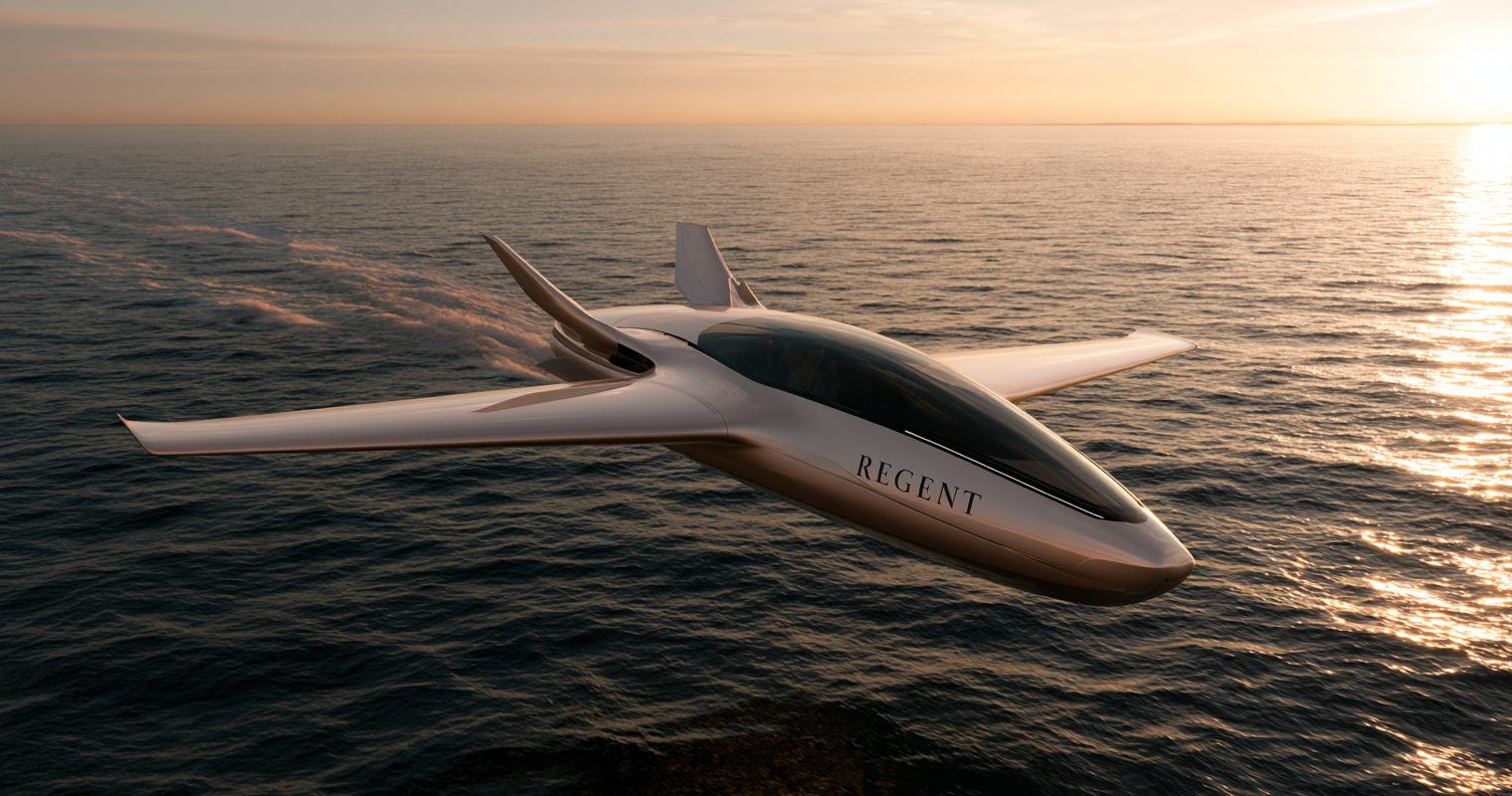
We’ve been waiting for future forms of commercial transportation for decades, and finally that time has come.
It’s now very clear that Tesla and the NHTSA have been working closely together…