



Nationwide Autonomy Within a Year
It’s now very clear that Tesla and the NHTSA have been working closely together…



We’ve been waiting for future forms of commercial transportation for decades, and finally that time has come.
Managing Editor’s Note: The U.S. dollar could break as early as October 7… Not weaken. Not slip a few percent. Break.
That’s according to our colleague, Market Wizard Larry Benedict. Larry says something big is coming for the U.S. dollar, and if he’s right, that means your bonds, your cash savings, even the dollars in your pocket will all be put at risk.
Larry is holding an emergency briefing next week where he will cover exactly what’s happening and what you can do about it ahead of the “reckoning.”
Just go here to sign up to join him next Wednesday, September 30, at 8 p.m. ET.
The Ekranoplan was a top-secret Soviet program.
Its mission was to build a “ship” capable of flying between one and five meters above the surface of water – at speeds up to 550 kilometers per hour.
Shown below, it was a monstrous naval ship capable of flight – equipped with a massive hull, a short wingspan, eight engines across the front of the vessel, and an incredible six nuclear missiles down its spine.
It was the Cold War, after all.
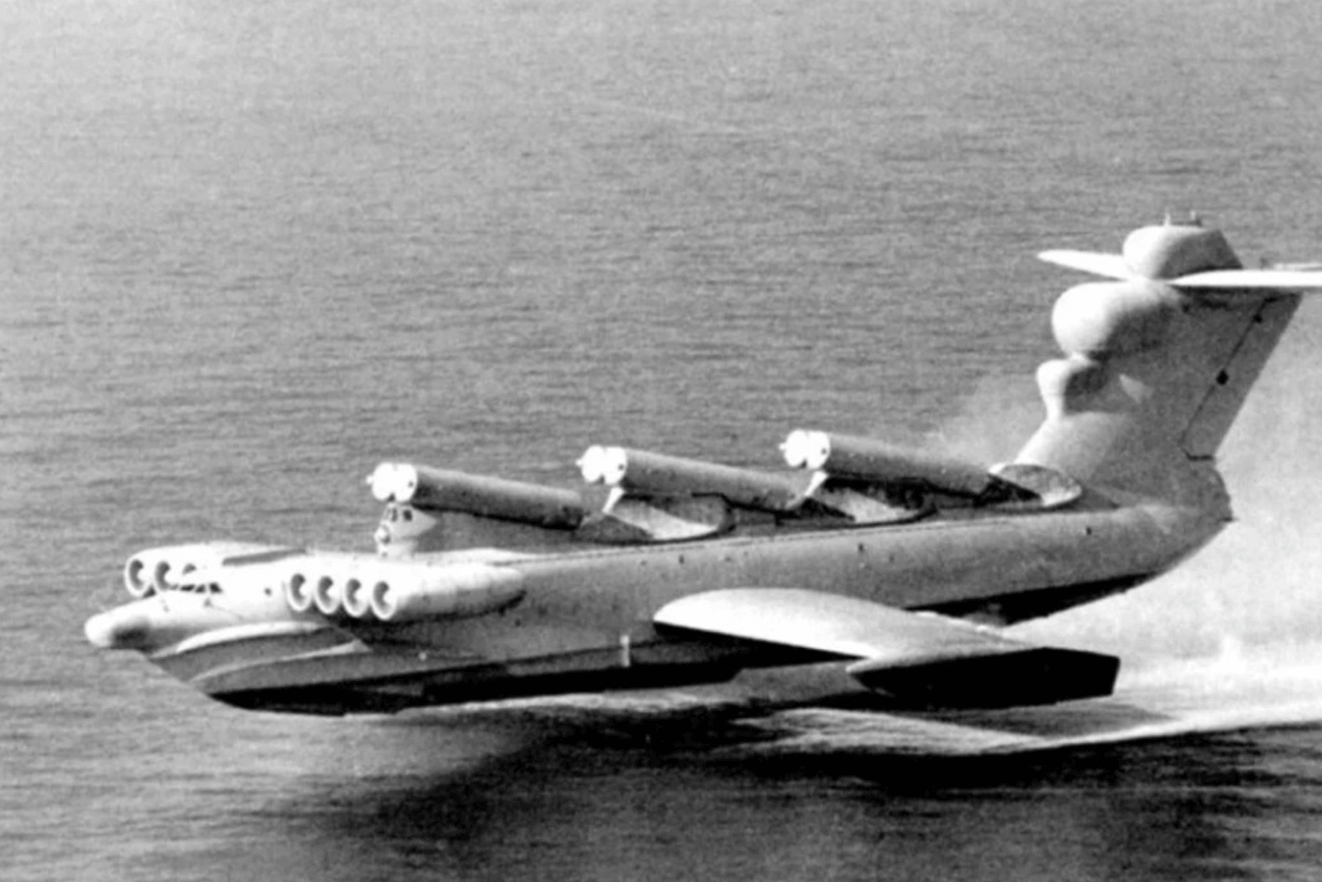
Soviet Ekranoplan | Source: Comrade
Looking at this 350-ton behemoth – with such a short wingspan – it just doesn’t look like it would fly.
But it did.
The Ekranoplan could take advantage of the ground effect, which we can think of like a cushion of air trapped between the wing and the surface of the water.
The aerodynamic magic from the ground effect is a reduction in drag, which increases speed and fuel efficiency.
The Soviets’ interest in such a ship was simple to understand. At top speeds, it was about eight times faster than the fastest U.S. aircraft carrier.
It flew so low, it evaded aircraft radar… and because it flew above the water, it evaded the threat of torpedoes. Other than its cost, it only had one major downside: It could only fly in calm seas, which limited its utility.
The first and only Ekranoplan went into service in 1987, and then the Soviet Union collapsed in 1991.
As for the Ekranoplan, it ended up beached in Derbent, Russia… and a fascinating piece of aerospace and naval history.
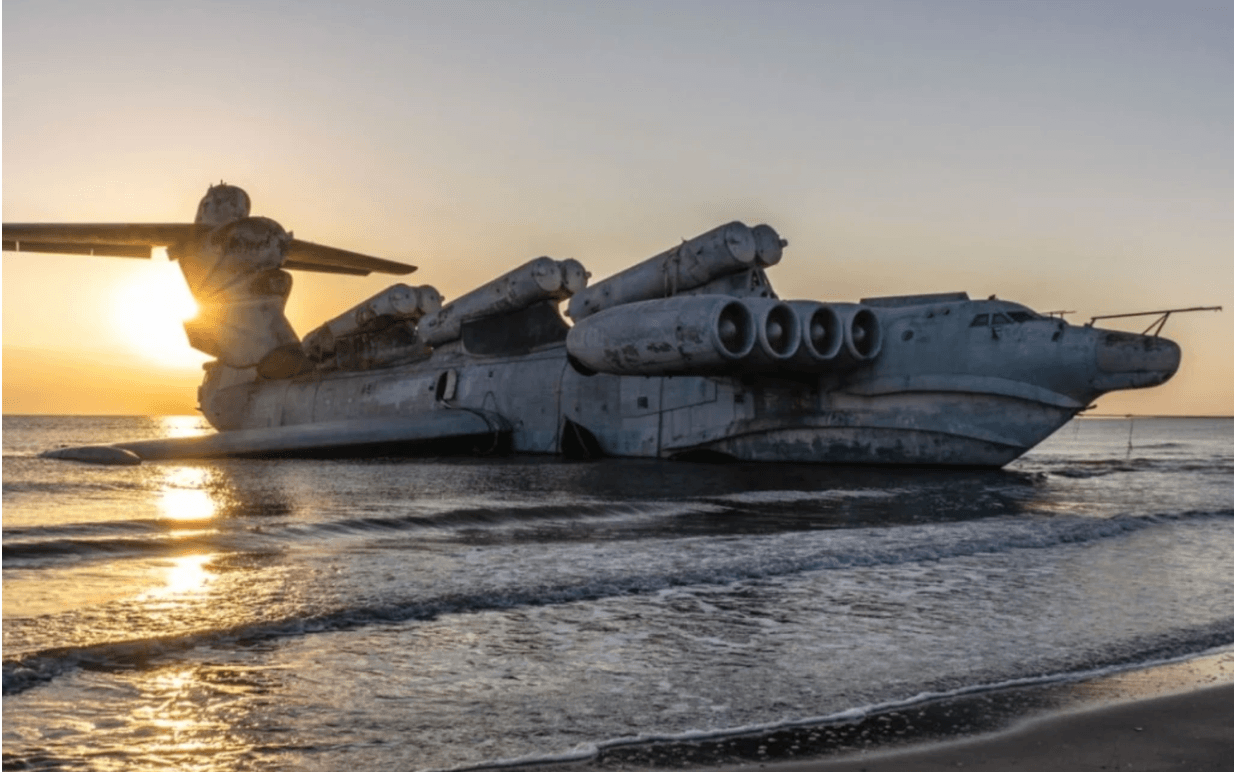
Ekranoplan End of Life, Derbent, Russia | Source: Comrade
With all the exciting developments happening right now in autonomous driving, as well as the return of supersonic commercial aviation – all of which we’ve been exploring in The Bleeding Edge – I’ve been thinking a lot about the future of transportation, which reminded me of the Ekranoplan and what comes next.

Larry Benedict went 20 straight years on Wall Street without a losing year. Jeff Brown recommended Bitcoin at $240 and Nvidia in 2016. Now they've issued the biggest warning of their careers: The U.S. dollar will break on Wednesday, October 7, at 1:00 p.m. ET – on a deadline set by the federal government… It could lose up to a third of its value. Or even half… And the money doesn't vanish. It moves into a market that could have potentially handed you over $410,000 the last time something like this happened. On Wednesday, September 30, at 8:00 p.m. ET, they share all the proof, free. Click here to reserve your seat for free.

In 2024, Wall Street veteran Dylan Jovine told his readers to buy an obscure space stock trading under $4 a share. It ran as high as $151. And anyone who held on had a chance to turn $5,000 into almost $200,000. Now he has reason to believe he's spotted another stock that could do even better. Go here now for the ticker >>>
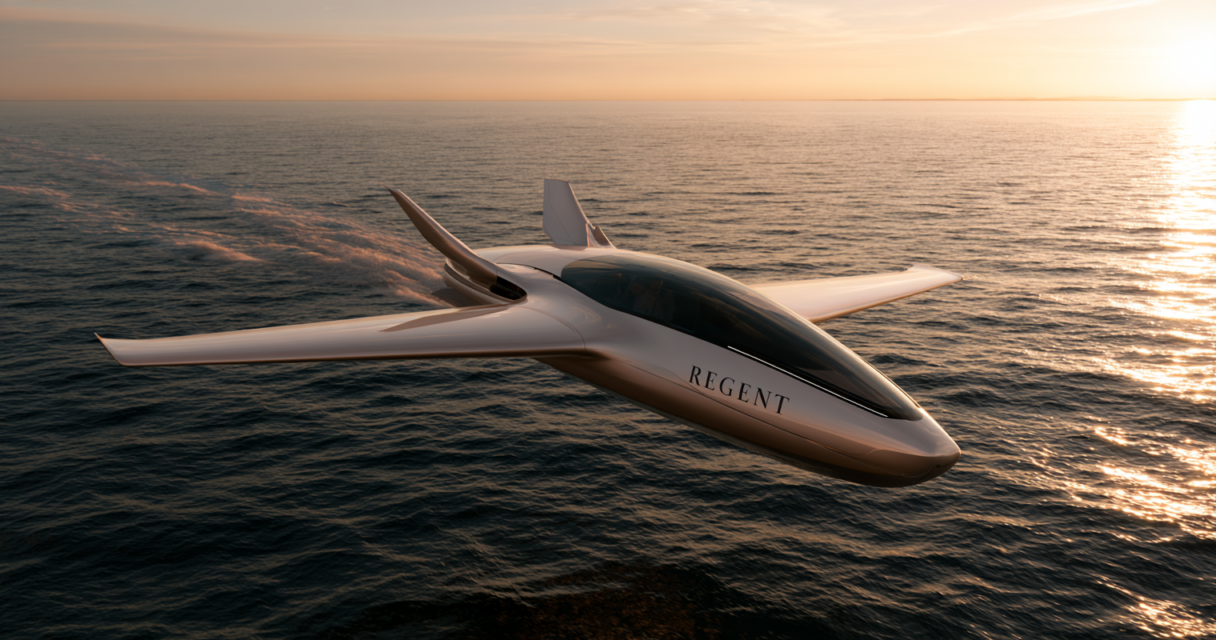
Earlier this month, an aerospace company, Regent, hit a major milestone with the first human-crewed flight of its Viceroy Seaglider, shown below.
Seeing is believing.
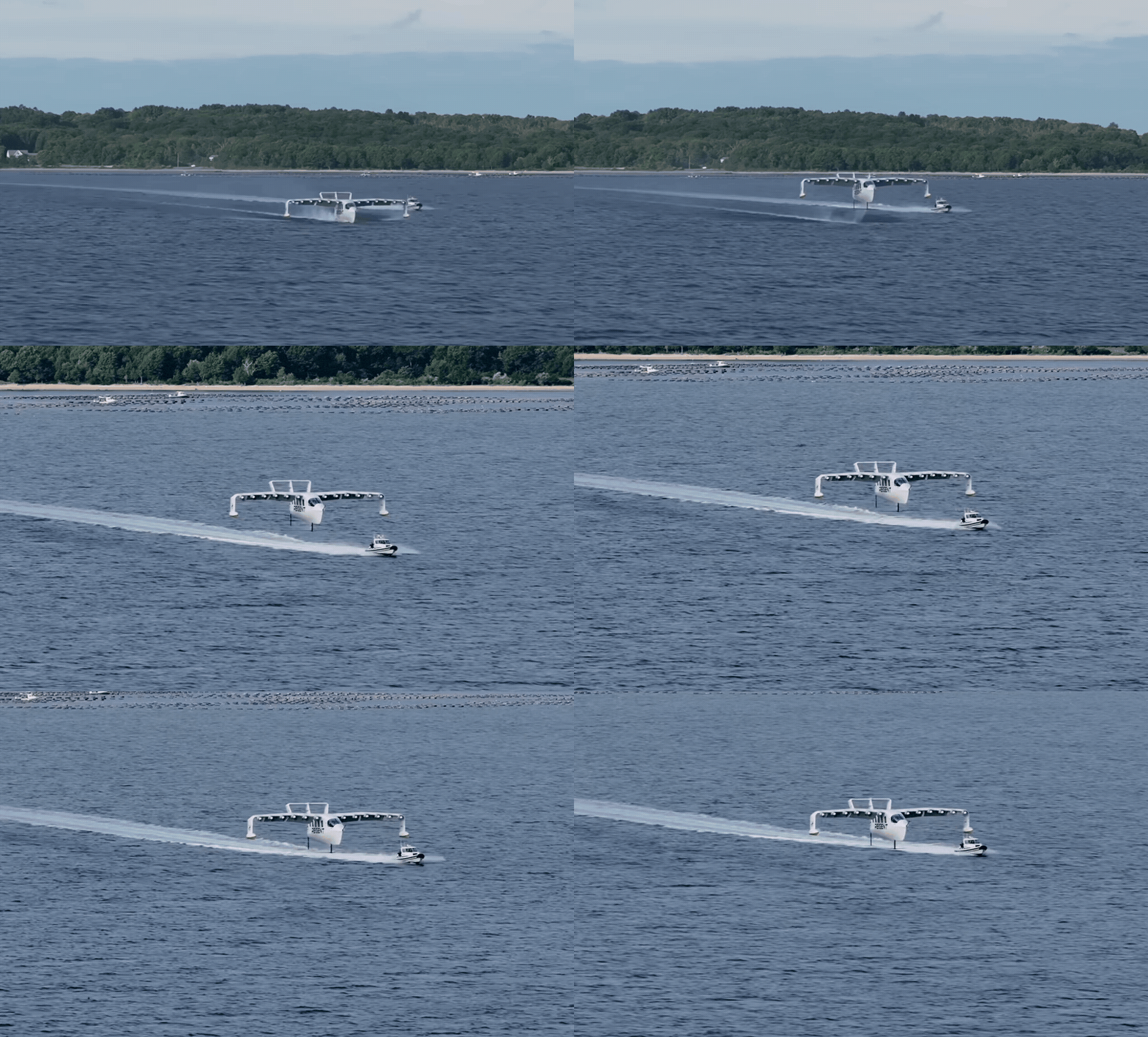
Source: Regent
Naturally, the scale is much smaller than the Ekranoplan, and the objectives are completely different.
Regent’s initial seagliders – which fall under U.S. Coast Guard regulations and not the Federal Aviation Administration (FAA) – are designed to carry 12 passengers, with future versions around 2028 capable of transporting potentially 50 passengers.
Being regulated by the U.S. Coast Guard allows Regent to avoid the time-consuming and expensive process of aircraft certification under the FAA.
This directly impacts time to market, in a positive way.
Because the Viceroy Seaglider takes advantage of the ground effect, its reduced drag and improved efficiency enable it to be fueled entirely by batteries. It is an electric aircraft.
I’ve never been a fan of electric propulsion in commercial aviation because of the power density and weight of the batteries. Economically, it just doesn’t make sense.
But in the case of the Viceroy Seaglider, with the help of the ground effect, the economics do make sense.
The Seaglider has a range of 160 nautical miles at cruise speeds of 180 miles per hour (300 kilometers per hour), with a payload capacity of 3,500 pounds (1,600 kg).
The interior of the Seaglider looks like something we might find in a small regional jet or turboprop aircraft.
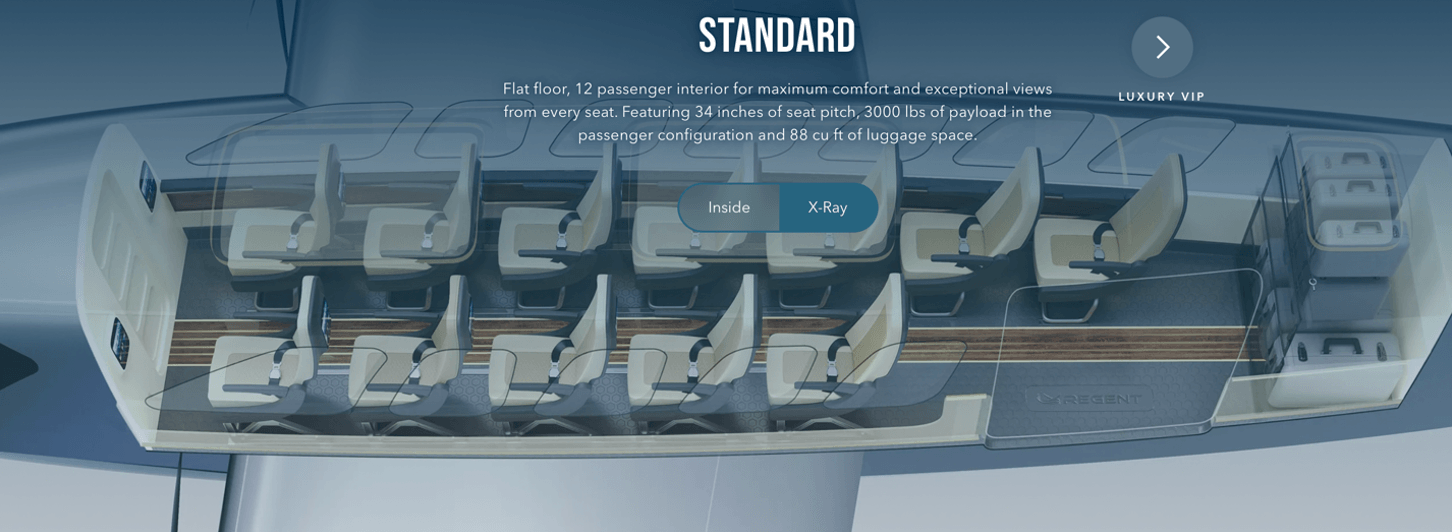
Interior of Viceroy Seaglider | Source: Regent
It may not be intuitive, but the market opportunity for Viceroy Seaglider is worth tens of billions of dollars.
The Seaglider has the ability to connect coastal seaports quickly, efficiently, and comfortably all across the globe.
A trip from Los Angeles to San Diego will be reduced to just a 45-minute flight… and cheaper than all other forms of transportation, with zero risk of any traffic.
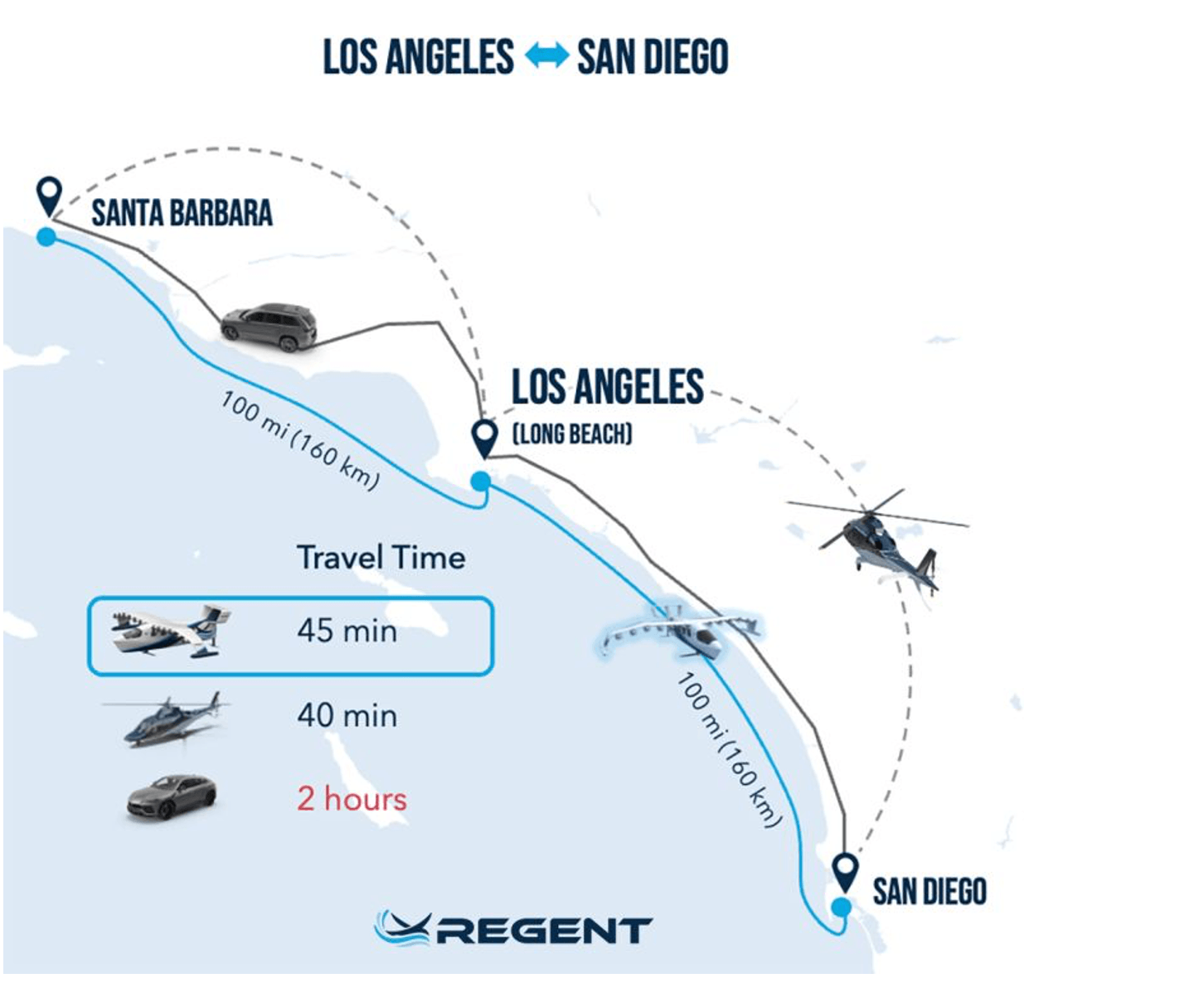
Source: Regent
Whether it is:
The market opportunity for this next generation of commercial transportation is everywhere.
Technology like this will make nearly impossible daily commutes possible, and also dramatically reduce travel time and discomfort for coastal travel.
As an indication of the level of interest from the aviation industry, Regent already has an order book that amounts to $10 billion of future business, as long as it succeeds in commercializing its technology.
Naturally, just like the Ekranoplan, there are certainly defense applications for Regent’s technology.
Because of its ability to fly below radar and above sonar, its seagliders are nearly invisible to an enemy.
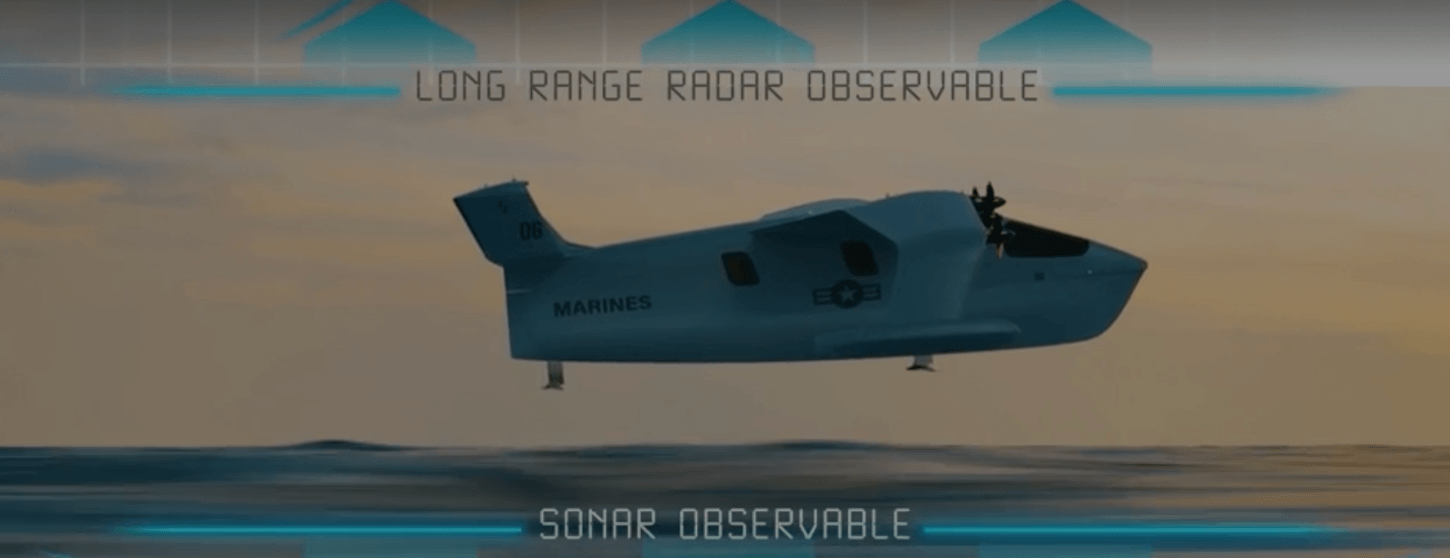
Source: Regent
A Viceroy designed for defense can be used for logistics, medevac, patrol, or troop movements.
A smaller Squire seaglider can be used for much smaller payloads of just 50 pounds.
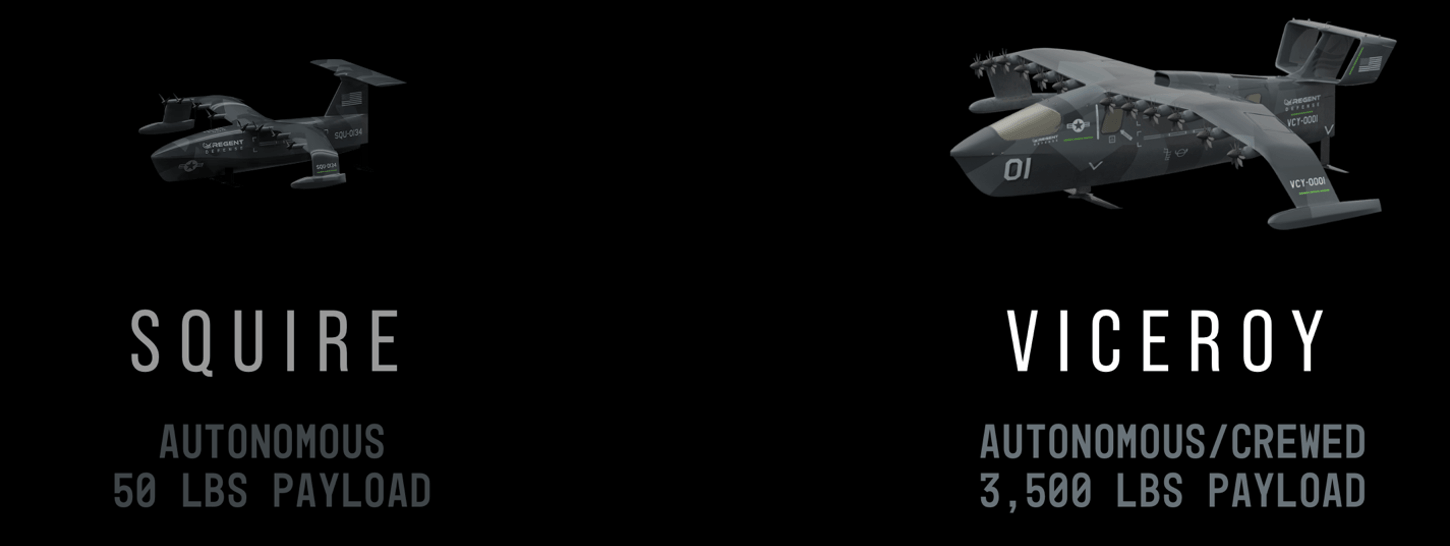
Regent’s Defense Seagliders | Source: Regent
Importantly, both the Viceroy and the Squire are being designed with the capability of fully autonomous flight.
The latest success that Regent has had hitting its milestones led to a $240 million venture capital raise at what I estimate to be a $1 billion-plus valuation.
This access to capital is exactly what Regent needed to achieve its target of enabling the first commercial flight operations by late 2027.
The Twenty Five, positioned as a new luxury coastal travel company, has been announced as Regent’s first delivery and launch partner, having already ordered 30 of the Viceroy Seagliders.
The initial focus of The Twenty Five for services will be on the U.S. East Coast, serving routes like New York to the Hamptons, Boston to Nantucket, Palm Beach to Miami, and Miami to the Caribbean.
We’ve been waiting for future forms of commercial transportation for decades, and finally that time has come.
And all of these technology breakthroughs are happening within the next two to three years.
I can’t wait to enjoy them all.
Here’s to the future of transportation,
Jeff
Add Brownstone Research as your preferred source on Google to see our latest stories in your feed.
 Add as a preferred source
Read the latest insights from the world of high technology.
It’s now very clear that Tesla and the NHTSA have been working closely together…

These two IPOs will be nothing more than liquidity events for the effective altruists, venture capital firms, and private...

Over the last week, we have discovered that this is a massive, well-coordinated psyop carried out by some powerful...