




The Dems’ Hit List
We should expect Democrats to start checking off names once they take the gavels in January


Whoever rebels first will write the rules of tomorrow.
Editor’s note: Tonight, Jeff Brown and Larry Benedict will reveal “Penny Tech Trades,” where every trade costs less than $1 per contract.
Wall Street is already pouring billions into this market, and it is federally regulated by the same agency that oversees the futures markets. They will trade their own money live on camera on at 8 p.m. Eastern. As a thank you for attending, you’ll receives free trade ideas with no strings attached. Add your name to the guest list with one click.
“Go to hell.”
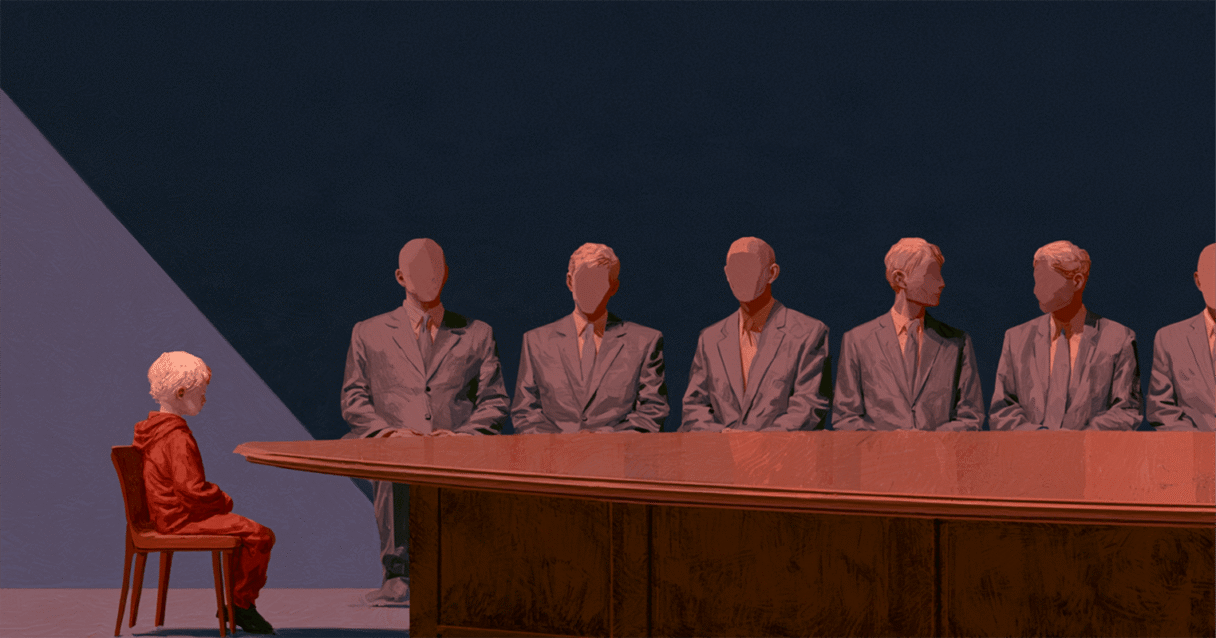
That’s what a 9-year-old named Scott said while sitting in the principal’s office of his public elementary school in Framingham, Massachusetts. The year was 1978.
Lined up across from him were seven adults: the principal, his two classroom teachers, the school’s guidance counselor, a child psychologist employed by the school system, his mother, and his father, Peter Gray.
They took turns explaining to Scott that he had to attend school and do whatever his teachers told him.
Scott spent years in what his father would later call “planned rebellion.”
To Scott, school was a prison, and he had done nothing to deserve imprisonment.
When he said those three words, his parents began to cry. They knew their son was right.
An unusual response for parents. But Peter Gray was no typical parent.
He was a professor of biopsychology at Boston College who studied the drives and emotions in mammals. Peter understood motivation at a level the people across the table did not. He saw the system as the problem, not the kid.
What happened next defined his career for four decades.
The family found a new school 10 minutes away called Sudbury Valley. It had been founded in 1968 by a group of parents on a 10-acre former estate. Every rule is written by the School Meeting, where each student and staff member gets one vote, regardless of age.
Rules are enforced by a Judicial Committee made up mostly of students. There are no classes unless students ask for one. No curriculum. No grades. No tests.
Scott enrolled at age 10. His anger subsided. He was happy again.
Yet his father’s skepticism grew.
Peter wanted to know whether a school with no requirements could prepare a child for college and a career. So he did what a scientist does.
In the mid-1980s, he tracked down the school’s graduates. Roughly three-quarters had gone on to higher education and reported no trouble getting in or doing well once there. The study ran in the American Journal of Education in 1986.
Gray didn’t stop there.
He surveyed anthropologists who had lived among hunter-gatherer bands on three continents and found the same pattern in every band.
Adults did not instruct children. Children played in mixed-age groups all day and learned what they needed to know. Sudbury Valley, he concluded, was the functional equivalent of a hunter-gatherer band for modern Massachusetts. That argument became his 2013 book, “Free to Learn.”
If you have children (or grandchildren), then you probably know…
When the adult steps away from the game, the kids figure it out faster.
That, in essence, is what the industry must learn about tokenized stocks.
Like Scott Gray in 1978, this nascent industry is eager to figure things out for itself. Meanwhile, the adults want to keep it penned in.
One of those adults is the NYSE.
On November 9, Ava Labs announced that Avalanche will serve as the core ledger technology for clearing and settlement on a planned tokenized securities platform affiliated with the NYSE.
AVAX, Avalanche’s native token, jumped about 8% on the day.
Avalanche is a public, permissionless layer-one blockchain compatible with Ethereum. So the headline reads as if the NYSE is stepping onto a public chain. But that’s not exactly the case.
The NYSE is not building on Avalanche’s public network. According to CoinDesk, the platform pairs the NYSE’s Pillar matching engine, the same technology that runs its main exchange, with a custom chain built on Avalanche’s technology and tailored to regulatory requirements.
The NYSE’s head of digital issuance, Dennis Lee, put the solution plainly. The ledger needed to “let us control who can take part.”
The setup will look a bit like this…
Trades still happen on the NYSE’s matching engine. Avalanche’s software then records who owns what and settles the trade.
It’s a database.
Now, a public blockchain is also a database. But it does something that a private ledger can’t… Thousands of strangers who do not need to trust one another can reach agreement, or consensus, without anybody in charge.
It would be as if each U.S. state tallied an election and arrived at a result without a federal government or centralized entity to certify it.
That’s what makes the technology so incredible. But the NYSE seems hesitant to embrace it.
Once again, the old guard is inserting itself and imposing old methods on new technology. After all, they’re the adults in the room.
There is good news in the fine print, though.
The new solution is multichain. Transfer agents such as Securitize, tZERO, Broadridge, Computershare, Equiniti, and Superstate will be able to settle through it.
And the system is designed for 24/7 trading and atomic settlement.
There’s also the bigger picture to consider…
Recently, Nvidia's stock went down. But a brand-new kind of trade on Nvidia, costing less than $1 per contract, increased 4,445% (from 2 cents to $1) in just two days. Do you know another trade on Nvidia this year that has increased 40x? On Microsoft, the stock went nowhere for 12 days. “The Penny Tech Trade” increased 952% over two weeks. They're called “Penny Tech Trades.” Tonight at 8 p.m. ET, Jeff Brown and Larry Benedict will show you exactly how they work, on camera, with their own money. Click here to save your free spot.

The last time this Washington event happened, more than $600 billion flowed into the market over the next 12 months. Handing everyday Americans a chance to potentially pocket tens of thousands of dollars. Now Larry Benedict, the hedge fund legend who went 20 straight years with zero losing years… Says the window of opportunity is open again… and billions could surge into the market as soon as December 9. And he’s giving away the ONE three-letter ticker you need to get in front of it. Click here to get Larry’s ticker FREE.
Intercontinental Exchange, or ICE, owns the NYSE. ICE also owns half of OKXICE, the joint venture with the crypto exchange OKX that we wrote about in “You Got to Let the Benz Drive.”
OKXICE announced this morning that it will open for trading on November 23.
More than 70 assets, including 59 Direxion ETFs and shares of Coinbase, Circle, Robinhood, Strategy, Securitize, BitGo, and Better.com will be available. Those are the companies that did not object to having their shares tokenized and traded on the exchange.
Sixty-seven objected, including all of the Magnificent Seven, JPMorgan, Goldman Sachs, and Wells Fargo.
What makes OKXICE interesting is how it differs from what the NYSE is building with Avalanche.
ICE does not tokenize anything on OKXICE. An unaffiliated party tokenizes the asset. It then trades on the OKXICE venue.
This is the setup that eventually reaches you and me. It is third-party tokenization of real shares that any venue can accept, so long as it follows the SEC’s rules. More venues mean more services built on top.
Vaults that put idle shares to work, lending markets, autonomous agents that rebalance at 3 a.m. on a Sunday – all of it will gain adoption as tokenized assets build momentum.
That is what the NYSE and Avalanche deal lacks. It is not public facing, and it will not touch DeFi.
It would be shortsighted to celebrate Monday’s news. It would also be shortsighted to dismiss it.
This is not one solution against the other.
ICE is building a bridge from the old market toward the onchain world with the NYSE and Avalanche. And I give it some credit for that. Meanwhile, with OKXICE, it is building something closer to a native solution.
In time, ICE and the NYSE will learn that the solution that offers more services with less friction is the better path forward… and they will embrace it.
The hard part is that every adult in finance is trying to tell everyone else how this should work.
Wall Street’s trade group, SIFMA, asked the SEC to flip the tokenization exemption from opt-out to opt-in, extend the objection window to 90 days, and said it would support delaying launches.
Nasdaq’s guidance to its listed companies calls the exemption a “shadow market” and frets about shareholder voting and knowing who owns the stock. Which are odd concerns to prioritize.
Broadridge’s latest ProxyPulse shows retail investors voted 27.5% of their shares this year, a figure that has drifted lower. Most individual shareholders do not vote. And Broadridge has had onchain proxy voting live since April.
Then there was the full-page ad in the Wall Street Journal, paid for by a 501(c)(4) with ties to SIFMA, warning CEOs that tokenization was “their problem.”
That same week, the firms in that neighborhood went live on DTCC’s own tokenization service. JPMorgan, Citi, Bank of America, Morgan Stanley, and Citadel Securities are day-one participants. JPMorgan told OKXICE it did not want its shares tokenized. Citadel told the SEC in December 2025 that DeFi deserves no broad exemptions.
Wall Street is objecting to the public marketplace, lobbying against it, buying ads to pit the public against it – all so it can buy time to build its walled gardens.
This is the moment to step back and take a temperature check.
The institutions we think of as the adults are lined up across the table. They are taking turns explaining why the rules exist and why we need them. And the advocates for public, permissionless systems are the kid telling them to go to hell.
Tokenization is happening no matter what. The genie is out of the bottle.
The only question is who is willing to cross the line Wall Street is drawing and give the market what it wants.
Whoever rebels first will write the rules of tomorrow.
Your Pulse on Crypto,
Ben Lilly
Editor, Chain of Thought
Add Brownstone Research as your preferred source on Google to see our latest stories in your feed.
 Add as a preferred source
Read the latest insights from the world of high technology.
We should expect Democrats to start checking off names once they take the gavels in January

We are applying yesterday’s rules to tomorrow’s solutions, and calling it progress.