




Gateways, Not Sandboxes
The venue that wins tokenized stocks will make buying tokenized shares easy and aid the user in choosing which...


These networks do more than elect politicians. They shape policy. And every so often one of them shows its hand.
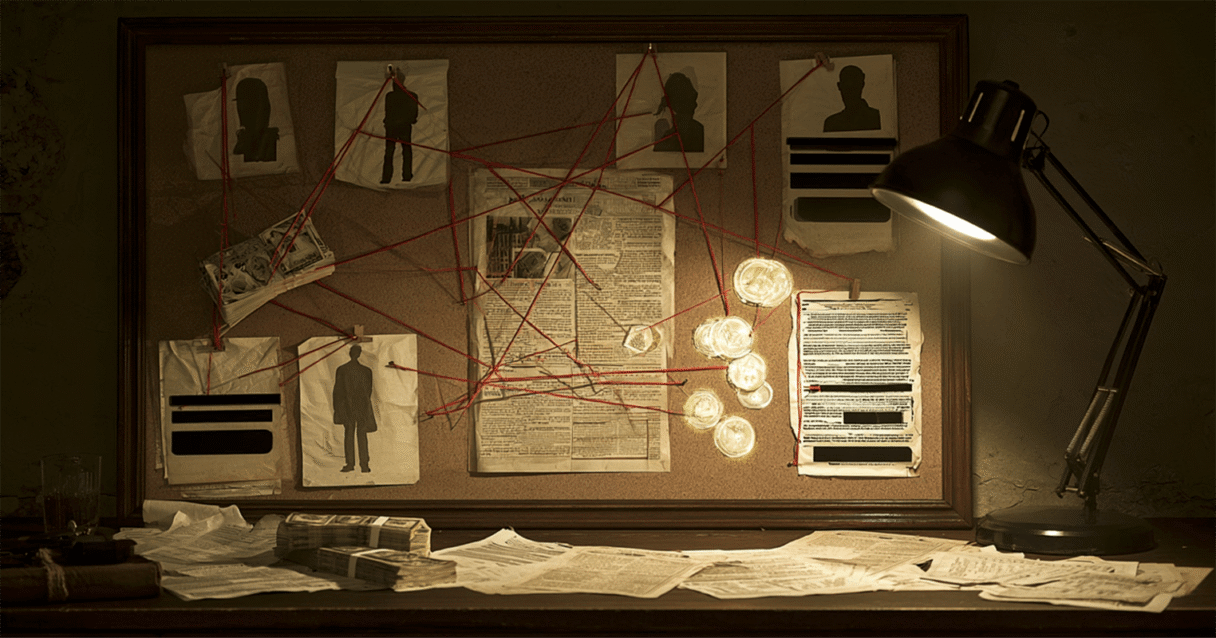
Dark money runs Washington, D.C.
We all intuitively know this.
But if you explain how it works – that anonymous political spending influences (and sometimes sways) elections and policy – it sounds like conspiracy.
It’s not.
Outside spending on the 2024 federal elections hit a record $4.5 billion, and more than half of it came from groups that do not fully disclose where their money comes from.
That figure was roughly double what it was in 2020.
Dark money exists because of a handful of rules.
A 501(c)(4) is a tax-exempt “social welfare organization.” Its stated purpose is to promote the general welfare of a community. That’s a broad mandate, and it comes with two features that matter.
The group can lobby without limit. And it can engage in political campaigns, so long as politics is not its “primary” activity. What counts as primary is open to interpretation.
In 2018, the IRS made the setup even more opaque…
That’s when it announced it would stop collecting donor names from these groups. A court threw that out on procedural grounds, so the Treasury finalized it as a formal regulation in May 2020.
Today only charities and political committees are still required to tell the IRS who funds them. A 501(c)(4) keeps its donor list in a drawer… and only pulls it out if audited.
These networks do more than elect politicians. They shape policy. And every so often one of them shows its hand.
That’s what happened over the weekend in the pages of The Wall Street Journal.
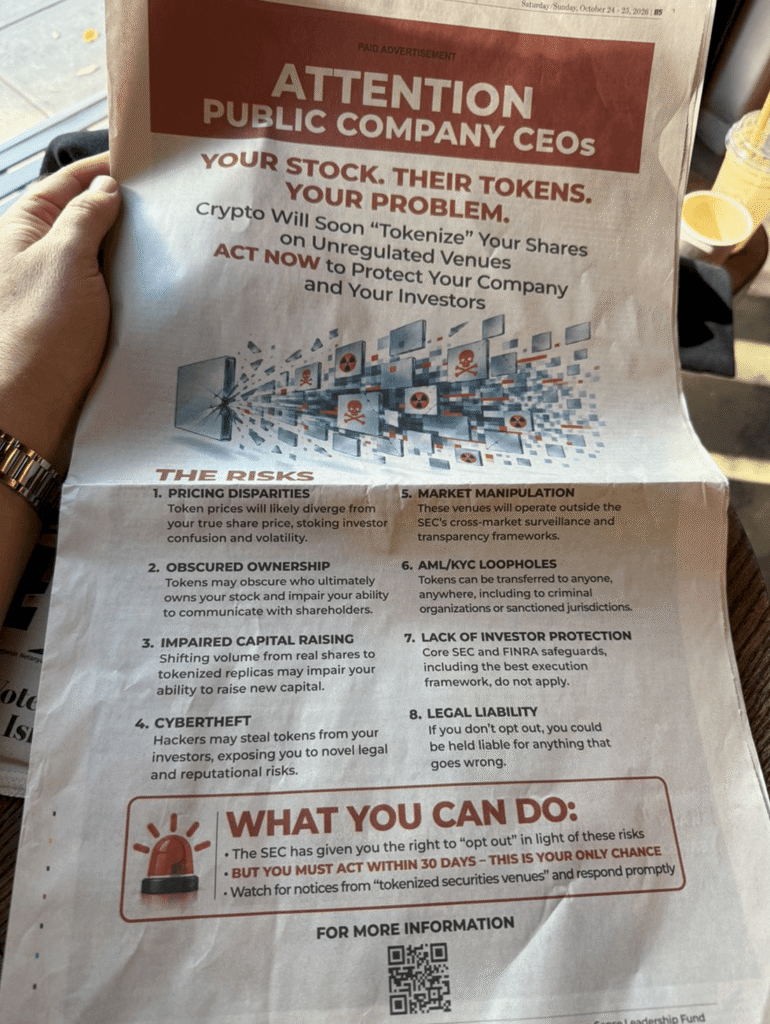
A full-page ad ran in the Journal’s October 24-25 weekend edition on page B5 of the business section.
You can read it for yourself…
Source: X.com @nickisanders
There’s a lot to unpack here…
The ad warns executives that digital asset firms are about to tokenize their companies’ shares without authorization and trade them on “unregulated venues.”
It goes on to list several dangers – pricing disparities, obscured ownership, impaired capital raising, cybertheft, market manipulation, etc.
And the kicker… legal liability for the CEO personally.
It reads more like a threat than a notification… which I suspect was the point.
The problem is that much of the ad is wrong.
These assets will not trade on unregulated venues. The SEC issued an innovation exemption on September 17 that specifically regulates these venues.
The tokens must carry the same economic and voting rights as the underlying shares. Every trader must pass identity and sanctions checks. Trades must be published within 10 minutes. Trading halts when the stock halts on its home exchange. The antifraud rules still apply.
Another interesting detail is the framing.
The ad alleges that “crypto” is doing the tokenizing. But the venue furthest along on tokenization is OKXICE, a joint venture half-owned by Intercontinental Exchange, the parent of the New York Stock Exchange.
All of this raises the question…
Who paid for this thing?
I couldn’t help myself. I went down a rabbit hole to find out.
The entity behind the ad is the Common Sense Leadership Fund (CSLF).
As you may have guessed, it is a 501(c)(4).
The donors are hidden by design. But the group’s own tax filings, which are public, tell us a fair amount.
Kevin McLaughlin is president, paid $400,000 a year. He spent nearly a decade at the National Republican Senatorial Committee and ran it as executive director for the 2020 cycle.
On the board are Haley Barbour, Scott Reed, and Parker Poling.
Barbour is a former Republican National Committee chairman and Mississippi governor who founded one of Washington’s largest lobbying firms. Reed was the U.S. Chamber of Commerce’s chief political strategist. Poling ran the House Republicans’ campaign committee.
This is not the Elizabeth Warren crowd. It is the professional Republican political class.
The fund’s top donor in its most recent filing is the American Action Network (AAN), another 501(c)(4). The AAN’s largest known funders include the Business Roundtable, which gave more than $7.2 million in a single year during the 2017 tax fight. The Business Roundtable includes members such as Jamie Dimon of JPMorgan Chase, Jane Fraser of Citi, Brian Moynihan of Bank of America, and Charles Scharf of Wells Fargo.
There’s the other party…
CSLF has a super PAC called the Eighteen Fifty-Four Fund. Unlike the nonprofit, a super PAC must report its donors to the Federal Election Commission. For all intents and purposes, the Eighteen Fifty-Four Fund and CSLF are one and the same.
In fact, the Eighteen Fifty-Four Fund is primarily financed by CSLF, which has sent it more than $7 million since 2022, with another $400,000 from the AAN.
This is where Citadel’s Ken Griffin enters the story.
Griffin does not write checks to the Eighteen Fifty-Four Fund directly. He doesn’t need to. In April 2022, a super PAC called American Patriots PAC gave the Eighteen Fifty-Four Fund $1 million. American Patriots PAC is a Griffin vehicle. He seeded it with $500,000 in 2021, had put in $6 million by mid-2024, and added $2.5 million more this spring. He is its dominant funder.
Separately, Griffin gave $5 million to the Congressional Leadership Fund in May, and that fund sent the Eighteen Fifty-Four Fund $80,000 in 2024. Griffin doesn’t give to CSLF directly, but in each case the money flows toward its super PAC.
Citadel’s interest is not subtle.
Last December, Citadel Securities wrote the SEC arguing that decentralized finance protocols should be regulated as exchanges and broker-dealers and that the commission should grant no exemptions from those definitions.
Citadel seems not to grasp, or not to care, that DeFi is public and permissionless infrastructure rather than a walled garden layered with middlemen.
The firm has no interest in seeing that type of infrastructure take root. After all, it is the middleman skimming off retail.
None of this proves who exactly paid for the Journal ad. And it doesn’t mean that any of the names mentioned above were personally involved in the ad’s design or publishing.
That’s the entire point of the dark money web.
But what we do know is that many of these parties told OKXICE they don’t want to tokenize their shares. This includes Goldman Sachs and Wells Fargo from last week. And JPMorgan Chase from today.
And then there’s this…

Forget 99% of stocks. With Larry Benedict’s “One Stock to $100K” strategy… You could potentially see wins up to $1,245… $950… and $1,325 in less than 24 hours… All by trading one special ticker. The catch? You must act BEFORE November 4. See How Larry’s “One Stock to $100K” Strategy Works While You Still Can (Including the Ticker)
On December 18, President Trump could take a personal stake in a brand-new energy company. Google, Nvidia, and Goldman Sachs already own a piece. It’s going public very soon… but you can get beforehand, thanks to a unique setup. Jeff Brown shows you how with as little as $500 – and names the stock, for free, in this video.
Ken Bentsen is president and chief executive of the Securities Industry and Financial Markets Association, or SIFMA. It is Wall Street’s main trade group, and its membership is made up of the broker-dealers, banks, and asset managers that tokenization is set to disrupt.
On October 19, SIFMA sent the SEC a letter on the innovation exemption. It asked the commission to require “affirmative issuer consent,” meaning companies would have to opt in rather than opt out.
It also asked for “a longer objection period” and “a universal issuer opt-out.” It raised questions about investor protection, illicit finance, trading volume limits, and beneficial ownership. It noted that venues “may begin operating within 30 days” and that issuers had already begun receiving notices.
The next day, Bentsen went on Bloomberg Television to make the case. He raised the problem of a stock trading across traditional exchanges and new tokenized venues at once, “fragmented trading and pricing,” and whether the new venues operate within “established market structure protections.”
Four days later, a full-page ad – complete with skull and crossbones – making the same argument appeared in the Journal.
Maybe it’s a coincidence.
Maybe…
But the entities mentioned earlier in the dark money flows are the same entities involved with SIFMA: the banks.
And here’s the real kicker…
This morning, the Depository Trust & Clearing Corp. announced its own tokenization service is live.
The DTCC is the plumbing of the U.S. stock market. Its depository holds more than $114 trillion in securities and keeps the official record of who owns what. Under a no-action letter the SEC issued last December, it can now mint tokens backed one-for-one by those securities.
At launch, 34 securities are eligible, a mix of large-cap stocks, index ETFs, and Treasuries, representing about $30 trillion in market value. The tokens move between registered wallets around the clock on the Canton Network and DTCC’s private chain.
Look at the launch partners. Twenty firms signed on. The list includes some familiar names from earlier: JPMorgan, Citi, Bank of America, Morgan Stanley, Barclays, UBS, State Street, Fidelity, and Citadel Securities.
The firms are not opposed to tokenization.
They’re opposed to tokenization they do not control.
The fight over the innovation exemption is a fight over who gets to market first, on whose rails, with whose record of ownership.
DTCC’s version keeps the ledger with the incumbents and ensures the banks continue to act as middlemen.
We have been saying it for months: The banks will not go down without a fight. This is just more proof.
They know their margins are at risk, and they are willing to spend serious money, through channels built to hide where it came from, to protect their turf.
This is far from over.
Your Pulse on Crypto,
Ben Lilly
Editor, Chain of Thought
Add Brownstone Research as your preferred source on Google to see our latest stories in your feed.
 Add as a preferred source
Read the latest insights from the world of high technology.
The venue that wins tokenized stocks will make buying tokenized shares easy and aid the user in choosing which...
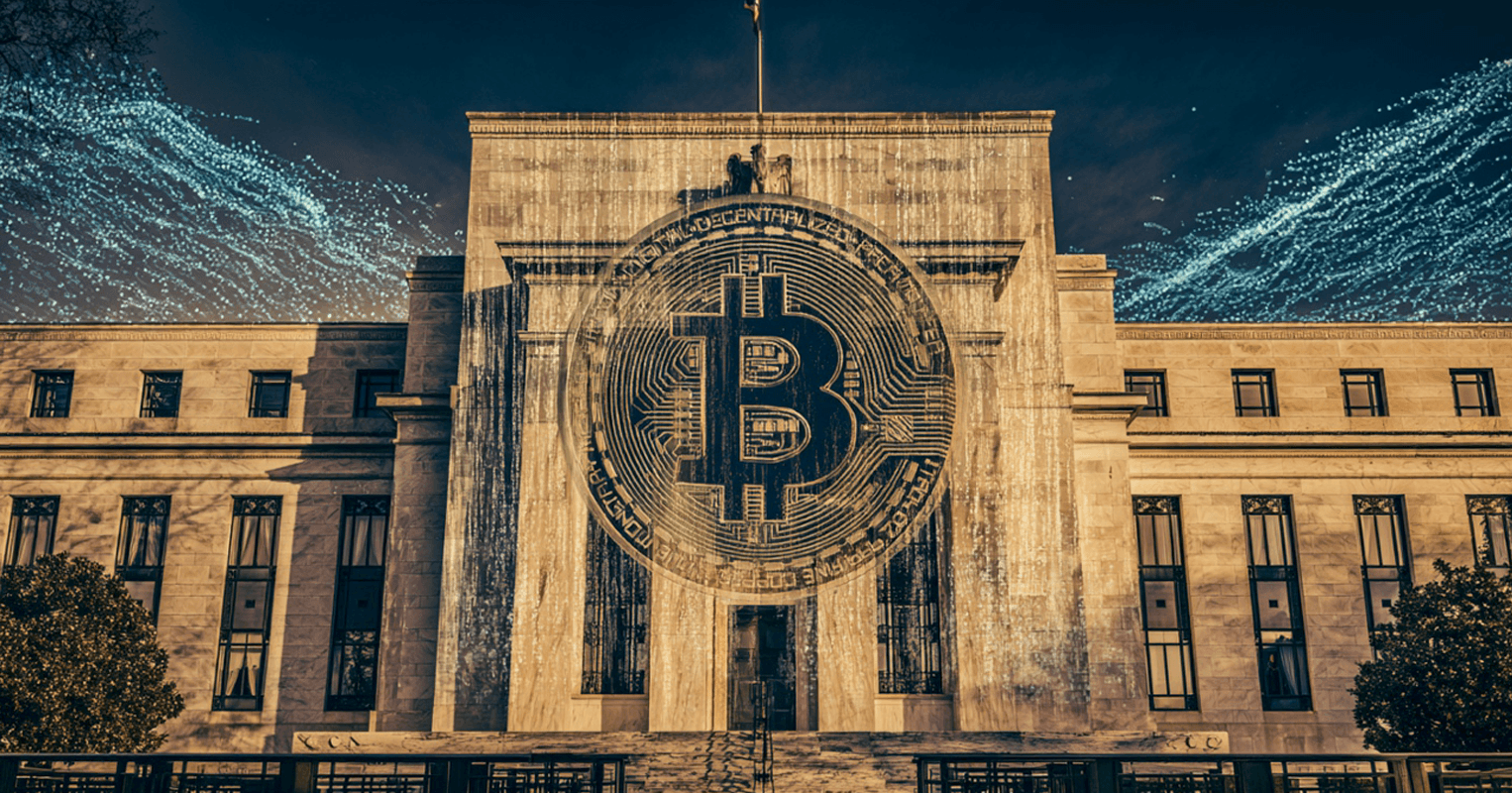
The dream of every central bank critic could be coming true – we might actually end the Fed.

JPMorgan can keep both pieces of infrastructure as long as it likes. But customers will decide where to do...