




The Hidden Bear
Sometimes, what you see depends on how you’re looking, not just what is there.



When the cost of using a resource falls, consumption often rises by more than the efficiency savings.
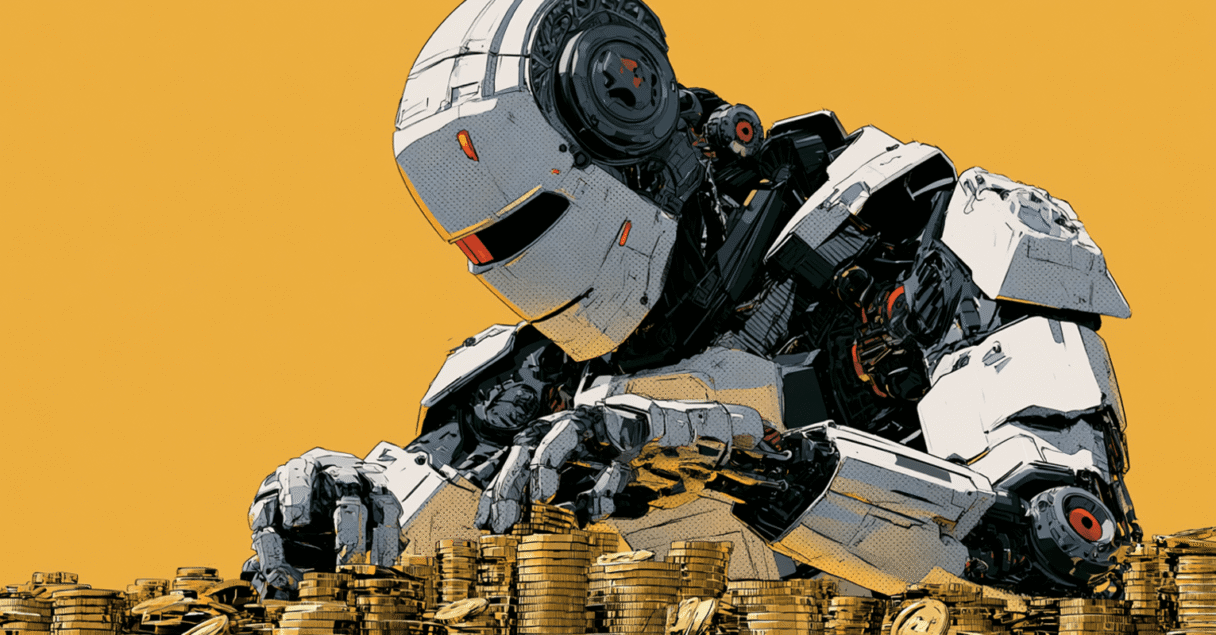

The hyperscalers—Google, Microsoft, Meta, Amazon and Oracle—continue to increase their infrastructure budgets, and they have the money to do so.
In just this past month, Meta, Google and Amazon announced they would spend a total of $40 billion more than projected building out their data centers this year.
That brings the total capital expenditure (CAPEX) of just these three companies up to $560 billion on the year. And next year promises to see even more investment in AI-related infrastructure.
Those commitments matter more than the day-to-day movement in semiconductor stocks. The hyperscalers are the customers who are funding a majority of this buildout. If their spending rises, demand will continue flowing through the AI supply chain.
So why have semiconductor shares pulled back in recent weeks?
Part of the answer is technical. Trend-following funds piled into the sector during the second quarter, helping push semiconductor shares up 86% on the quarter. After a move like that, some short-term investors were always going to lock in gains.
But the larger narrative parroted by the naysayers is that AI infrastructure spending cannot continue at this pace. The latest version of that fear centers on Moonshot AI’s Kimi K3 model and other high-performing open-source models from China.
The headlines suggest these models could undercut OpenAI, Anthropic, and the other frontier AI labs. That conclusion, however, has some false assumptions.
But in a rush to spread fear to get clicks, journalists overlook the actual technology. They don’t seek to have a fundamental understanding as to how the technology works. These open-source Chinese models are distillation models.
That means they train the model by running millions of queries on ChatGPT and Claude and copying their responses. This is really a form of intellectual property theft, but it’s nearly impossible to stop.
These models would be nothing without the distillation of U.S. frontier models. So, frontier labs have nothing to fear yet. For the most complex tasks and those that require the highest level of fidelity, there will always be demand for frontier models.
More importantly for investors, cheaper models do not reduce the need for compute. Quite the opposite. They expand the number of people and businesses that can afford to use AI.
It’s also worth noting that three prominent U.S.-based AI labs are developing open-weight AI models as a counter to what China-based entities have developed. Those three private AI companies leading the way, and ones to keep an eye on, are: Thinking Machines, Prime Intellect and Arcee.
This is a classic example of the Jevons paradox.
When the cost of using a resource falls, consumption often rises by more than the efficiency savings. We saw the same misunderstanding after DeepSeek shocked the market a year and a half ago.
Lower token prices led to more experimentation, more applications and more inference.
The result was not less infrastructure demand. It was more.

It’s not every day you see the world’s top economies intervening in the currency market. But that’s exactly what happened over the past week.
Japan’s Ministry of Finance (MoF) finally stepped into the currency market late last week to support an excessively weak yen, which had been trading near 40-year lows against the U.S. dollar (USD).
This wasn’t entirely surprising…
A weak yen is a boost for Japan’s export-oriented economy, but the falling currency presents other issues.
For one, Japan isn’t a resource-rich nation. The country must import much of its oil and gas needs. A weak yen makes energy imports more expensive. For that reason, Japanese policymakers become increasingly concerned when yen weakness accelerates to extremes.
The initial intervention on July 30 came just a day before the Bank of Japan’s (BoJ) interest rate decision, where it decided to leave rates unchanged. It also adopted a more hawkish tone at that meeting, indicating that future policy would focus on managing inflation at the potential risk to economic growth. That means further rate rises in Japan could be in the cards.
But the biggest surprise is that Japan didn’t act alone.
For the first time in nearly three decades, the U.S. joined Japan to support the yen. While the amount spent by the U.S. isn’t confirmed, a photographer captured a note written by Treasury Secretary Scott Bessent at a cabinet meeting to “buy Japanese Yen [JPY] $5-10 bill.”
Why would the U.S. do this?
Japan remains the single largest foreign holder of U.S. Treasury securities to the tune of about $1.19 trillion. Japan could have sold Treasurys (and thus dollars) as part of its attempt to strengthen the yen. If it did, the selling pressure could push U.S. bond prices lower and rates higher.
Interest rates across the yield curve are already under pressure. The 30-year Treasury yield recently jumped to 5.2%, the highest level in 19 years. Japan’s selling could have pushed rates higher still.
So, the speculation is that the U.S. became directly involved to prevent Japan from dumping Treasurys.
The fact that the Treasury would go to these lengths suggests that rising rates are a real concern among U.S. officials. Rising rates can impact everything from the economy to bond allocations in investor portfolios.
If the interest rate situation tips the wrong way, this rally could come to an abrupt halt. So this is one more reminder to play this market carefully…

Alphabet (GOOGL) is big…and likely getting bigger.
The company already operates a massive cloud and data center network. It was also early to design its own AI accelerators. Then, it built the Gemini family of models and distributed AI through its Google search and email applications that billions of people use.
But one critical part of the AI stack remained closed… The physical tensor processing units (TPUs).
TPUs are custom accelerators designed specifically to train and run artificial intelligence. Google has spent more than a decade developing these chips alongside the networking, storage, software and data centers required to operate them at scale.
And, in the second quarter, Alphabet finally began selling the hardware to clients.
Alphabet confirmed that it delivered complete TPU systems directly into customer data centers for the first time. It also began recognizing revenues from those sales. And it expects this to accelerate next year.
At first glance, selling TPUs outside its cloud may look like Google is giving away an advantage.
It isn’t. And this is a very smart move.
Some of the largest customers want dedicated infrastructure inside their own facilities. Direct system sales allow Google to capture those dollars rather than surrendering them to another supplier. Alphabet management describes this as an expansion of the company’s addressable market.
Google is opening another channel as well…
In May, it formed a joint venture with Blackstone backed by an initial $5 billion equity commitment. It will sell TPUs to this new company so it can offer data center capacity, networking and Google TPUs as a service, with its first 500 megawatts expected online in 2027.
This means one thing: Alphabet now controls the entire AI stack.
It designs the silicon. It builds the networking and cloud infrastructure. It develops Gemini models and enterprise AI software. And it distributes AI through Search, Workspace, YouTube and the Gemini app.
The company can now monetize every layer. It can sell TPU systems upfront, rent computing capacity through Google Cloud, collect model and enterprise software revenue and use AI to improve its advertising and subscription products.
We can already see the flywheel turning.
Google Cloud revenue surged 82% year-over-year to $24.8 billion last quarter, while backlog reached $514 billion.
Even more incredibly, according to industry reports, Alphabet may order 15 million TPUs in 2028. At those numbers, it’s possible it sells more AI accelerators than Nvidia (NVDA) for the year.
Now, there is more than enough demand for both these companies to supply these AI chips. We don’t need to worry about one displacing the other. It just goes to show how big a business the TPU line could become for Google.
With a market capitalization of approximately $4.4 trillion, the company is already big. But with this new master plan in place, I would expect it to only get bigger from here.
Add Brownstone Research as your preferred source on Google to see our latest stories in your feed.
 Add as a preferred source
Read the latest insights from the world of high technology.
Sometimes, what you see depends on how you’re looking, not just what is there.

If the Fed has gone back to raising rates, why was the post-hike bounce in stocks so strong?

To be completely fair, there is a non-zero chance that things go horribly wrong