



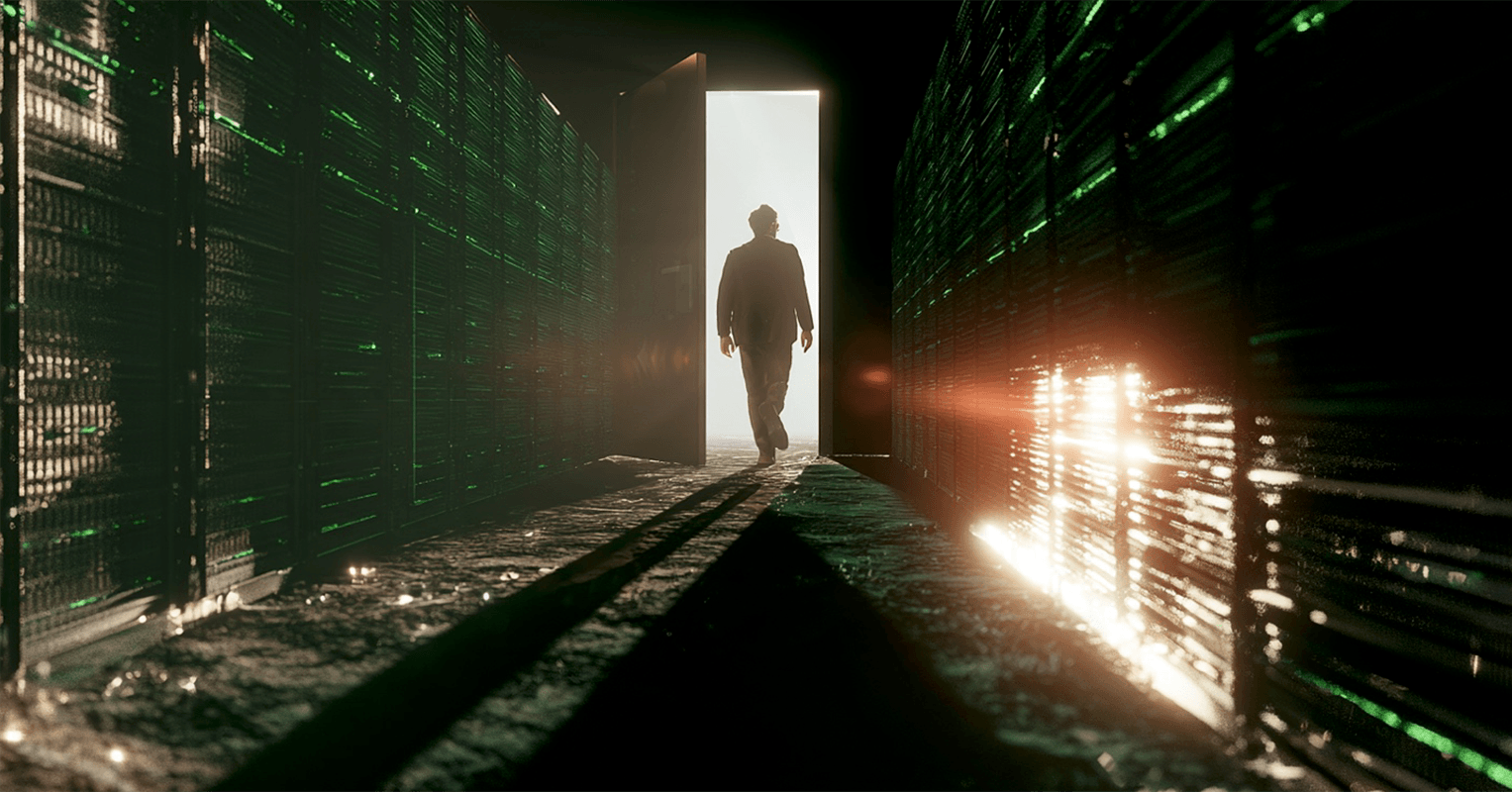
Nvidia is Bigger Than Jensen Huang
Did Nvidia just lose its CEO, or did it lose the extraordinary business he built?


Pessimism sounds smart. Optimism has paid.


My view is: We’re in the final innings of a volatility washout. Tech data proves it.
Over the past 20 trading days, roughly 490 tech stocks had outflows. That puts it in the top 7% of all such stretches since our tech data begins in 2020. On November 5 alone, 118 tech stocks had outflows, the fifth-heaviest day on record, just behind the April 2025 tariff crash.
Since 2020, tech has seen an outflow wave this big only four other times. In three of them, tech stocks were higher six and nine months later, with median gains of 25% and 35%. The last one came a year ago almost to the week, and tech rose 36% over the next six months. The exception was December 2021, which kicked off the 2022 bear market.
So, what separates a bottom from a deeper drop?
What happens next.
Since 2020, we’ve seen 10 days with 100 or more tech outflows. Outflows usually kept coming, often 10 to 1 over the next four sessions.
After November 5, inflows won, 37 to 32, a first in our data. The three closest matches, where inflows returned fastest, dipped the next week. Three months later, tech was higher each time, averaging 21%.
Outflows that just stop are what exhaustion looks like. Morgan Stanley says hedge funds cut risk at the fastest pace in more than a decade in early November.
The forced sellers have already sold. And here’s the part the crowd keeps missing…
With 88% of the S&P 500 reported, FactSet says 84% of companies beat earnings estimates and 74% beat revenue estimates. Third-quarter earnings are up 31.4%. Yet the forward P/E fell to 17.7, below its five-year average of 19.8.
The real bargains are in growth.
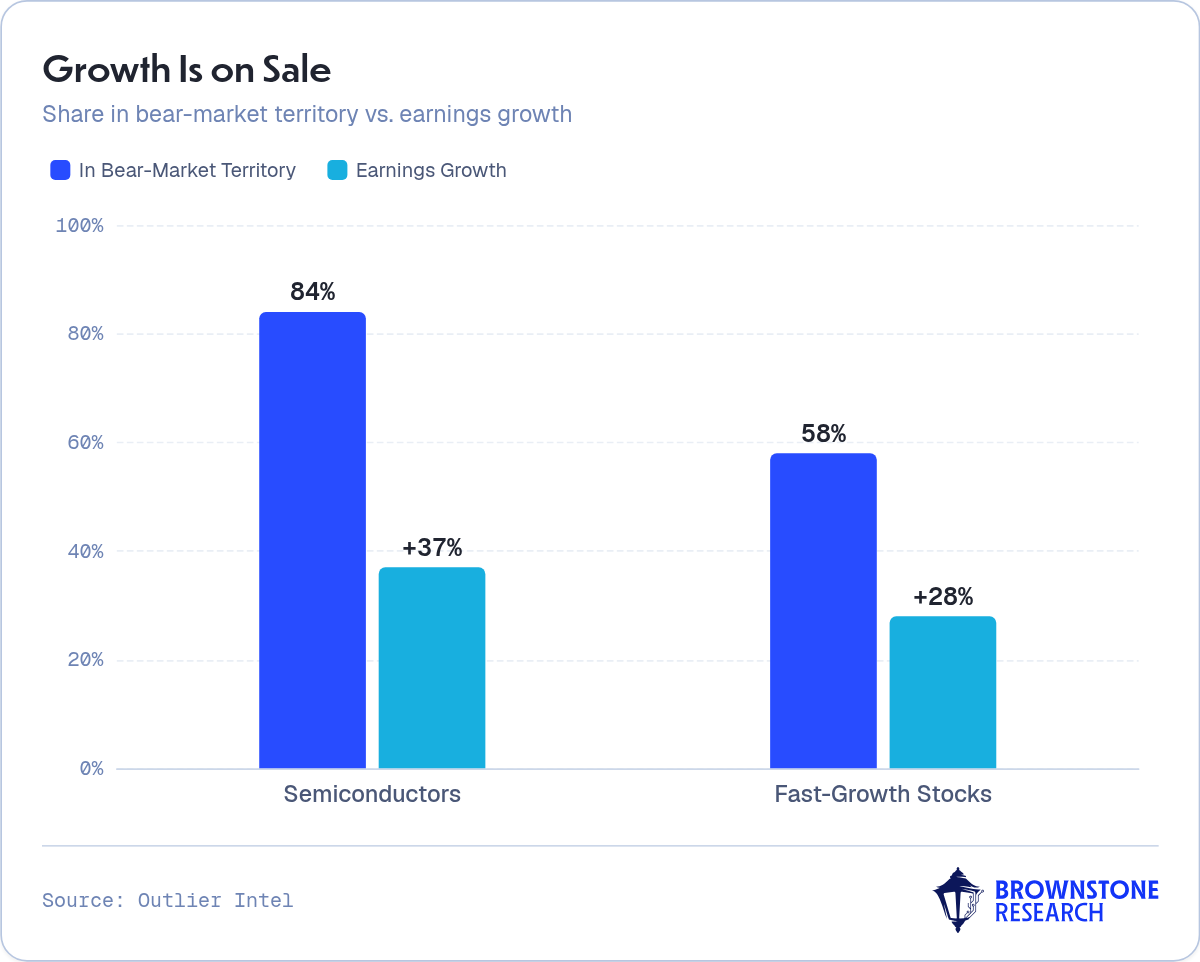
I screened every stock over $2 billion market cap that’s growing both sales and earnings by 20% or more. Two-thirds of them are in bear markets, at a median 31% below their highs. Their earnings are growing 38%, nearly four times the rest of the market.
Semis are the extreme case: 84% are in bear markets while their earnings grow more than three times faster than the rest of the market.
I also track a group of the fastest-growing AI infrastructure stocks. The median name is 49% below its high, yet its earnings are growing nearly 30%. Since their recent lows, they’ve bounced a median 21%, nearly double the average stock.
They’ve had big up days and quieter down days, with higher highs and higher lows. The names that got hit hardest are leading the recovery.
When the best growth is priced like it’s broken, the setup favors buyers.
This doesn’t mean you ignore risk. But stocks have spent about 78% of the time in bull markets since 1929.
Pessimism sounds smart. Optimism has paid.

A new form of AI detects the most profitable trades each morning, 90 minutes before they occur, across 2,467 stocks. A colossal market move coming on November 25 (with 93% historical accuracy) will open the best conditions yet. Try it now (no purchase required).
Do you think the volatility is over? It’s just getting started… By January 3, most of today’s top stocks could lose their grip… and a new group of little-known stocks could seize power… soaring double, triple, and even quadruple-digits in a matter of weeks and months. The good news? Jeff’s colleague, Jason Bodner, created a way to potentially spot the new winners right as they break out 852%, 1,267%, 1,532%, and even 1,921% or more. Jeff and Jason are sharing all the details in a timely investment briefing, including the name of their #1 pick for 2027 – for FREE. Watch it here NOW.

In the 19th century, industrial legend Andrew Carnegie undercut his competitors by buying direct control of the Pennsylvania iron mines that fed his steelmaking empire. That strategy gave Carnegie control up and down his supply chain. It also made him a fortune.
Ever since, vertical integration has been a go-to tactic for building America’s biggest conglomerates. The current race to build data centers is no exception.
Earlier this year, Amazon led the pack, becoming the first tech company to sign a deal directly with American miners to source the energy metal copper.
Amazon unveiled a deal to buy copper directly from the Johnson Camp mine in Arizona, controlled by junior firm Gunnison Copper (OTC: GCUMF). That copper will go directly into Amazon’s new data centers across the country, cutting out the middlemen in a sector increasingly squeezed for supply. After the deal, Gunnison’s share price jumped 34% in under two weeks.
That’s likely not the last deal we’ll see between big tech and mining firms.
When giants such as Amazon start going to the source, their competitors must follow… or face shortages of critical metals and risk falling behind in the data center buildout.
Fortunately for U.S. tech firms, America has a lot of copper potential.
Back in 1980, U.S. mines were the world’s largest copper producers. But environmental obstacles and permitting backlogs – as well as a general move away from heavy industry – devastated production, dropping America to sixth place globally.
But all that copper still lies in the ground, especially across the southwestern states such as Arizona. The Johnson Camp mine where Amazon is buying copper is a restart of a historic operation that opened in 1882.
Most of the new copper production coming online in America right now is from restarting old mines. The Mineral Park mine in Arizona and the Lisbon Valley mine in Utah both switched back on over the past year.
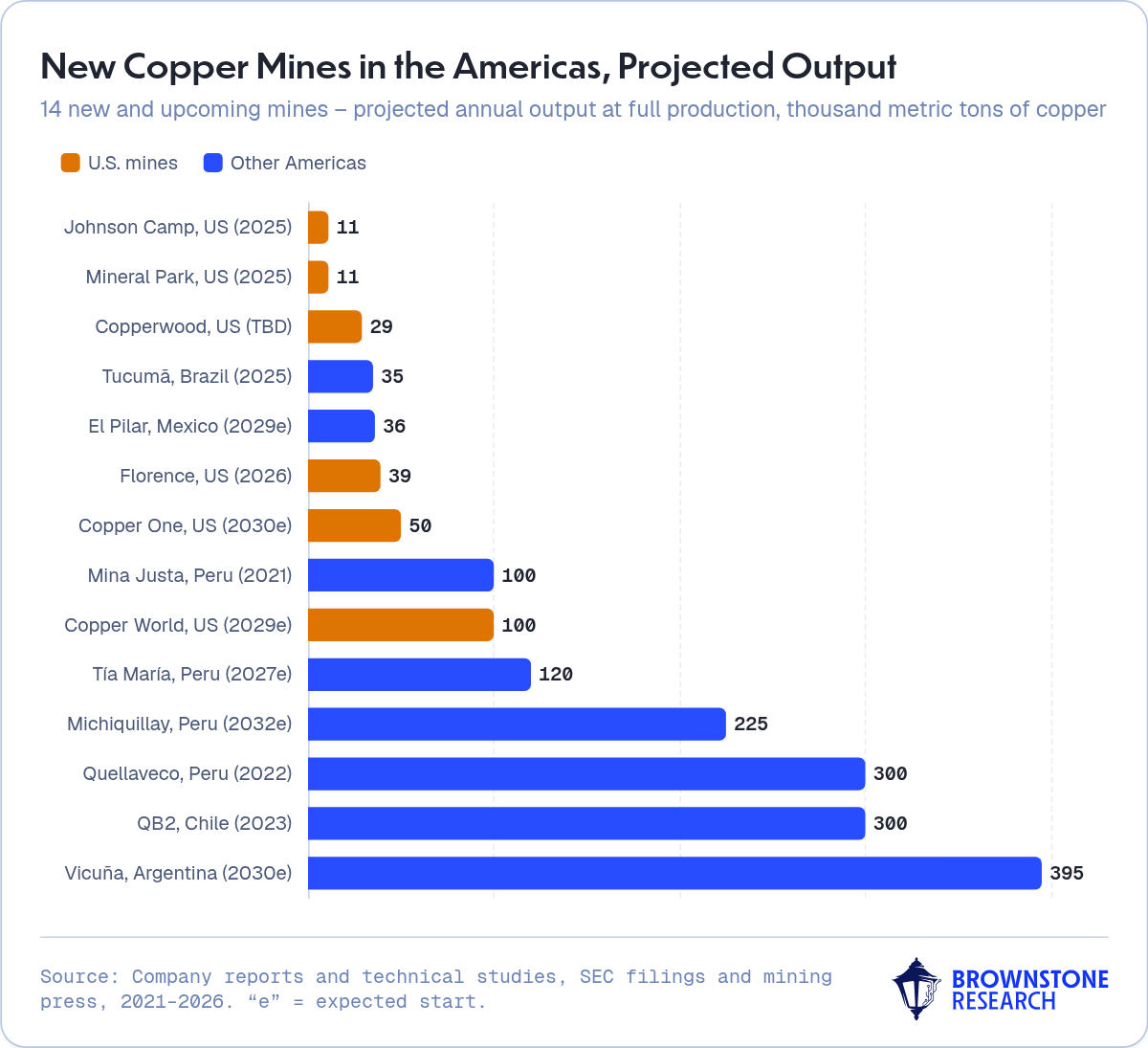
The problem with mine restarts is scale. U.S. copper mines coming back online are small – the best ore was mined years, decades, or even centuries ago. The chart below shows how U.S. mine restarts (orange) produce only a fraction of the output of new mines in nearby countries.
To meet demand from hyperscalers, America needs more than mine restarts – it needs fresh new mines. That’s starting to happen.
Late last month, Hudbay Minerals and Japanese conglomerate Mitsubishi approved construction of the Copper World mine in Arizona. The chart above shows that this new mine is substantially bigger than the restarts.
There’s also the Santa Cruz copper project in Arizona, developed by Ivanhoe Electric (NYSE American: IE). It’s a proven copper deposit immediately adjacent to a historic copper mine called Sacaton, which operated from 1974 to 1984.
The fact that Ivanhoe is working new copper deposits means the richest ore is still in place. And given demand from firms involved in the AI buildout, Ivanhoe is more than willing to spend the capital to get it out of the ground.
The ongoing AI buildout cannot happen without a renaissance in mining for critical metals such as copper. You can’t have one without the other.
It’s why I believe we’re in the early innings of the next great commodities supercycle. And every investor should pay attention.
Jensen Huang was ousted as CEO of Nvidia (NVDA) last week. And readers of Prediction Profits booked a 233% profit in two days as a result.
Let me explain.
Jensen Huang is the visionary who built Nvidia into a juggernaut. The company is the undisputed face of the artificial intelligence boom. Huang co-founded Nvidia 33 years ago and served as president and CEO throughout.
Until recently…
Last week, Huang was forced out by a board that could no longer ignore cascading personal and national security scandals. You likely know the details, so we won’t rehash them.
But NVDA shareholders didn’t take the news well. The stock is down more than 30% from its October peak.
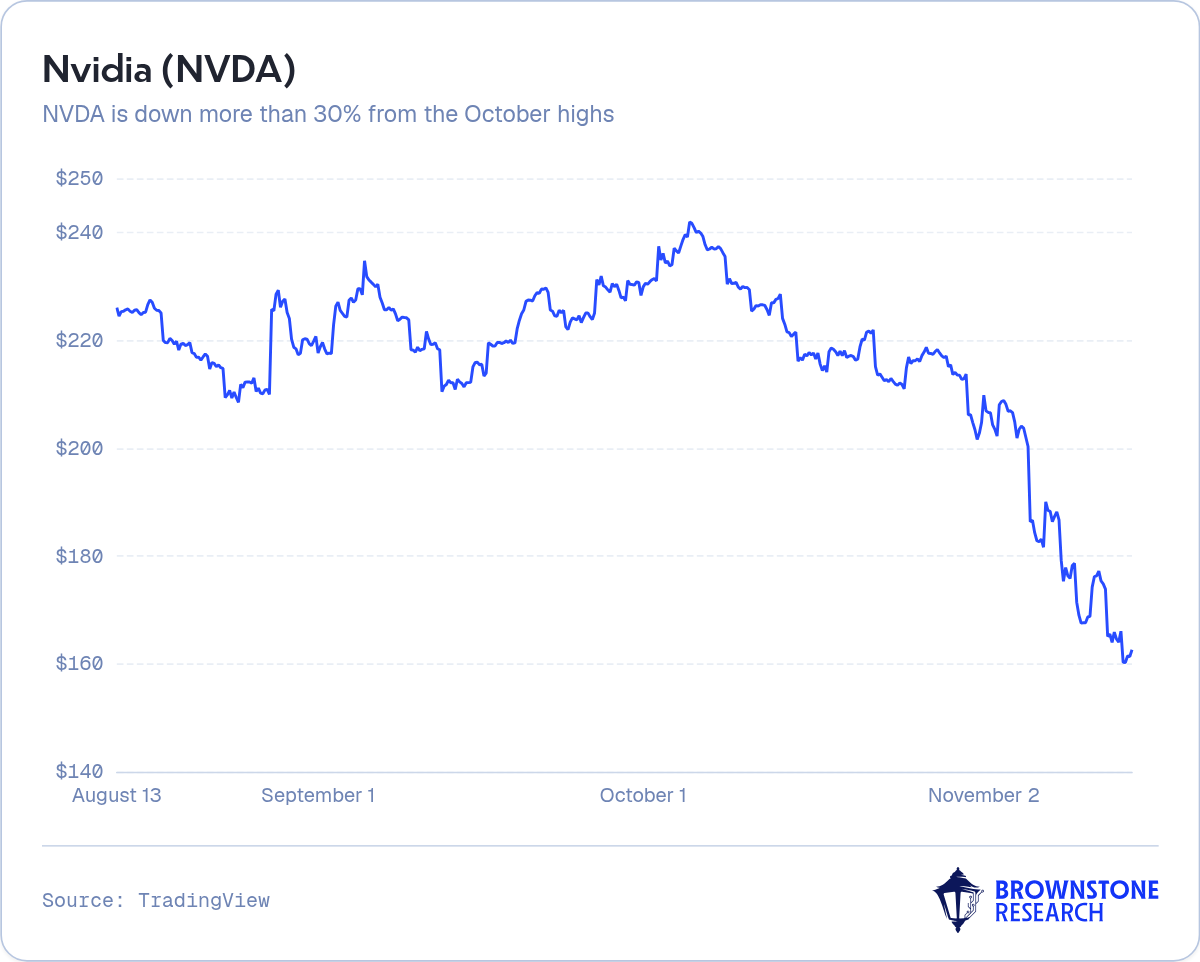
For a trader, that volatility is tempting. But there was another overlooked way to profit from the Nvidia turmoil without touching the stock.
On November 10, Larry Benedict published an investment thesis for a trade on Kalshi, a prediction markets platform.
The question for the contract was simple: “When will Jensen Huang leave as Nvidia CEO?” The “before July 1, 2027” contract was trading at $0.30. If Huang left before that date, anyone holding that contract would be paid $1.00 per contract.
Given the severity of the allegations, those odds looked underpriced. So Larry recommended subscribers buy the contract. Just two days after publishing that trade, Huang resigned. Subscribers who took the trade realized a 233% return.
I understand it may seem distasteful to benefit from a man’s (very public) ousting from the company he co-founded. But we have an obligation to our subscribers to share attractive trade ideas wherever we find them. And this one was too enticing to pass up.
The contract was likely underpriced because Huang and Nvidia are practically synonymous to many investors. They couldn’t imagine one without the other.
But the history of markets is littered with leaders who seemed indispensable… until they weren’t. And for a company as important as Nvidia, Huang’s connection to an alleged Chinese intelligence operative seemed a bridge too far for any reasonable board.
As it turns out, we were right… and subscribers have the 200%-plus return to show for it.
Add Brownstone Research as your preferred source on Google to see our latest stories in your feed.
 Add as a preferred source
Read the latest insights from the world of high technology.
Did Nvidia just lose its CEO, or did it lose the extraordinary business he built?

Once the major indexes broke key technical levels, there were forced sellers across the board.

None of the AI infrastructure companies I heard from last week said anything other than business as usual.