




The AI Bears Are Wrong (Again)
On the surface, it makes some sort of sense. But this argument misses two things…



Anthropic’s success has been driven by two major initiatives...

By Jeff Brown, Founder, Brownstone Research
The growth of AI labs has been nothing short of breathtaking.
Both OpenAI and Anthropic are seeing revenues scale at a pace we rarely see. The cleanest way to measure this growth is through annual recurring revenue (ARR). ARR takes the latest monthly revenue and annualizes it to give investors a sense of the current run rate of the business.
OpenAI began monetizing just four years ago, and they already have an ARR of $30 billion. And Anthropic, which began monetizing its LLM a year later, is projected to have an ARR of $50 billion as of this month.
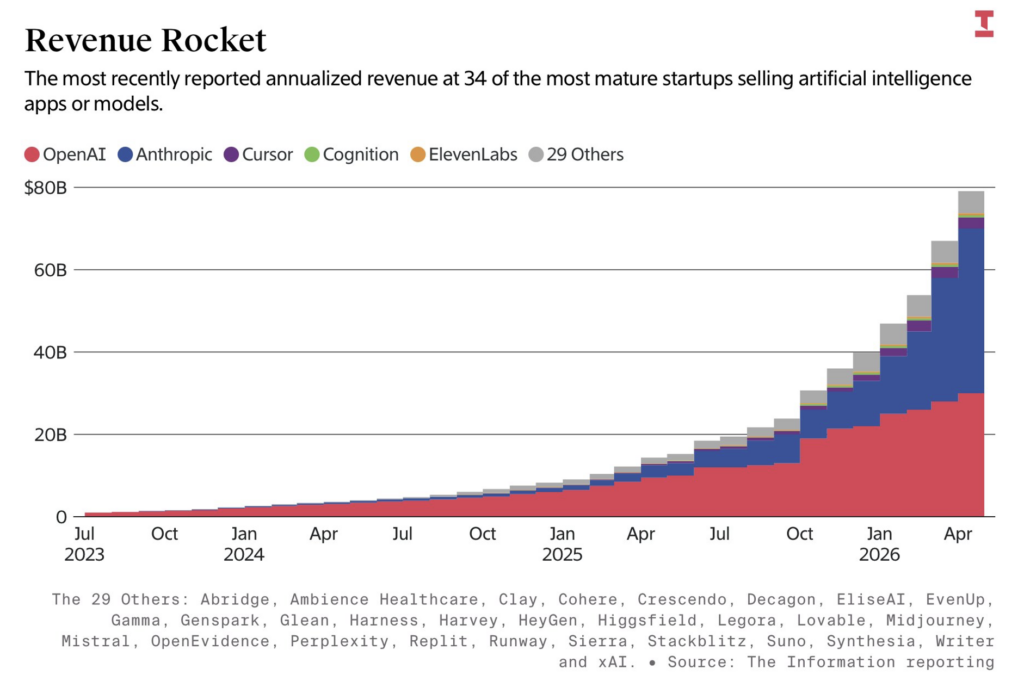
But what’s more interesting is the different models these companies have pursued to generate this revenue.
OpenAI targeted the consumer AI category. It deserves credit for that. ChatGPT became one of the fastest-adopted applications in history and introduced hundreds of millions of people to artificial intelligence.
But there is a problem with that model.
Consumer AI is expensive, as every free prompt costs them money. And when hundreds of millions of users are interacting with a model for free, inference costs become enormous.
OpenAI has struggled to convert its massive free user base into paying subscribers, with an estimated paid conversion rate of about 6%. That is a difficult economic model when compute costs are still so high.
As of the last quarter, OpenAI reported a negative 122% operating margin. That means that for every dollar of revenue OpenAI generated, it spent $2.22. That is not sustainable.
Anthropic took a different path.
It treated the consumer market as secondary and focused almost entirely on high-value enterprise customers. That decision is now paying off.
Anthropic has more than 1,000 corporate customers spending over $1 million annually. Its customer roster includes eight of the Fortune 10.
Anthropic’s success has been driven by two major initiatives. The first is the one most readers have probably heard about: Claude Code.
Software development was one of the earliest and most obvious use cases for artificial intelligence. Large language models can analyze existing code, identify patterns, suggest improvements, and help programmers move much faster.
As of February of this year, Claude Code reached a $2.5 billion annualized run rate. At that time, Anthropic said that number had doubled from January. Given Anthropic’s broader revenue growth, it is reasonable to assume Claude Code is contributing more today.
But Anthropic’s bigger stroke of genius is its API model.
More than 80% of Anthropic’s revenue comes through API token consumption. That may sound technical, but the concept is simple.
An API, or application programming interface, allows another software program to access Claude directly.
A business can build Claude into its own internal tools, customer-facing applications, coding environments, cybersecurity systems, or document workflows. Every time Claude is used through that application, Anthropic charges based on token consumption.
Tokens are the basic unit of AI usage. A token can be a word, part of a word, a punctuation mark, or a piece of code.
Large language models process tokens to understand a prompt, reason through a task, and generate a response. As a rough reference point, one million tokens equal about 750,000 words of text.
The more complex the task is, the more tokens it consumes.
And the more tokens an enterprise customer consumes, the more revenue Anthropic generates.
And if a customer rolls out a successful internal application across an entire organization, token consumption can rise 10x, 20x, or more. And Anthropic gets paid as usage scales.
That is a much better model than subsidizing hundreds of millions of free consumer chats.
The result is that Anthropic’s private-market valuation has surged. Last month, it finalized a capital raise at a $965 billion valuation. Its valuation is now higher than OpenAI.
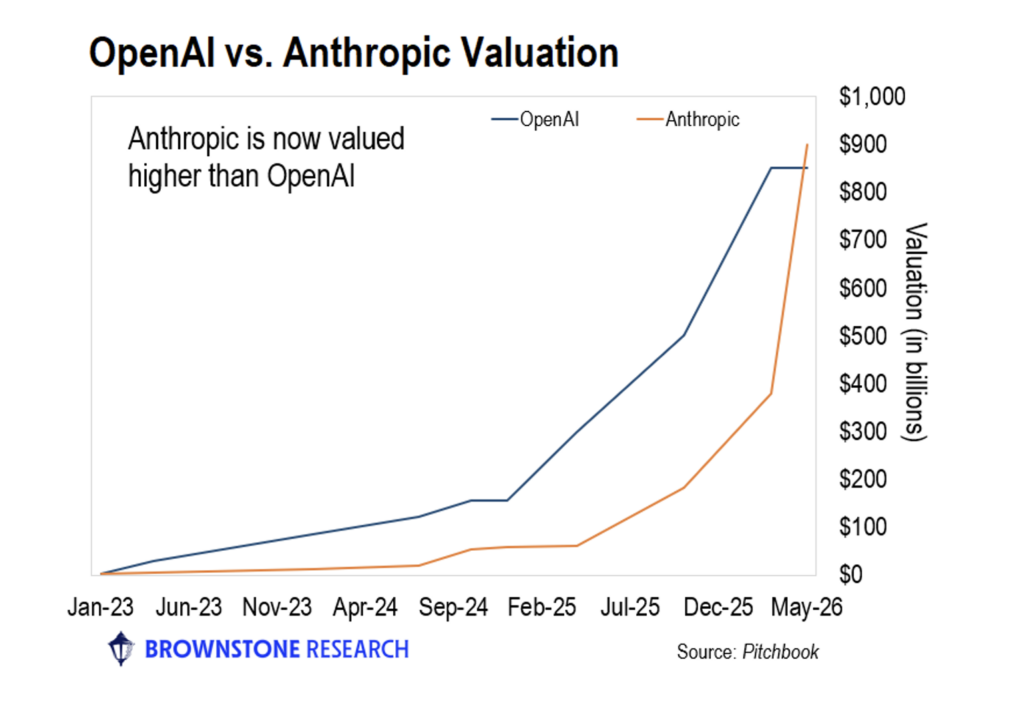
AI adoption is increasing. More businesses are using it. And as the cost of compute continues declining, more profitable use cases are surfacing for AI.
All this means one thing. Growth is not over.
By Ben Lilly, Senior Crypto Analyst, Brownstone Research
Opportunity is born from panic…
And for Bitcoin, there’s plenty of it.
Bitcoin dropped more than 28% in roughly two weeks, falling back below $60,000. That’s more than 53% below its October 2025 all-time high of over $126,000.
The fear has been relentless, and the headlines keep feeding it.
But while outlets like CNBC are eager to plan Bitcoin’s funeral…the smart money is getting a rare signal from the options market.
This signal is so rare that we have only seen it four other times in the past four years.
Each one hit during a major market panic. And each one was followed by historic runs for Bitcoin in the months that followed.
The first signal gave us 121% returns in less than six months; the second delivered 210% within seven months; the third brought 67% in under four months; and the fourth saw 37% in three months.
It’s a setup we cannot afford to ignore.
The signal I’m referring to comes from 25-delta skew.
That may sound complex, but it’s not.
What it essentially measures is the amount of fear or greed in the market. When the market is fearful, it buys insurance to the downside in the form of puts, creating high skew. And this measure is what hit historic levels last week.
As we see on the chart below, the one week dated 25-delta skew or premium paid for puts hit above 25% during Thursday’s sell-off. Traders were paying up like crazy to protect against more downside.
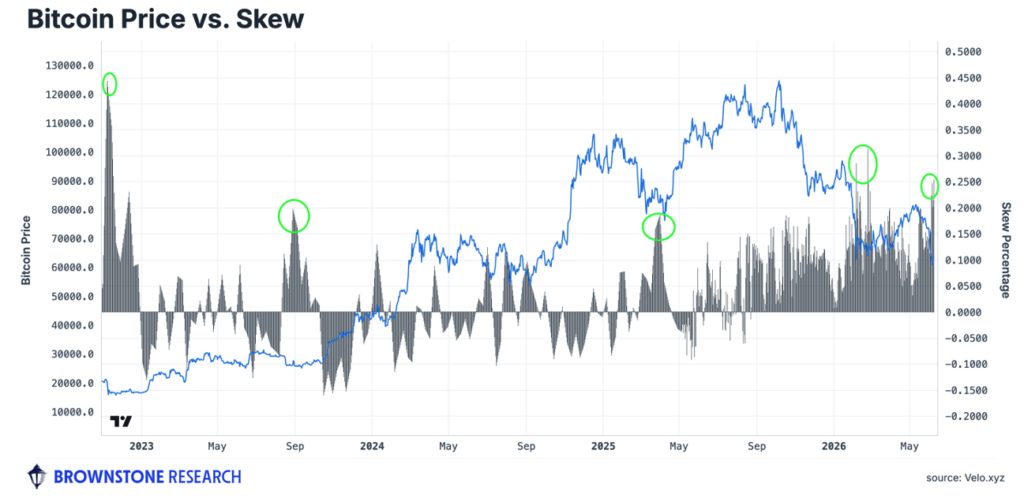
Paying a high price for downside insurance may not seem like a bullish setup on its face, but it’s a classic contrarian indicator. It’s often a signal that all the fear is more than priced into the asset, and that a near-term rebound is likely.
Have a look at the green circles in the chart and you’ll see what I mean. These were times of market anxiety, when investors were willing to pay up for downside insurance. Each time, major rallies followed.
Every one of those moments felt like the end of the world for digital assets. But opportunity is born from panic.
And it’s times like this that you want to start averaging in for the long haul.
By Feruz Kurbanov, Senior Analyst, Brownstone Research
How would you like to still be skiing at 85?
Or perhaps celebrate your ninetieth birthday with a miles-long hike?
That, in a nutshell, is what the longevity industry hopes to accomplish for patients.
And a new partnership announced last month took an important step in that direction.
Human Longevity is a company that applies the power of genomic science to diagnose disease years before symptoms present. And it just launched a new business called Human Life Foundation Models (HLFM).
HLFM also announced a multi-year, multi-million-dollar partnership with biotechnology company Insilico Medicine, a leader in artificial intelligence (AI)-driven drug discovery.
Together, the companies hope to build what they describe as the first large-scale AI foundation model focused specifically on human longevity.
The implications are vast…
The idea is similar to how large AI systems such as ChatGPT learn from massive amounts of text.
But instead of learning from books and websites, this new AI model will learn from biological and medical data. Human Longevity is in a great position to supply that data.
Human Longevity has spent more than a decade collecting information including genetics, medical imaging, clinical records, and long-term health data from thousands of people.
By combining these datasets with Insilico Medicine’s AI technology, the companies hope to create a system that can better understand how the human body ages and why certain diseases develop.
The goal is not just to help people live longer. It’s to extend what researchers call “healthspan” — the number of years people remain healthy and active.
If successful, the AI models could help predict disease risks years or even decades before symptoms appear. That could allow doctors to recommend lifestyle changes, monitoring, or treatments much earlier than is possible today.
The partnership also reflects a larger trend across healthcare.
AI is increasingly being used to discover new drugs, identify disease patterns, and analyze enormous amounts of biological information.
Aging research has become one of the hottest areas for investment, with analysts estimating that the global longevity market could grow from roughly $5.3 trillion today to nearly $8 trillion by 2030.
Still, important questions remain.
Many scientists agree that aging is a major driver of diseases such as cancer, heart disease, and dementia. However, researchers are still learning exactly how aging works at the biological level.
Critics also warn that the broader longevity industry sometimes moves faster than the scientific evidence, with some companies promoting expensive treatments that have not yet been fully proven.
But what makes this partnership noteworthy is its focus on data and prediction rather than consumer wellness products.
The companies say they will use privacy-preserving AI systems that keep patient data secure while allowing models to learn from information stored in different locations.
The collaboration points toward a future in which AI may help medicine shift from treating disease after it appears to preventing it before it begins.
If that vision becomes reality, the biggest impact may not be just adding years to life, but delivering a healthy, active lifestyle for patients well past 100 years.
Add Brownstone Research as your preferred source on Google to see our latest stories in your feed.
 Add as a preferred source
Read the latest insights from the world of high technology.
On the surface, it makes some sort of sense. But this argument misses two things…
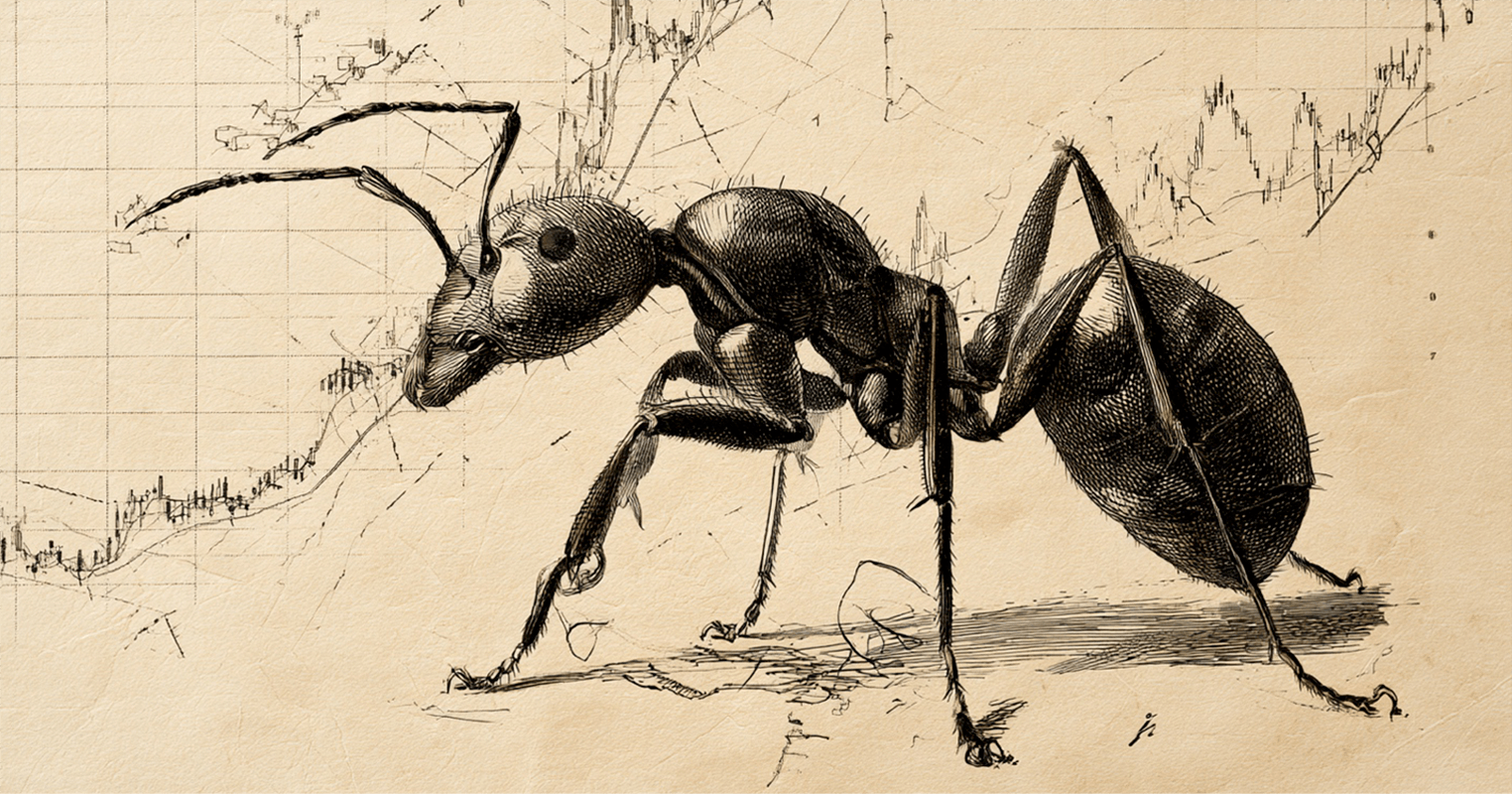
In South Korea, individual stock traders have an unusual nickname: gaemi, the Korean word for ants.

The GPUs are being deployed in a timely manner. What isn’t arriving fast enough is the electricity to power...