



Google’s Nuclear Deal Reveals the Scale of AI’s Power Problem
Google’s recent agreement reveals the scale of the AI power shortage and why supplying power is such an important...



“Restoring supersonic flight over land isn’t just about speed. It’s about unleashing American innovation and ushering in a Golden Age of Travel,” says Transportation Secretary Sean Duffy. And it’s about time…
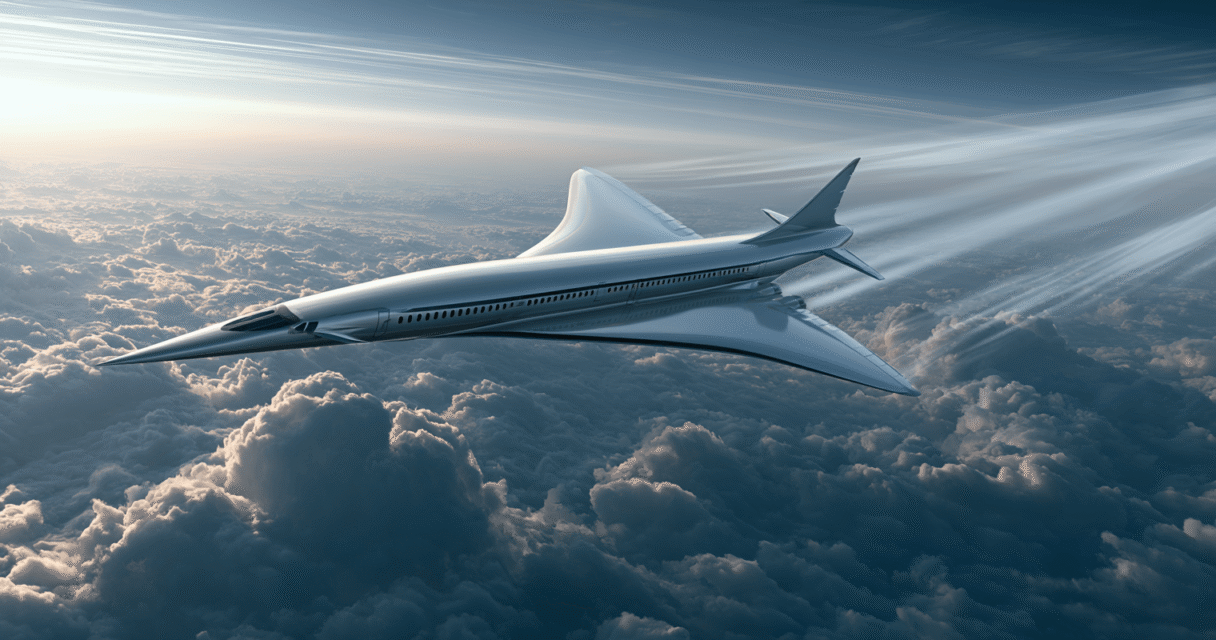
In March 2001, Boeing announced one of the most unique commercial aircraft designs in history… the Sonic Cruiser.
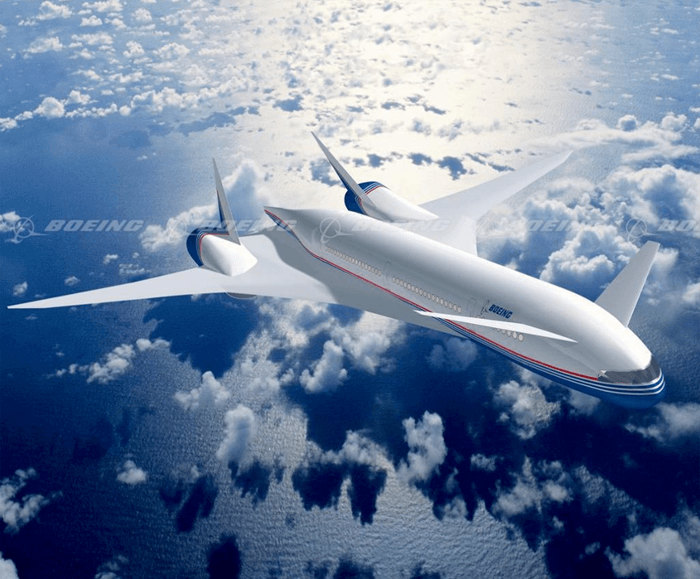
Sonic Cruiser Rendering | Source: Boeing
It was a striking design. Modified delta wings were positioned towards the rear of the fuselage. Embedded within were the two rear-mounted jet engines and not one, but two vertical tails housing rudders for directional stability.
It also featured two forward canards – the two small wings at the front of the fuselage – which gave the aircraft a highly unusual look, something that had never been seen before on any production narrowbody or widebody commercial aircraft.
At the time of Boeing’s announcement, the Sonic Cruiser was Boeing’s top product development priority. The goal wasn’t to make a new, modern aircraft with a cool design.
The goal was to make a faster aircraft to save flight time, something the market and consumers have long wanted.
The Sonic Cruiser was designed to travel at speeds between Mach 0.95 and 0.98 – about 15-20% faster than what we are used to today. Traveling at near the speed of sound results in significant time savings for passengers.
There was only one drawback… Traveling so close to the speed of sound required burning more fuel. It was less efficient.
Boeing was trying to solve for two things, specifically faster flight times and avoiding the rules and regulations around sonic booms over land. Hence the sub-supersonic Sonic Cruiser.
The Sonic Cruiser was the answer to what came next after the supersonic Concorde, which the industry knew would be decommissioned after the devastating crash of Air France flight 4590 in July 2000.
The Concorde was far too expensive to build and maintain, extremely inefficient with fuel, and regulations in most countries wouldn’t allow it to fly over land because of the loud sonic boom, so its market potential was dramatically reduced.
In the end, the Concorde was decommissioned in 2003. And sadly, Boeing’s Sonic Cruiser never got built. Where Boeing landed was that the speed advantage wasn’t large enough over existing commercial aircraft to justify the higher fuel costs. Boeing refocused its efforts on the development of the 787 Dreamliner, which was first announced in 2003.
And that meant that the issue of faster commercial aircraft and shorter flight times remained unsolved.
Just about everything related to commercial aircraft has gotten worse over the years. The seats are smaller, the food is worse or non-existent, there is less legroom, and in most cases, the service is significantly worse.
But if we could cut the flight times in half, the rest wouldn’t be so bad…
But that can’t be done without supersonic aircraft, and the economic incentives to build and bring a commercial supersonic aircraft to market aren’t significant enough with the restrictions concerning sonic booms over land.
Which is why the announcement this week by the Federal Aviation Administration (FAA) and the U.S. Transportation Secretary Sean Duffy is so important and exciting.
New proposed rules have been announced concerning Enabling Supersonic Overland Flight.
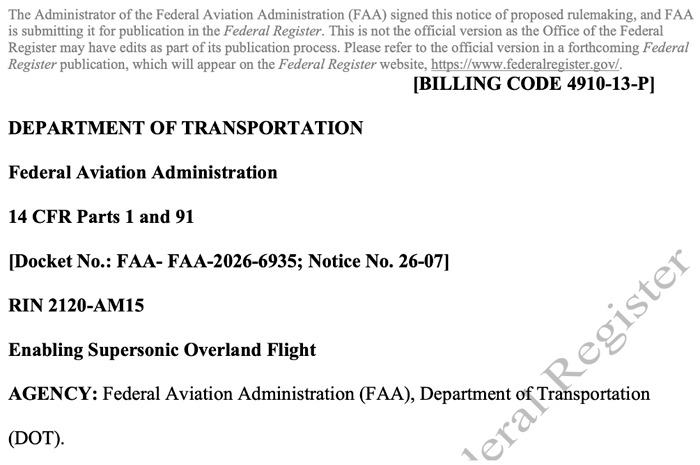
The rules provide regulatory guidance for aircraft manufacturers of supersonic aircraft that sets a noise-based certification standard for supersonic aircraft over land. The FAA also announced that it would be providing additional noise standards for landing and takeoff noise for supersonic aircraft.
These simple standards – this simple common-sense rule framework announced – give private industry the green light to finalize designs and invest in bringing supersonic commercial flights back to the world 25 years after the last Concorde flight.
This latest regulatory change links back to Executive Order 14304 – Leading the World in Supersonic Flight.
Transportation Secretary Sean Duffy summed it up, “Restoring supersonic flight over land isn’t just about speed. It’s about unleashing American innovation and ushering in a Golden Age of Travel.”
It’s about time.
This is exactly what regulators are supposed to do with our taxpayer dollars. Provide a clear regulatory framework that incentivizes investment and innovation in products and services that will benefit the public.
The outdated rules and regulations have literally held back the aerospace industry for decades. We’ve had the technology and the know-how to reduce the impact of sonic booms. We just didn’t have the regulatory framework.
So how is this all possible? How can the sonic boom sound be reduced over land?
Reducing the impact of a sonic boom on land is achieved by a technique known as Mach cutoff. With the right supersonic aircraft design and altitude, a sonic boom refracts back up into the atmosphere, which reduces the audible noise on the ground.
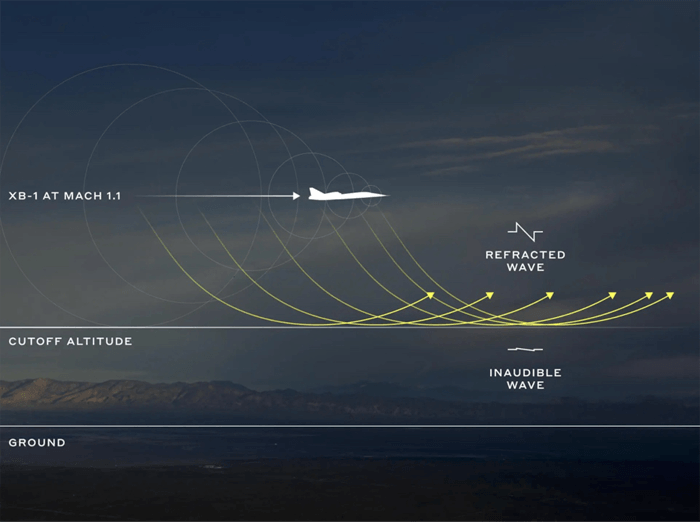
Mach Cutoff Example | Source: Boom Supersonic
Boom Supersonic, the leading private aerospace company developing a supersonic commercial aircraft, calls its technology Boomless Cruise. Boom designs aircraft in a way that causes the sonic boom to come off the aircraft at a shallow angle, which results in the sonic boom refracting back into the atmosphere.
This results in no audible sonic boom noise on the ground. This isn’t theory. It has been proven with Boom Supersonic’s XB-1 prototype supersonic aircraft.
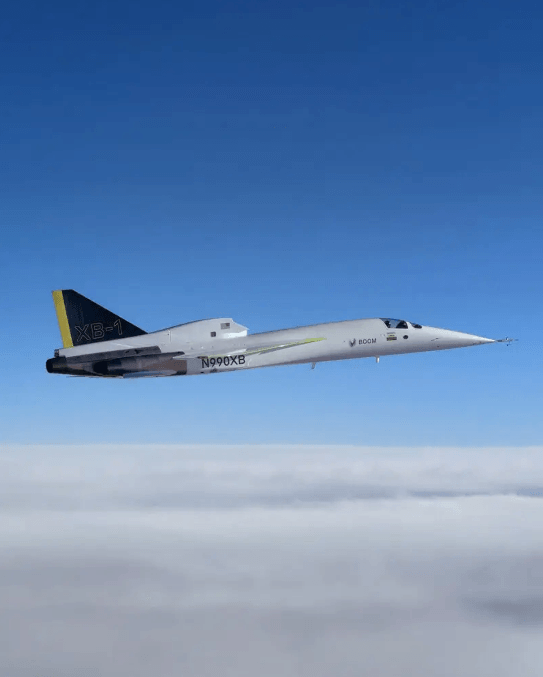
XB-1 | Source: Boom Supersonic
Boom successfully demonstrated supersonic flight with no audible supersonic boom noise on the ground six times already with the XB-1 supersonic prototype aircraft. Boom’s commercial supersonic aircraft, Overture, will also be capable of flying at Mach 1.3 over land with no audible supersonic boom.
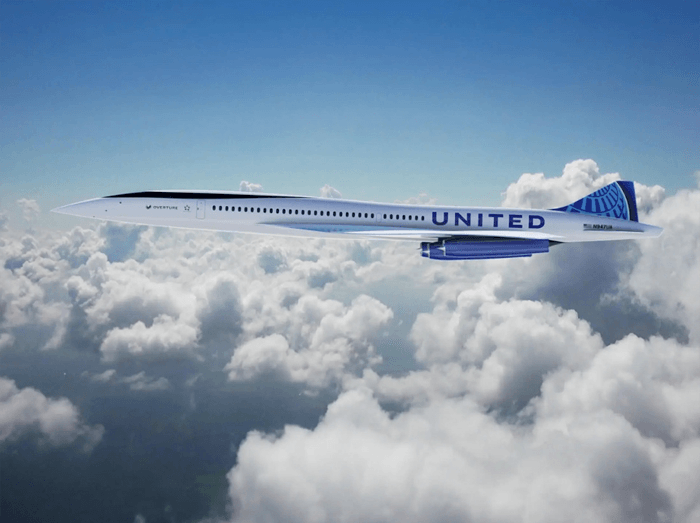
Overture | Source: Boom Supersonic
What this means is that a flight from New York to San Francisco will only take three and a half hours. A 9 AM departure from New York will put us on the ground at 9:30 AM in San Francisco, local time.
Awesome.
And better yet, when flying over water, Overture will be able to cruise at Mach 1.7, resulting in flights that are 2X faster than what were used to. Just imagine what it would be like to cut your flight from San Francisco to Tokyo, or your flight from New York to Paris, in half!
It’s coming! Boom will conduct its first full-scale prototype flights of Overture in 2027, and with the current regulatory environment, it should be able to receive type certification for Overture in 2029. That means that we may see the first commercial flights on Overture towards the end of 2029.
Not far away at all, and it will be worth the wait.
This is the most exciting time in history for the aerospace industry.
Between the supersonic developments at Boom Supersonic, to the incredible work SpaceX is doing with Falcon 9 and the Starship, to the AI-enabled defense technology of companies like Anduril and Mach Industries.
The regulators are working in partnership with private industry, and innovation and investment have been unleashed to a degree that I’ve never seen before.
We have so much to look forward to… including supersonic flights,
Jeff
Add Brownstone Research as your preferred source on Google to see our latest stories in your feed.
 Add as a preferred source
Read the latest insights from the world of high technology.
Google’s recent agreement reveals the scale of the AI power shortage and why supplying power is such an important...
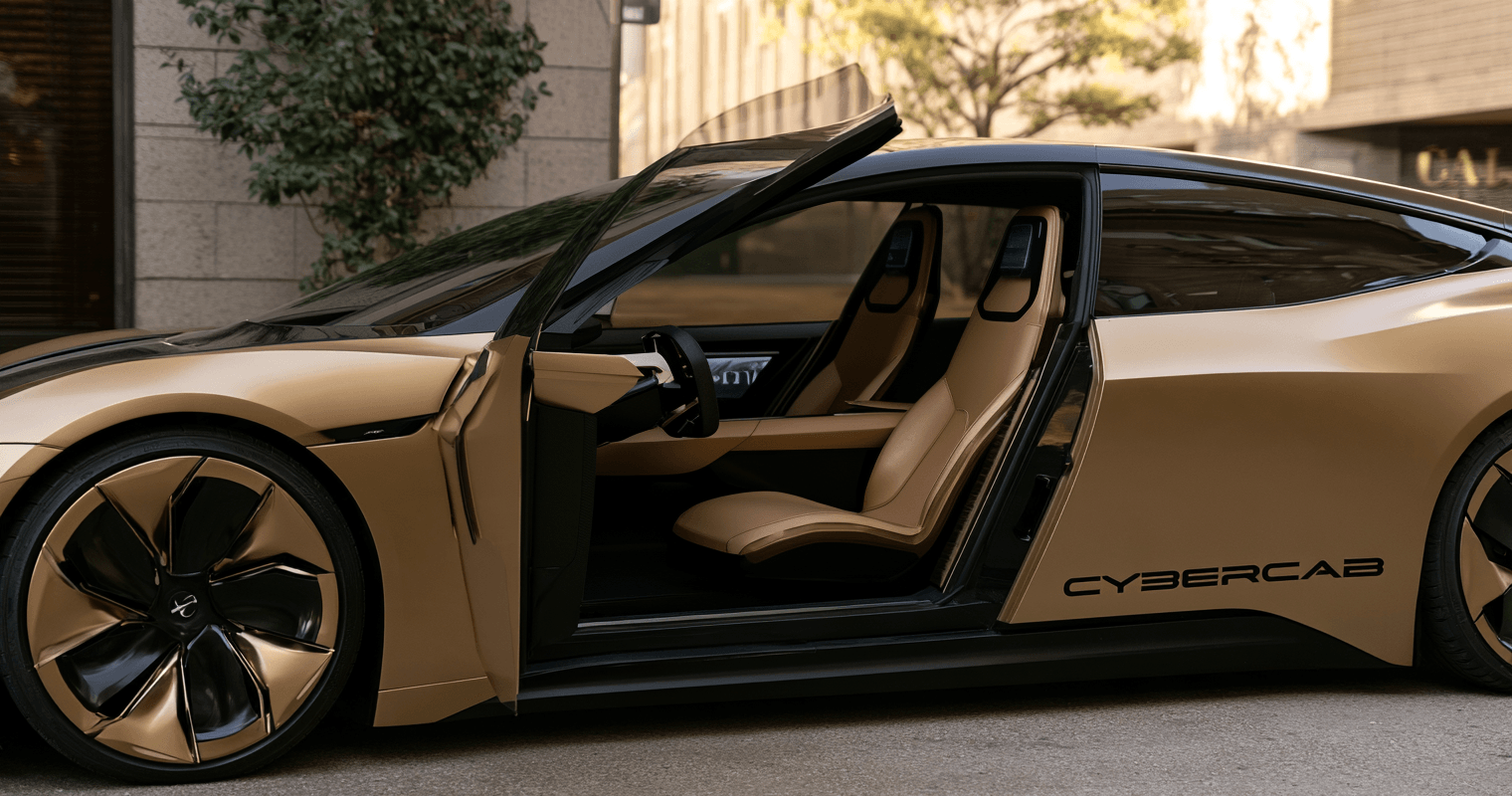
There is something very special happening right now. A bloom of autonomous driving, and Austin is the epicenter.
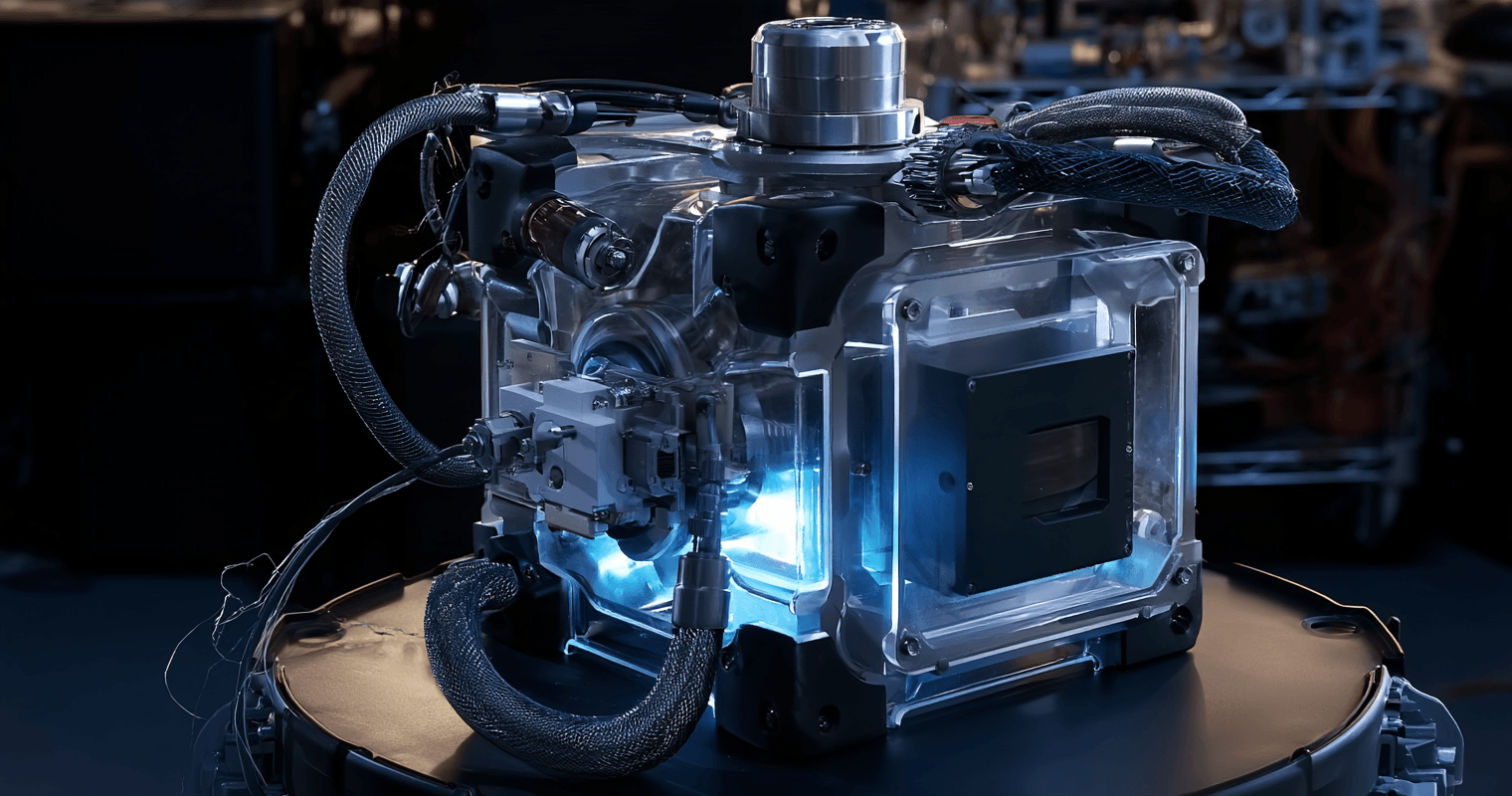
The idea of a matter compiler has been a science fiction dream for decades. Not any longer.