


The Largest Merger in History
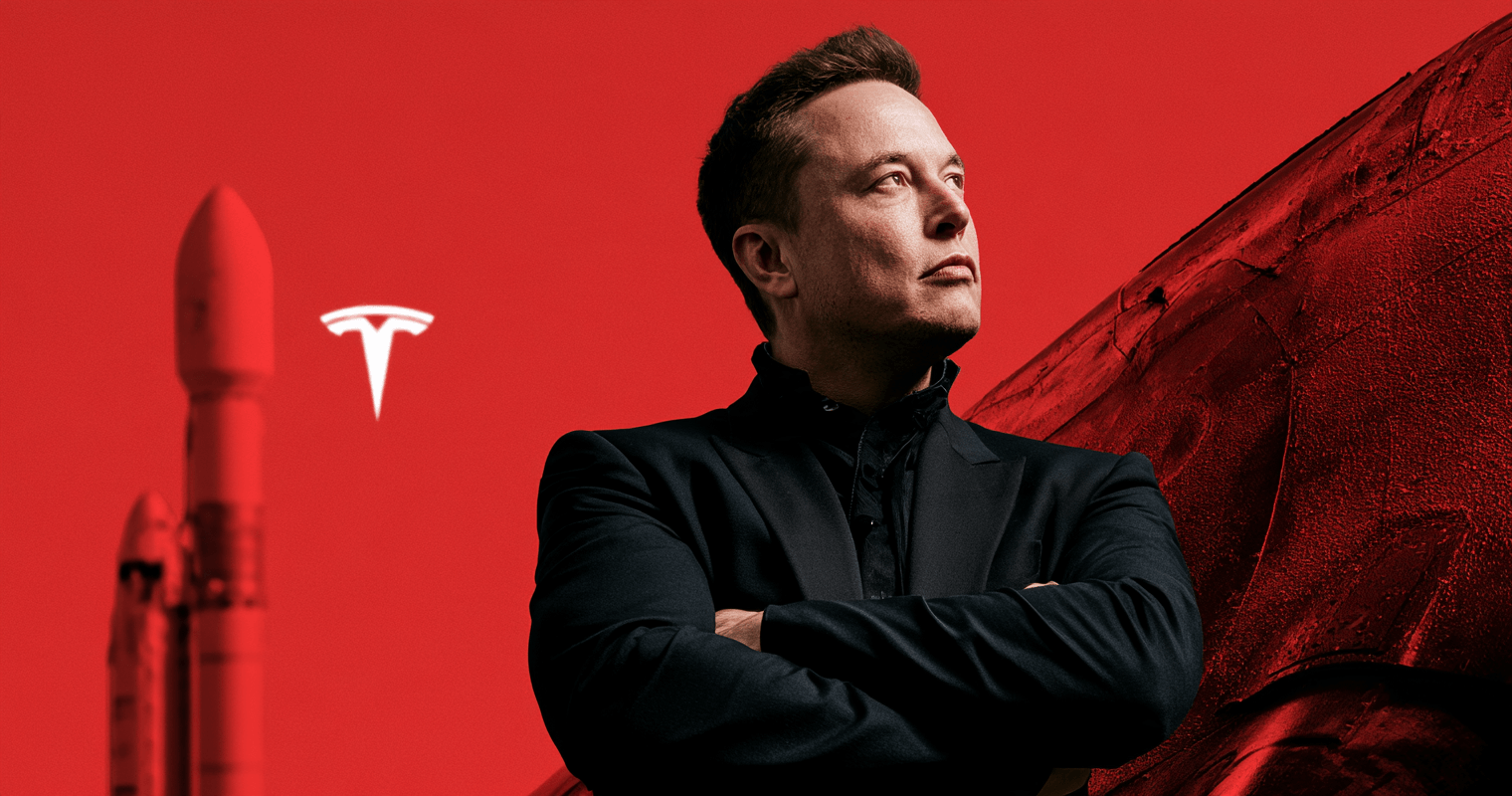
Tesla and SpaceX have now formed special committees to evaluate a potential merger between these two Elon Musk-led powerhouses.



Despite so many predicting reductions in spending/CAPEX, announcements of increased investment continued unabated.
It was yet another incredible week for the AI infrastructure buildout.
Despite so many predicting reductions in spending/CAPEX, announcements of increased investment, to the skeptics’ chagrin, have continued unabated.
ASML (ASML) – the company with the monopoly on EUV semiconductor manufacturing equipment that is responsible for the world’s most advanced semiconductors – had a stunning earnings call on Wednesday.
But it wasn’t the record numbers that were so stunning… It was ASML’s future guidance:
Better yet, TSMC (TSM), in coordination with the Trump administration, announced an additional $100 billion of investment in U.S. based semiconductor manufacturing in Arizona. This is on top of TSMC’s previously announced $165 billion in investment already, bringing the total to $265 billion – more than a quarter of a trillion dollars.
I know the numbers almost don’t feel real… but they are.
And to state the obvious, this is an extraordinary level of investment.
TSMC chairman C.C. Wei summed it up with, “The demand and the supply, the gap is so big, so we are working very hard to narrow the gap.”
Semiconductor companies like TSMC don’t commit $265 billion to building new capacity unless they see demand for years to come. And while not explicitly stated by TSMC, I am confident that TSMC is signaling to Musk and SpaceXAI (SPCX) that it is stepping up and is committed to being a much larger supplier for its advanced semiconductors manufactured in the U.S.
As a reminder, SpaceXAI has already announced that it will spend as much as $119 billion on building its own TeraFab because TSMC’s and others’ manufacturing capacity isn’t anywhere near what SpaceXAI’s and Tesla’s future needs are.
If that’s not convincing enough, Meta (META) announced that it will increase its investment in its data center campus in Louisiana, expanding that project to 5 gigawatts of computing power.
The additional $40 billion investment increases the total investment in the Louisiana campus to more than $250 billion… On a single data center campus.
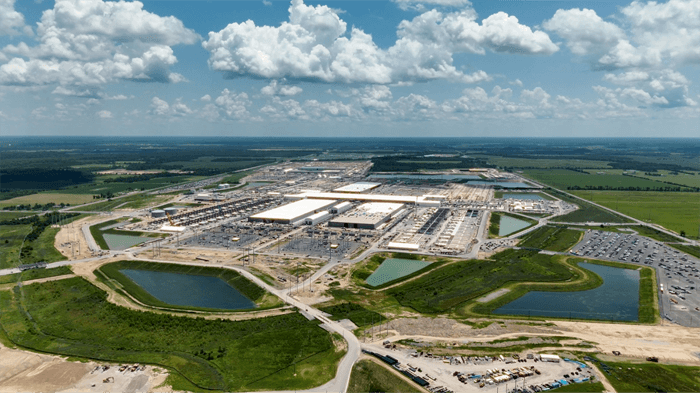
Meta Richland Parish Data Center Campus, July 13, 2026 | Source: Meta
And Meta can afford it. While Meta is using most of its free cash flow for this year and next to fund the buildout, it still sits on about $81 billion in cash. It has the money to fund the buildout, and in time, the investment will pay off.
The numbers keep going up. Concrete, foundational, and forward-looking.
A once-in-a-lifetime infrastructure buildout that will change the world.
Have a wonderful weekend,
Jeff
Hi Jeff,
A big THANK YOU to you and your team. I have been an Unlimited Member since mid 2020. Your service has been very profitable for me. Your Bleeding Edge keeps me informed on what is happening in the tech world. I don’t know where else I would get this coverage. Your work is much appreciated. I’m looking forward to an exciting spring and summer of biotech now that winter is over.
Now, my question about Cerebras. I understand that it takes 15 to 28 kW to power this massive “chip”. That is a lot of heat to dissipate in a small area. Does it have to operate on a liquid-cooled cold plate? Does that limit the application somewhat? I would like your comments on this. Thank you. Best regards.
– Iver L.
Hello Iver,
Thanks for being an Unlimited member. I’ll have some news coming out for Unlimited members very soon that I hope you’ll be excited about.
I share your excitement about biotech, and I can’t tell you how excited I am about this fall and next year, for that matter.
A wave of IPOs will begin in the fall, giving us a large number of exciting tech/biotech companies to trade/invest in, along with a bunch of industrial companies that are thriving on the back of this massive infrastructure and reindustrialization trend happening right now in the U.S. This will continue for another two to three years at least.
As for Cerebras (CBRS), you’re right. This massive “chip,” which is actually an entire silicon wafer representing the largest AI semiconductor ever built, runs very hot.
It has 4 trillion transistors and delivers 125 petaflops of performance. The WSE-3 has 19 times more transistors and 28 times more computational power than the NVIDIA B200.
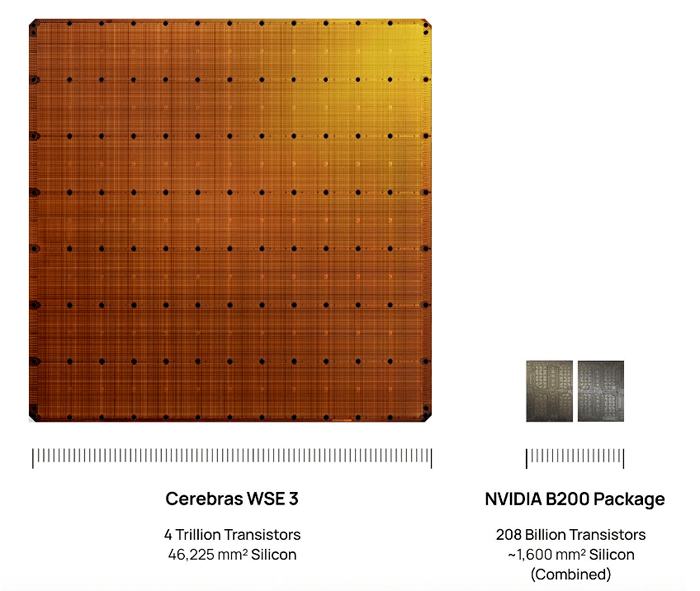
Cerebras WSE-3 vs NVIDIA B200 | Source: Cerebras S-1
It’s a remarkable piece of engineering.
It’s because of this incredible performance and computational power that it requires so much electricity. It consumes about 23-25 kilowatts (kW) in normal operations and maxes out at 27 kW.

Cerebras WSE-3 | Source: Cerebras
And because of the size of the semiconductor, no standard air cooling with heatsinks – passive heat exchangers designed to transfer and dissipate heat produced by small, high-power, high-heat devices – could keep the entire system cool enough to run properly. I remember this as Cerebras was evolving in its early years.
They tried to find solutions from third-party vendors for cooling systems, but no one was willing to develop a custom system for Cerebras. They probably assumed Cerebras would be unsuccessful with its radical design, so they didn’t see it as a big market opportunity.
As a result, Cerebras had to develop its own proprietary liquid cooling system for its WSE-3 to solve the heat problem.
The way that Cerebras does this is by attaching a copper cold plate to the back of the WSE-3 semiconductor inside the CS-3 system. The copper cold plate has micro-fin channels used for coolant flow. The CS-3 cooling system pumps 100 liters per minute through the system at 20 ° C, plus or minus 2 degrees.
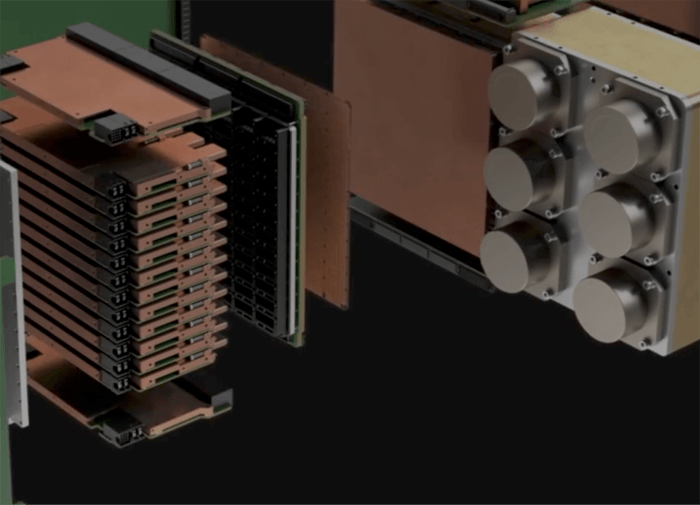
Cerebras CS-3 System | Source: Cerebras
The image above isn’t great but shows us how the CS-3 is constructed. If we look closely, the WSE-3 is in the middle (you can see grid marks on it). To the right is the copper cold plate. To the left of it is the circuit board that attaches to the WSE-3 (the black plane). And to the left of the circuit board is the power delivery assembly.
I don’t really view this implementation as having any limitations. These are just engineering requirements. Any data center will have to be designed with the ability to provide this kind of liquid cooling to support a Cerebras installation.
This means that the system is designed for AI data centers with the needed infrastructure, not really for small single-rack deployments (though that is possible, just not the most economical).
Liquid cooling, while causing increased upfront costs, is becoming the industry standard for high-performance AI systems. This becomes truer with each successful generation of AI semiconductors that produce increased heat at max performance.
Hi Jeff and team,
Reading this makes me wonder if perhaps the media companies that put this kind of spin on these types of announcements are actually positioning themselves to benefit from the hype (or at least the executives are).
I’ve been wondering this about politicians and other influential people and organisations for some time but have mostly chalked it down to Hanlon’s Razor (which broadly states that incompetence is far more likely than malice).
However, there have been times when your explanations seem so obvious that it’s hard not to ask who benefits from all the apparent ignorance. I know that this has nothing to do with your research, but have you seen any evidence of manufactured volatility in the market, for the benefit of the orchestrators and to the detriment of retail investors like us? Thanks.
– Robin L.
Hi Robin,
I believe that you were referring to my Bleeding Edge – AI is Fueling Jobs Growth, which I wrote earlier this month.
Regardless, your instincts are absolutely correct.
And I wish that the old adage of Hanlon’s Razor were true, but it’s not.
Let’s use an example… The first will be for the government. The pandemic was manufactured volatility, designed for two reasons.
One, to manufacture an outcome in an election by pushing mail-in/drop box balloting, enabling widespread fraudulent voting. And two, to push through a massive spending bill to support the manufactured “crisis” through which hundreds of billions could be siphoned off fraudulently.
I can’t tell you how many hearings on Capitol Hill I’ve watched where excruciating detail on these frauds was presented. I’ve reviewed municipal-level hearings as well, which document the severity of the frauds.
Thousands of people have already been convicted of fraud and election interference. And the work is nowhere near complete.
Just to understand the scale of the manufactured crisis and who benefited…
Contrary to Hanlon’s Razor, these were structured, organized, fraudulent schemes designed to steal from the U.S. taxpayer. They weren’t stupid. They were criminals.
Understanding what took place is actually important as an analyst. If a trillion dollars will be spent in some sector, or stolen from some sector, I have to understand the trading or investing implications of that happening.
The Ukraine conflict was started by the U.S. It was another manufactured crisis used to push through massive amounts of spending programs, of which at least tens of billions of dollars have been siphoned off.
The investment implications, however, have been bullish for U.S. defense companies and drone companies developing the next generation of warfare.
Manufactured volatility or crisis in the financial markets happens all the time. And it is always designed to benefit the investment banks or hedge funds and their top clients. There are literally too many examples to name. But let’s look at a very recent conviction by way of example.
Andrew Left, the founder of Citron Research, was found guilty last month of one count of securities fraud scheme and 12 counts of securities fraud. Left was a stock analyst who got a lot of media coverage for identifying stocks that he believed would fall in value.
His “game” was to build large short positions in companies and then use his public platform to create market volatility in the stocks that he held short positions in. Once he drove stock prices down with his negative spin on companies, he would cover his short positions and make massive profits.
The United States Attorney’s Office determined…
Left used his social media following and public platform to earn at least $21 million in quick profits by fraudulently manipulating the stock market from at least March 2018 to October 2023.
This kind of market manipulation happens all the time.
Investment banks put their best clients into stocks first, and then, after everyone is “in,” they get on the financial news networks and in The Wall Street Journal and Barron’s talking up the companies that they have already put their clients into.
The stock rises, and eventually they take profits. But they don’t tell the retail investors that they are taking all their money off the table.
This is why my team and I work so hard to:
My approach works.
Yes, there will always be downturns in individual asset classes. But in 2025, the Near Future Report beat all but one major hedge fund with a money-weighted average return of more than 40%, and Exponential Tech Investor returned a 58.6% money-weighted average return, crushing all the major hedge funds.
On a portfolio basis, these are extraordinary returns. On an individual stock basis, some stocks were up more than 1,000%, and I’ve lost count of how many triple-digit percentage winners we have.
We can win. We can even beat Wall Street at its own game. And there are times when we can use the manufactured volatility/crisis to our advantage.
Jeff, if you are talking about the blockchain trilemma, you may want to look at KAS.
KAS is a layer-one chain that solved the blockchain trilemma. KAS has the potential to be the true peer-to-peer payment system that BTC was meant to be. Sincerely.
– Quy N.
Hi Quy,
Thanks for the question on an interesting project. Ben Lilly – my senior blockchain analyst – joined me in answering it.
For folks who might not be as dialed into all things blockchain, the “blockchain trilemma” references a technological constraint in blockchain technology in which a blockchain cannot pursue the highest level of scalability, security, and decentralization simultaneously. There must be tradeoffs. You can only maximize two of the three features.
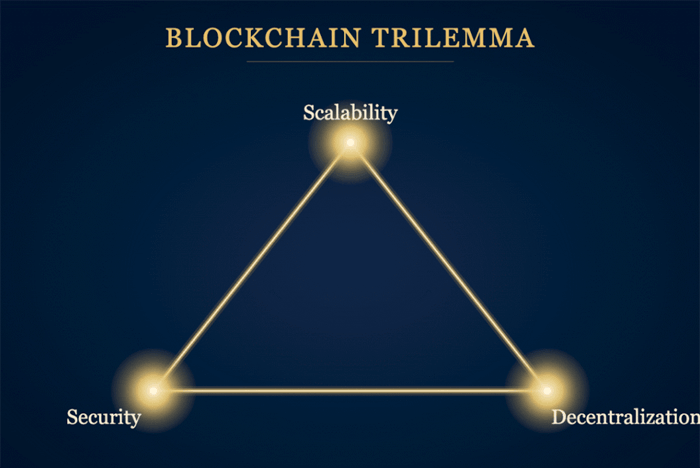
We dug into it recently over at our Permissionless Investor advisory.
Before we dive into the question, it’s worth noting that Bitcoin sits in a class of its own at this point in the public blockchain and peer-to-peer network space.
It was first. It’s the oldest. As a result, it has the greatest “Lindy effect,” which is to say that because it has been around the longest, it will likely survive for a much longer period of time.
Because of this Lindy effect, it also enjoys integrations into wallets, brokerage accounts, lending and borrowing desks, and at this point, ETFs and various Wall Street derivative products.
To replace Bitcoin as the dominant peer-to-peer payment system would need to go beyond solving the trilemma problem. And would need to somehow attract far greater integrations and investors than anything else to date.
I wanted to get that out of the way because KAS might, in fact, have superior technology. We’ve seen many blockchains have superior solutions to Bitcoin over the years. But none of it has been able to dethrone bitcoin.
There’s even a project called IOTA that was building a competitor to normal blockchains using what’s called a Directed Acyclic Graph (DAG). Most blockchains order blocks sequentially – one right after the other. DAGs, on the other hand, can generate blocks in parallel, allowing for far more transactions and blocks over the same period. Iota called their DAG a “Tangle.”
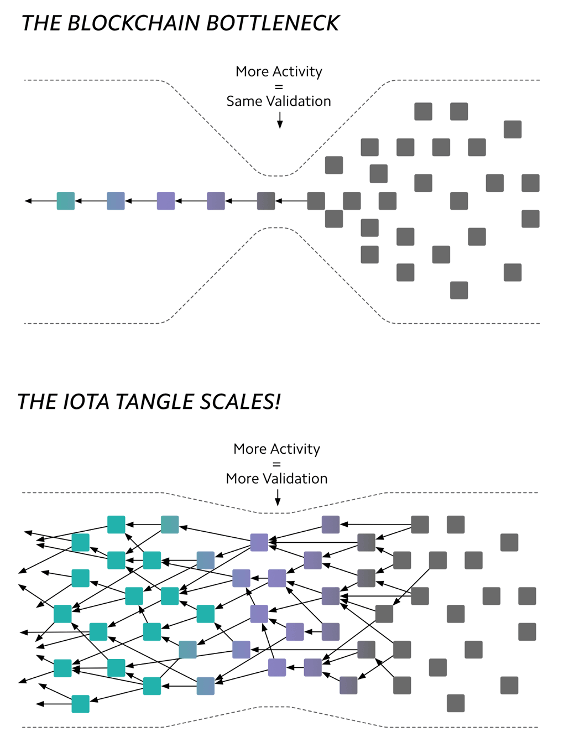
Source: Iota Blog
IOTA launched in 2016. It had some security issues in its early days. But one feature that really gave many in the industry pause was its need to have what was called a “coordinator.” The coordinator was run by the IOTA Foundation.
DAGs are incredibly powerful and able to scale thanks to blocks happening in parallel. But this introduces an issue in terms of ordering. If there are multiple blocks happening at the same time, the network lacks sequential transactions.
For example, let’s say two transactions take place back-to-back on the same lending protocol. The transaction that happens first might impact the rates and capital available to borrow for the second transaction.
Sequencing matters.
The centralized coordinator on IOTA is what brought ordering to its network. But – as we saw with the blockchain trilemma – that meant the network was sacrificing decentralization for scalability. And that also impacted security.
KAS is also based on a DAG system… And from what I see, KAS does say it addressed the need for a coordinator with DAG thanks to GHOSTDAG.
This gives it sequential ordering and essentially creates a main chain through its network. Which means it’s dependent on proof-of-work, and I’ve noticed a significant concentration of the network’s hashrate lies in just two mining pools.
The hashrate is the amount of computational power used by a proof-of-work network to process transactions. The more distributed the total hashrate, the more secure the network, since it would cost somebody a lot of resources to control a majority of that hashrate.
And when we look at how that computational power is distributed, we get an idea of how centralized or decentralized the network is. A healthy network would normally see a hashrate highly dispersed across many mining pools. This would give it greater decentralization.
It’s a bit in the weeds, but it’s important to understand for context around why this gives us pause.
In the case of KAS, one mining pool commands more than 36% of the network’s hashrate. The second mining pool has almost 19%. Combined, they would have a 51% attack risk to the network, which means it’s not very decentralized at all.
All it would take is the collaboration between these two mining pools, and the blockchain could be manipulated. Theoretically, it could be decentralized, but in practice, it is not.
But, more importantly, I don’t like that KAS pushes its smart contract layering to its layer-two blockchain. The reason comes back to the sequential issue…
The GHOSTDAG solution and DAGs in general are not common solutions for peer-to-peer payment networks. That doesn’t mean they are not the best… It just means they are not as battle-tested as normal blockchain technology.
One downside is that DAGs can be difficult to use with smart contracts. It comes back to the ordering concern. And it’s most likely why KAS has pushed this off to a layer-two until they can better test the contracts on the layer-one.
For these reasons, we don’t believe KAS has solved the trilemma. And to be clear, it’s not about whether a blockchain is solving it or not. Each blockchain must decide what it’ll focus on as it relates to these three priorities: security, scalability, decentralization.
Pursuing all means you’ll be average at all three. Pursuing one of them to the point of being best in class means you’re sacrificing one or both of the other issues.
That is the reality of the trilemma.
As technology improves and researchers find new and innovative solutions, we will be able to pursue more of each of the three pillars. But no matter what, there will be tradeoffs.
Ben and Jeff
Add Brownstone Research as your preferred source on Google to see our latest stories in your feed.
 Add as a preferred source
Read the latest insights from the world of high technology.
Tesla and SpaceX have now formed special committees to evaluate a potential merger between these two Elon Musk-led powerhouses.

This isn't about simply recreating the old system on new infrastructure…

As companies give digital workers more responsibility, protecting their systems becomes part of the cost of putting AI to...