




The Catalyst for Critical Assets
All of these technological advancements will require metals and materials on a scale we’ve never seen before…


The most significant announcements NASA Administrator Jared Isaacman made at the MAX POWER aerospace festival centered around a renewed drive to get NASA’s lunar ambitions back on track…

Managing Editor’s Note: This Wednesday at 8 p.m. ET, Jeff is sitting down with our colleague, Larry Benedict, to show you a different kind of trade.
These trades, what they’re calling “Penny Tech Trades,” cost less than $1 per contract. And at the event Wednesday evening, Jeff and Larry will show how the trades work by placing real trades with real money, right on camera.
It’s free to attend, and every attendee receives the free trade ideas, no strings attached. Just go here to add your name to the guest list.
This weekend, NASA hosted its MAX POWER aerospace festival at the Kennedy Space Center in Florida.
The event came in honor of America’s 250th anniversary – to celebrate the past, present, and future of space exploration.
NASA Administrator Jared Isaacman’s enthusiasm for NASA’s reborn future was on full display…
He flew an F-5 and a MiG-29 jet for the crowds – followed by parachuting into the event with some big announcements.
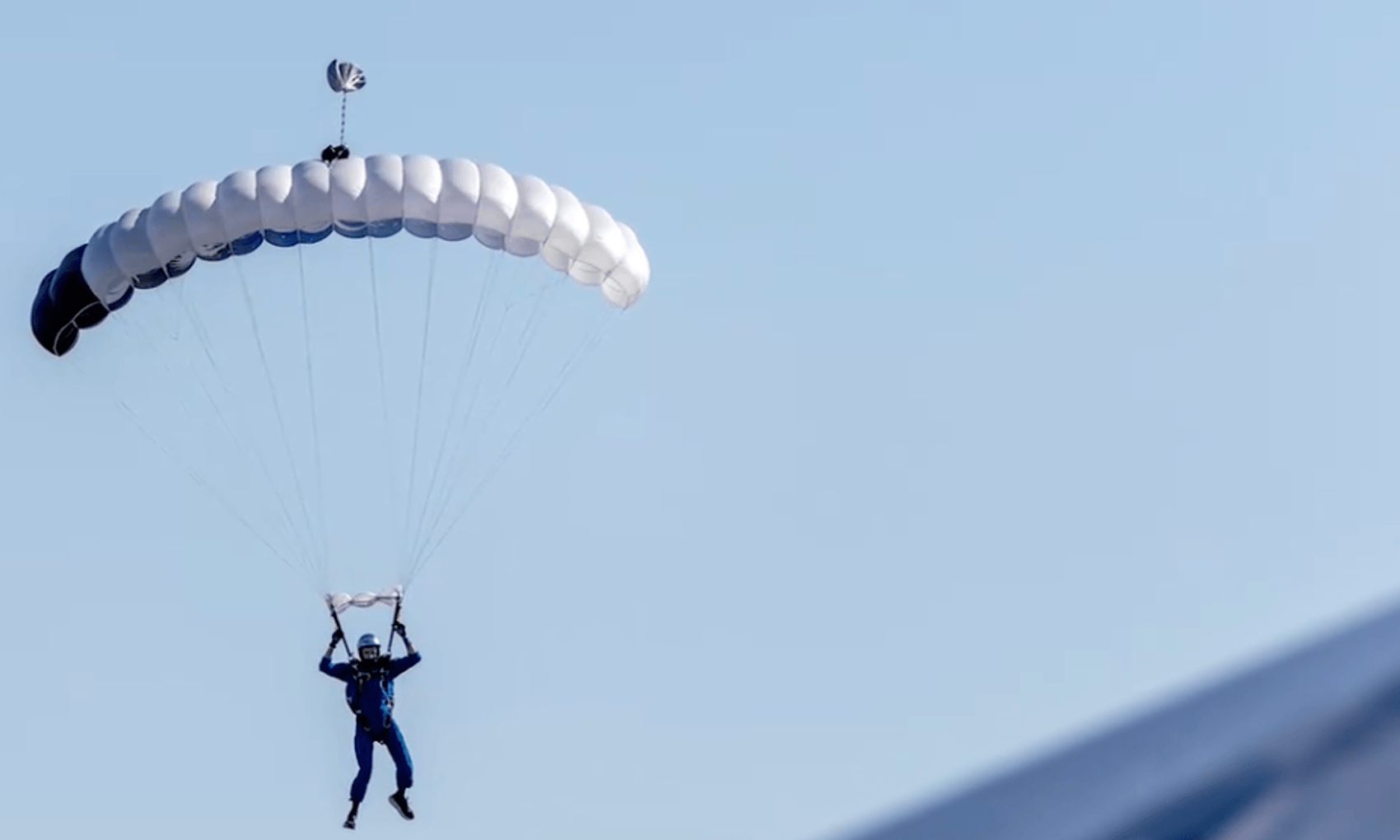
NASA Administrator Isaacman Parachuting into MAX Power | Source: Space.com
Theatrics aside, Isaacman is bringing not only his passion for space exploration to NASA, but also his business acumen and more of a Silicon Valley mindset to an organization – one that’s been congealed in bureaucracy and inefficiencies.
The most significant announcements Isaacman made centered around a renewed drive to get NASA’s lunar ambitions back on track.
This has been Isaacman’s primary thrust since he was sworn in as NASA’s administrator less than a year ago in December 2025.
This year, NASA streamlined its Moon Base program…
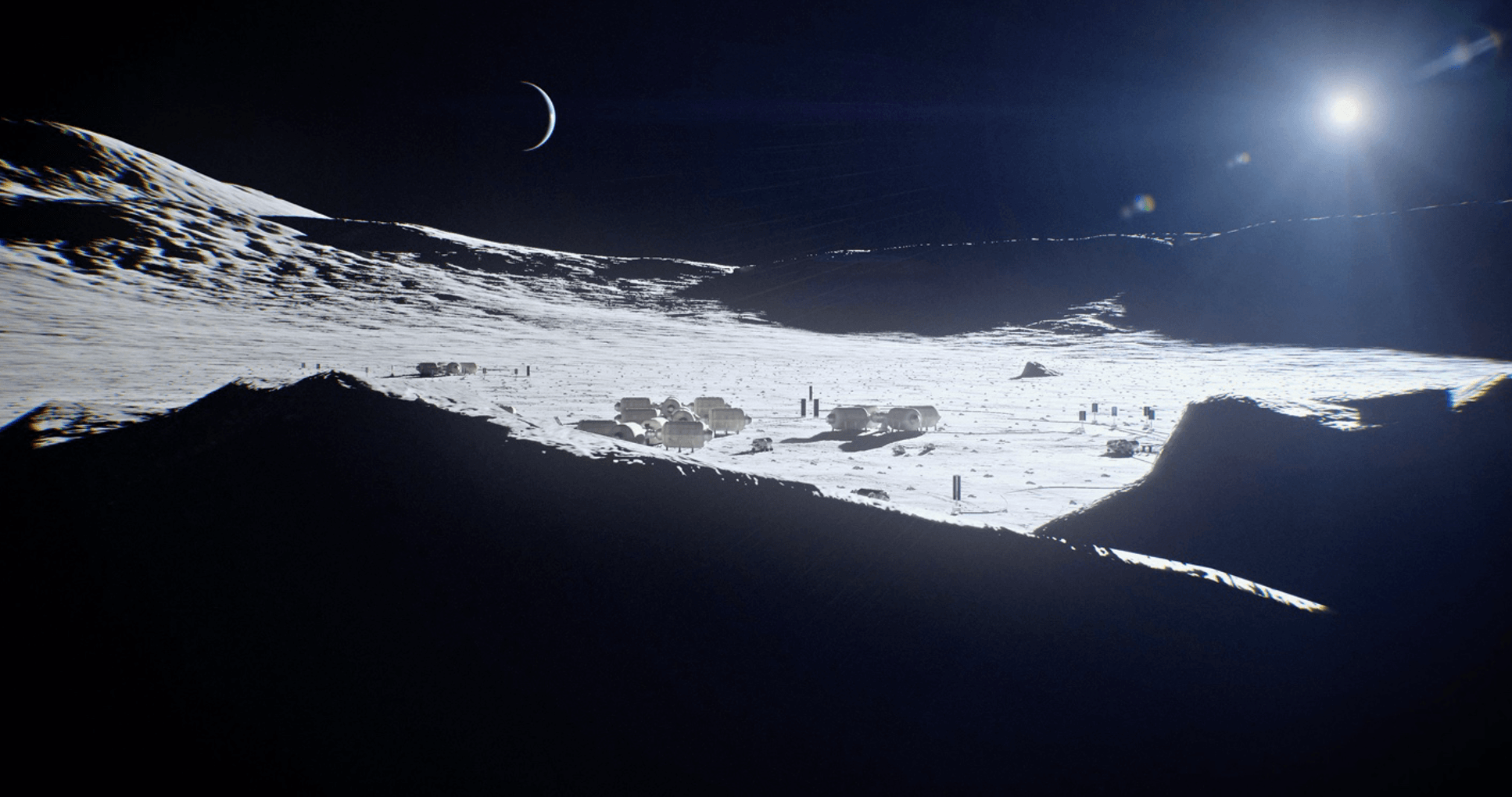
Rendering of NASA Moon Base | Source: NASA
Instead of attempting to execute on the entire initiative in-house, NASA has turned to private industry to accelerate its timelines to returning to the moon.
For the next phase of its Commercial Lunar Payload Services (CLPS) initiative, which is the program to deliver various payloads to the lunar surface, NASA has named eight companies that will compete for missions:
Of the eight companies named, only Blue Origin remains private.
And only two – Lockheed and Northrop Grumman – are incumbent aerospace companies. This fact is very telling about Isaacman’s strategy.
This CLPS-2 project is a 10-year initiative with an indefinite delivery and indefinite quantity master contract – with a $10 billion maximum value.
It’s actually a small amount considering how ambitious the Moon Base project is.
That’s because it reflects this next generation of the aerospace industry – enabled by SpaceX (SPCX), which has resulted in launch costs plummeting by more than 90%.

Fortune says Wall Street is debating whether we’re in an AI boom or a bubble. But hedge fund legend Larry Benedict says it makes no difference whether AI stocks skyrocket or crash. Either way, one three-letter ticker he’s watching could hand everyday Americans a chance to pocket YEARS of gains in a matter of days… over and over again. All thanks to a major event in Washington, which just triggered an accelerated wealth-building window. Click here to get Larry’s three-letter ticker FREE before December 9.

Three reasons:
It all happens Wednesday, November 11, at 8 p.m. ET, on an exclusive website. The event is free, but availability is limited. Save your seat with a single click here.
This is a particularly exciting moment in time as SpaceX’s next Starship launch, Flight 15, is scheduled for November 13 – this Friday – with the launch window opening at 4:45 PM Central Time.
While this launch is SpaceX’s second commercial launch that will deliver another 26 Starlink V3 Satellites to orbit, there is another reason for great excitement…
SpaceX’s launch 15 will be the first attempt at catching both the Super Heavy booster and the Starship spacecraft at the launch pads in mid-air with the Mechazilla robotic arms.
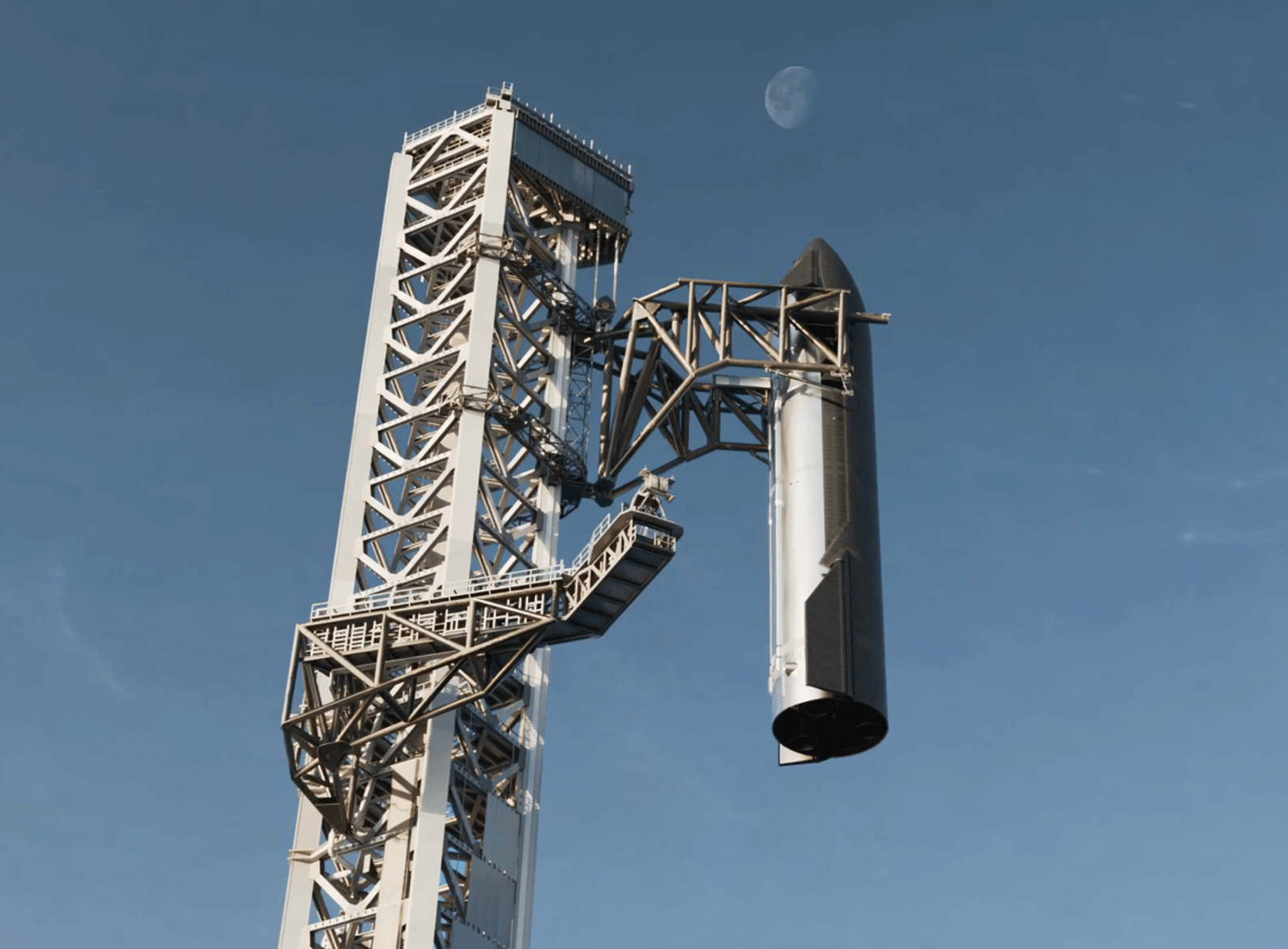
Rendering of what we expect to see after launch 15 | Source: SpaceX
Sheer insanity and absolutely inspiring.
It’s the economic and operational significance of this milestone that is so critically important…
Returning both the booster and the Starship back to Earth safely is a demonstration of reusability that will result in launch costs dropping by another 90% at scale.
And it is SpaceX that is the most likely to be able to deliver regular payloads to the moon, cheaply and consistently.
NASA left the door open for its own Space Launch System (SLS) as a part of the CLPS initiative.
However, the SLS relies on Boeing and other subcontractors… and currently costs $4.2 billion per launch for the Artemis program. And Isaacman’s own stated goal for the SLS is only one launch per year, which basically unveils the limitations of NASA to execute on more frequent launches.
In other words… The SLS no longer makes any sense at all.
SpaceX can accomplish everything that the SLS can accomplish (and a whole lot more) for less than 5% of the cost of a single SLS launch.
I suspect that Isaacman plans to wean the use of SLS over the next couple of years in a way that won’t negatively impact the current Artemis program.
And Blue Origin still needs to prove its launch capabilities to NASA.
Earlier this year, Jeff Bezos refocused Blue Origin on lunar missions and discontinued its commercial New Shepard flights above the Karman line for civilian passengers. This was a smart decision.
Relativity Space is also in the mix for launches for NASA on its Terran R rocket…
However, the Terran R has never been launched, and the first test launch is expected before the end of the year.
Assuming a successful mission of the Starship this Friday, it’s easy to see why SpaceX is in the pole position for transporting large payloads to the moon, potentially regularly, to help NASA establish its lunar outpost.
Aside from the lunar payload services, NASA announced it is moving forward with its Polar Rover for Observation, Mapping, and In-Situ Exploration (PROMISE).
This is an exciting mission, as it is targeting the Moon’s South Pole to assist with landing site selection.
It is also aiming to drill into the lunar regolith to search for ice/water and Helium-3, and to better understand the chemical composition of the lunar surface near the South Pole.
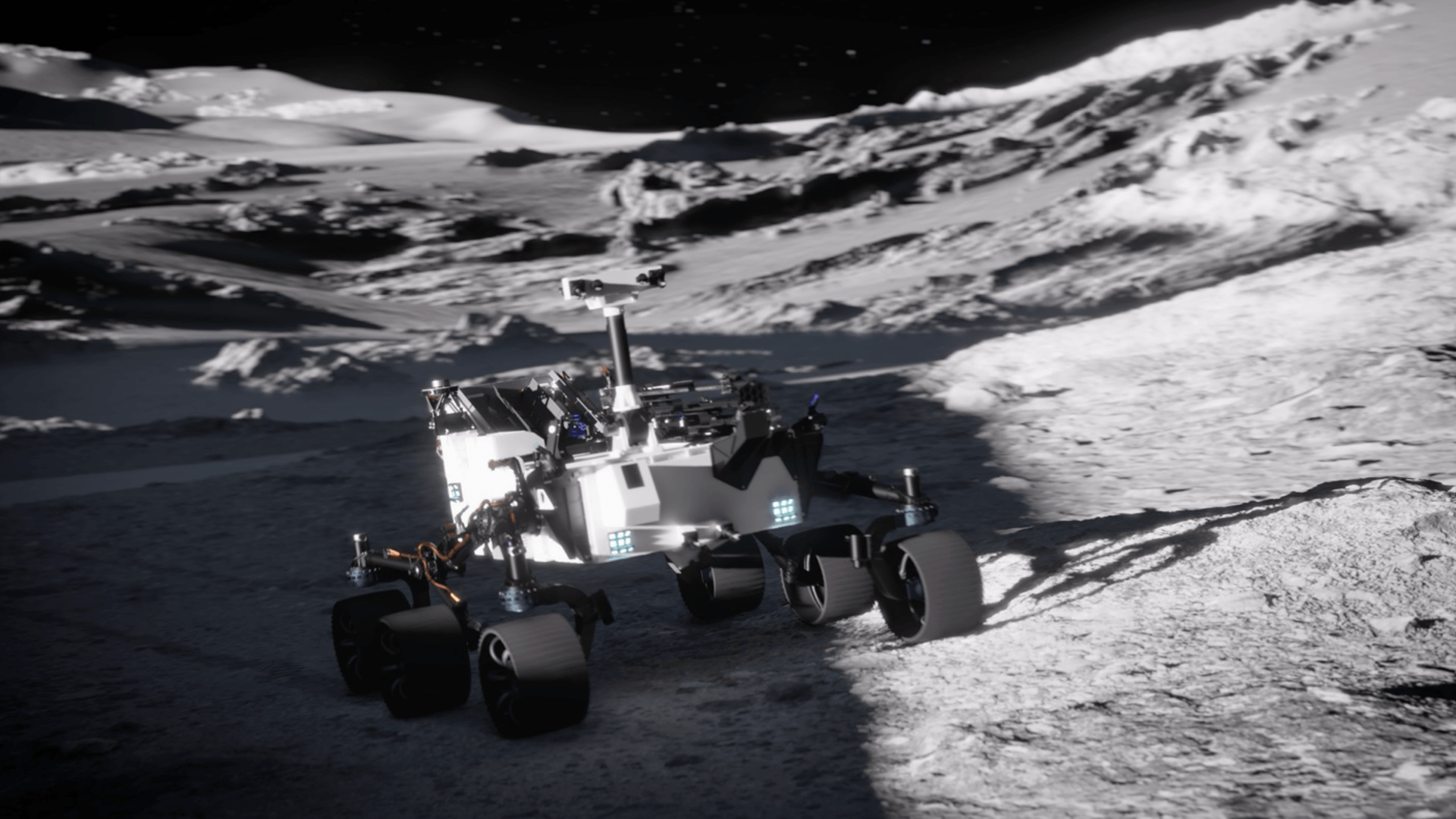
Rendering of NASA PROMISE Lunar Rover | Source: NASA
The PROMISE rover will use a lot of the technology used in NASA’s Curiosity and Perseverance Mars rovers, but it will be nuclear powered, which is necessary because of the lack of sunlight in that area of the Moon.
NASA awarded Blue Origin a $94 million base contract to deliver the lunar rover to the Moon with a performance-based option for an additional $140 million more if it is successful.
Having a competitive market for services will benefit NASA to ensure costs are as low as possible.
And if Blue Origin experiences delays, SpaceX will be ready to fill in.
Other lunar infrastructure announcements were awarded this weekend to Honeybee Robotics for energy storage, Redwire (RDW) for power generation, and Yank Technologies for wireless power transfer.
And for communications, SpaceX will be deploying a Starlink network of communications satellites into lunar orbit – to provide constant communications between the lunar surface and Earth, 24 hours a day.
And as crazy as it sounds, the lunar Starlink network will have enough capacity to stream all of the services that we enjoy today on Earth, to whoever is stationed on the moon.
The stark reality is that the U.S. is in a modern space race…
Only this time, the threat is very real.
In a recent interview, Isaacman made the point that in the ‘60s and ‘70s, China was way behind, but today it is entirely different.
China has an operational space station. It has demonstrated the capabilities of its lunar rovers, space suits, launch technology, and its landers.
And it is targeting a manned lunar landing in 2029.
This is what is driving the 2028 data for the crewed Artemis IV lunar landing and all of the other missions reviewed above.
This is precisely why this public/private partnership is so critically important.
Not only can private industry get the work done for a fraction of the cost compared to if NASA performed it in-house, but it can get it all done in a fraction of the time.
The Artemis II 10-day mission around the moon earlier this year was so inspiring.
Artemis III will launch in June 2027 to low Earth orbit to test docking of NASA’s Orion capsule and one or both of SpaceX Starship and Blue Origin’s Blue Moon spacecraft in preparation for the 2028 lunar landing.
We have an exciting 24 months ahead of us.
Bullish on aerospace technology, bullish on the space economy, and bullish on NASA’s direction for the first time in a long time.
We have so much to look forward to.
Add Brownstone Research as your preferred source on Google to see our latest stories in your feed.
 Add as a preferred source
Read the latest insights from the world of high technology.
All of these technological advancements will require metals and materials on a scale we’ve never seen before…

I know that this will likely be an uncomfortable subject for many of us. It definitely falls under the...

Kalshi hit a record $98 billion in October volume. Here’s how prediction markets went from academic experiment to a...