




Bitcoin Will Hit $251,000
Most Bitcoin price projections are entertaining, but unhelpful. So, I made my own.



Many weaker banks will fail. I can’t predict the number. But many.
Managing Editor’s Note: Every four years, something strange happens in the market. Jeff Brown calls it “the million-dollar cycle.”
You won’t hear about it on the evening news. Most financial advisors couldn’t explain it if you asked. And yet, like clockwork, it’s shown up again, and again, and again.
Most people don’t notice until it’s already played out. But a small group of investors knows exactly what to watch for. And each time this shift has taken hold, they have had the chance to turn a single $1,000 stake into six figures…
If you’d like to potentially be one of them, make sure to RSVP for Jeff’s upcoming event with one click here.
A press conference with the chair of the Federal Reserve might not seem like a hot ticket. But former Chair Jerome Powell knew how to draw a crowd.
Analysts would dissect everything he said (and how he said it) to gain an edge in the market.
Powell’s pressers were some of the first use cases for natural language processing, a field of AI that “listens” and analyzes what a human says.
Powell’s remarks were analyzed in real time to determine whether his words were hawkish or dovish. The models would even fixate on how frequently certain words appeared. There were a few attempts to decipher his tone – frustrated, relaxed, on edge, etc.
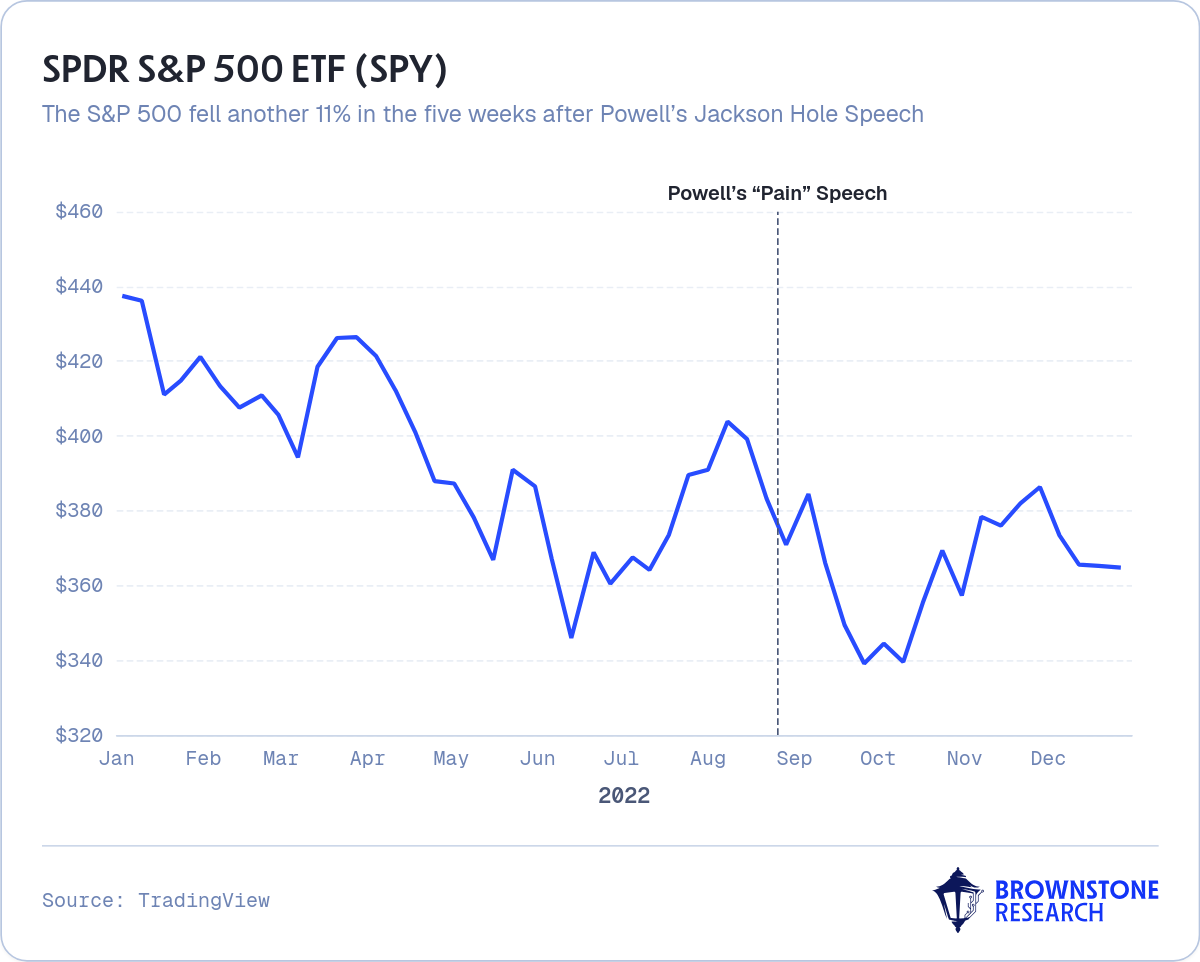
His 2022 speech at Jackson Hole was a prime example. It ran just eight minutes. That’s short for the Federal Reserve’s marquee annual address. But he made the most of it.
Going into the event, the Fed had hiked its key rate by more than 200 basis points that year, an attempt to beat back inflation. But after Powell called inflation “transitory” for much of 2021, investors wondered whether he had the stomach to keep raising rates.
They got their answer.
In those eight minutes, he used the word “pain” twice. The context was important. Pain was one of the “unfortunate costs” of bringing down inflation. He also mentioned Paul Volcker – the Fed chair who hiked rates to nearly 20% to whip the inflation of the late ’70s – twice.
That was enough. Markets sold off hard, and “pain” became the one-word summary of the entire tightening era.
The practice of analyzing the Fed chair’s words evolved from there. AI systems would analyze the words, and algorithms would trade against the data in milliseconds.
Powell was arguably the most important show in town during his tenure. But his successor, current Chair Kevin Warsh, may not be. Increasingly, markets are listening to somebody else.

While I can't guarantee you'll become a millionaire... The last four times this secret market cycle played out, you could have turned $1,000 into $1.6 million during the first cycle in 2011… More than $1.8 million in the second cycle in 2015… More than $680,000 in the third cycle… And more than $1.7 million in the last cycle in late 2022. It’s happening again by the end of October, so click here to RSVP to Jeff Brown’s The October Million-Dollar Cycle special event.

That’s when billions of dollars could begin moving into one overlooked corner of the AI boom. As that money moves, Larry Benedict believes it could create your next chance to profit. Get the ticker he is watching before December 9.
Announcements from Treasury Secretary Scott Bessent are the new hot ticket. And it’s not hard to see why.
The Treasury’s main job is issuing U.S. debt.
There’s a lot of it, more than $40 trillion. And how the Treasury manages that pile is becoming increasingly important.
That’s because the market is asking the U.S. government to pay more for every dollar it borrows. Yesterday’s 30-year bond auction cleared at a yield of 5.618%, a 26-year high for that maturity.
The importance of these yields extends far beyond the Treasury market. The 30-year sets the tone for what it costs to get a mortgage and what corporations pay to borrow. Rising yields are a cost burden that falls on the economy itself. It’s why Bessent’s comments carry more weight than anything Warsh has to say.
And to understand why, let’s have a closer look at yesterday’s auction…
On the surface, it went better than expected. The sale drew solid demand, and yields that had pressed toward 5.73% earlier in the day fell to around 5.6% after the results crossed.
That gives the impression that things went well.
Falling yields imply strong buying. Strong buying implies investors still want American debt, which would seem to imply the long-term fiscal outlook for the federal government is better than many assume.
But one caveat: There was another buyer at yesterday’s auction, the Treasury itself. It deployed the full $6 billion of what it allows itself to spend on buybacks.
Which means we shouldn’t be surprised to see Bessent spend another $6 billion next week or perhaps raise his own self-imposed cap.
The main seller to Bessent was banks. Primary dealers, to be specific.
They are obligated to absorb whatever other bidders don’t want. That leftover supply lands on their balance sheets. Which means banks are loaded with long-dated debt they never asked for, and they’re the happiest to sell it back to the Treasury.
The debt banks actually want is short-term. It’s cheaper for them when it’s time to make sure all their debts and credits line up at the end of the night.
But short-term Treasurys are not as easy to buy as they once were. And to understand why, we need to look at how stablecoins are changing the financial system.
Bessent has a price-insensitive buyer of short-term Treasurys. It’s the stablecoin issuer.
Remember, U.S. dollar stablecoins are backed by these short-term Treasurys, which are considered “cash equivalents.” That makes stablecoin issuers price agnostic. The issuers don’t care what that debt costs because they have to buy it whenever they issue stablecoins.
This is a relatively new phenomenon…
The pro-crypto stance of the current administration has done two things for crypto.
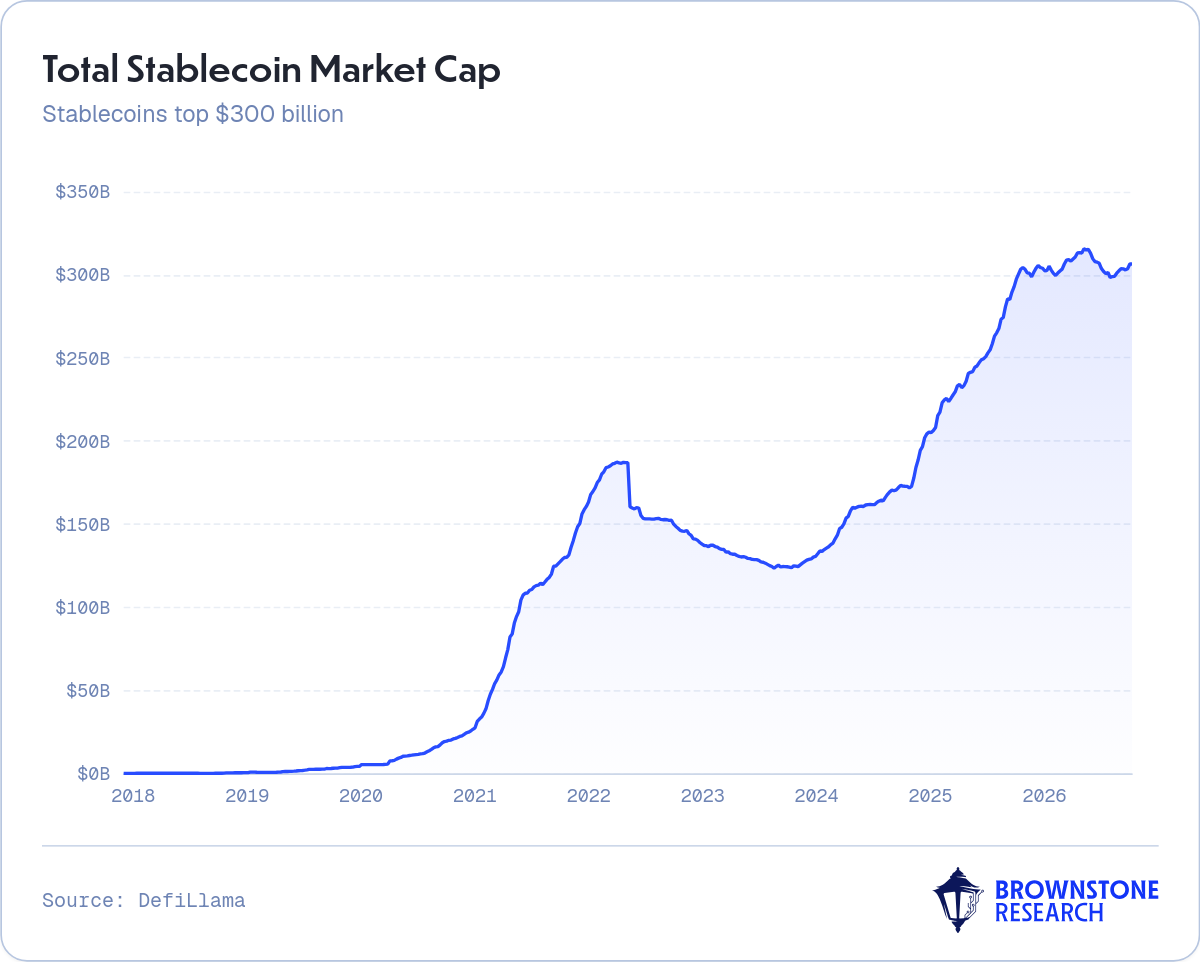
First, it gave stablecoin issuers the confidence to exist thanks to the GENIUS Act and a supportive regulatory regime. In one year, the stablecoin market grew from $172 billion in late 2024 to more than $300 billion by late 2025.
Second, these new stablecoins introduced a wave of buyers into the short-term Treasury market. As a result, stablecoin issuers are reshaping the front end of the curve.
The share of short-term Treasury auctions that dealers were forced to absorb ran at 25% to 35% from 2022 to mid-2024. Then from late 2024 into late 2025, it fell to 18% to 25%. That decline coincides precisely with the period when stablecoin growth went vertical on the heels of the GENIUS Act.
Stablecoin issuers changed the market almost overnight.
This is a bit of a win-win for Treasury and the digital asset ecosystem. Bessent gets a willing buyer of short-term debt. Stablecoin issuers get the backing for their assets. And the larger ecosystem gets its liquidity.
All else equal, Treasury and investors would like to see stablecoins grow. But so far this year, they haven’t.
The stablecoin market has sat around $300 billion for all of 2026.
The market has stalled. The result is that stablecoin issuers are no longer crowding out buyers at short-term Treasury auctions.
That’s not going to fly with the Treasury. Remember the mechanics… Bessent is buying up long-term Treasurys in order to reissue that debt at shorter durations. If he can’t place that short-term supply successfully, yields get out of control. He needs a buyer, and he needs it badly.
Stablecoins are the buyer he is actively pushing to bring back. The GENIUS Act is the law for stablecoins, and it’s set to go into effect in January.
If Bessent cannot bring this buyer back to the market, his entire debt-management strategy fails.
It’s fair to say the debt issue is edging toward a national security issue…
We’ll get final numbers for the government’s fiscal year, which ended on September 30, next week. But the data we have through August paints a clear enough picture.
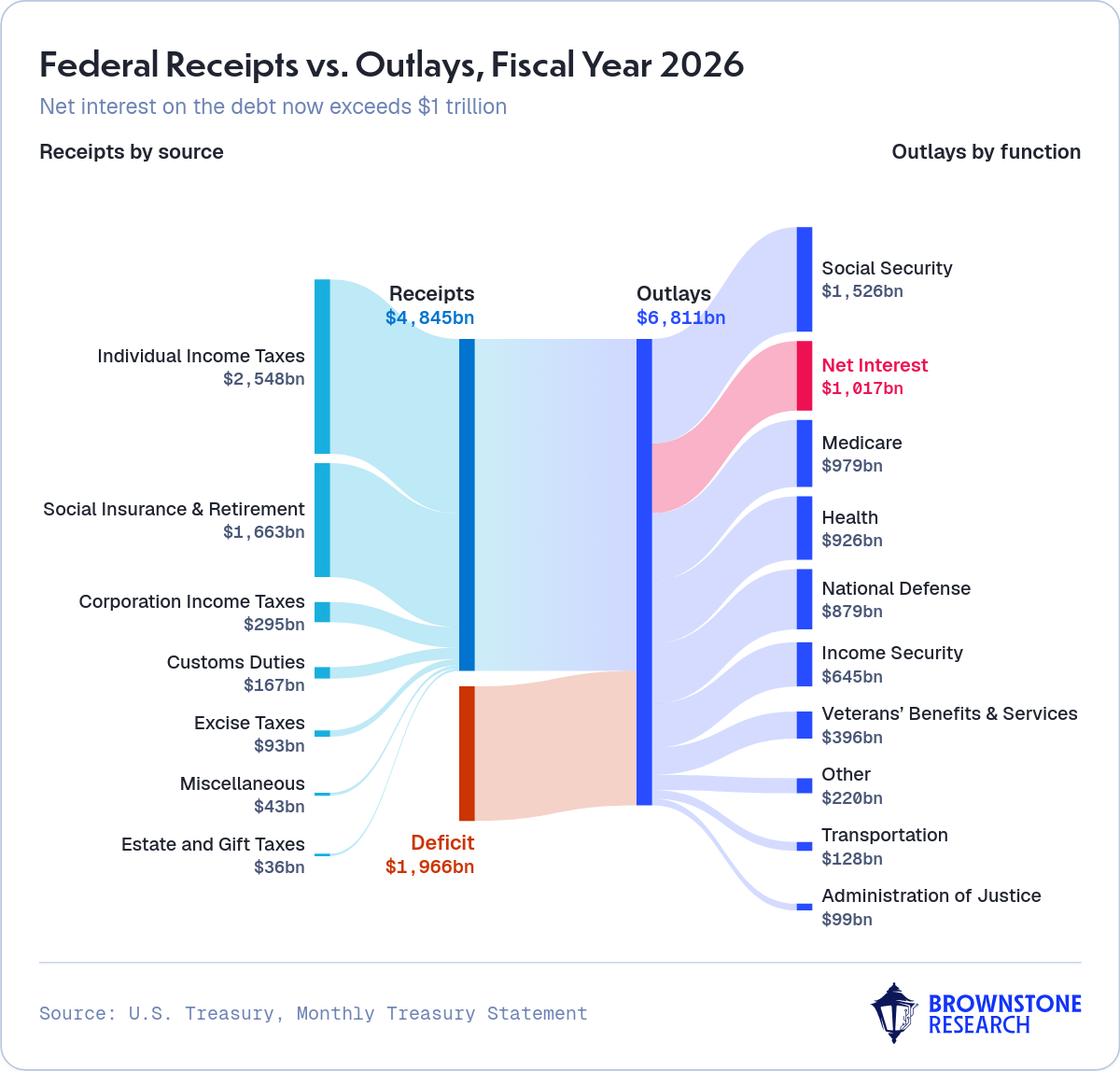
At just over $1 trillion, interest on the debt is the second-largest line item in the budget, larger than both Medicare and national defense. And remember, much of that interest is being paid on debt issued years ago when rates were lower. As it matures, Treasury will be forced to issue new debt at the now-higher rates.
That will push interest expenses higher, which will put more strain on the federal budget. As the fiscal situation becomes more tenuous, investors will plausibly demand even higher yields to buy U.S. Treasurys.
And down that ugly road we go…
There is arguably nothing more important to the financial economy than making sure Treasury yields don’t go ballistic.
And as we laid out in Don’t Fight Bessent, this is why the growth of tokenized stocks will accelerate. Maybe the administration believes in the benefits to investors. But the government definitely believes in the benefits to the Treasury market.
Assets moving onchain require more stablecoin liquidity to trade against. Onchain liquidity means stablecoins. Stablecoins mean price-agnostic buyers of American debt.
For Scott Bessent, it’s the escape hatch…
Robinhood’s chain is the live case study.
Robinhood Chain launched with stock tokens back in July and has accumulated more than $150 million in tokenized stocks and funds. That growth has coincided with the stablecoin supply on its chain more than doubling, now passing $1 billion.
But here’s the catch…
Those stock tokens are not available to U.S. persons. Which is what this whole discussion is really about.
The SEC and CFTC are pushing hard on Project Crypto – the initiative by the White House, SEC, and CFTC to bring finance onchain.
The two are releasing new guidance by the week with the goal of getting tokenized assets trading onchain as soon as possible.
And the industry knows it.
We’re seeing partnerships between legacy exchanges and crypto-native firms popping up every day.
Nasdaq put $100 million into Kraken’s parent company to launch tokenized equities. NYSE’s parent, ICE, invested in and partnered with OKX to distribute tokenized NYSE-listed stocks earlier this week. NYSE itself is working with Blockchain.com and Securitize on its tokenized trading venue.
None of this is coincidence.
Once U.S. persons get the green light, Bessent gets his buyer back. We’ll know the buyer has returned because it quite literally changes the financial ecosystem.
And once this change occurs, I expect the rules to shift at the old banks that unlock a wave of liquidity. More on that crypto catalyst in a future essay.
For now, know this…
Stablecoin issuers are becoming the Treasury’s main lifeline. Not the banks, which were the main distributors of Treasurys for generations.
That role is flipping. And as it flips, banks lose the regulatory moat that justified their existence. The Manhattan high-rises become a crushing expense as they struggle to compete in a financial system that no longer needs them to clear the government’s debt.
Many weaker banks will fail. I can’t predict the number. But many.
What’s coming will look like what AI did to software companies – rapid disruption in a sector that investors assumed would last forever.
It’ll be a bank-pocalypse.
What was once a walled financial system with banks as the gatekeepers will be torn down by the very industry the Treasury needs more than ever.
It’s why the banks fought so hard against the CLARITY Act. They know their time is up.
But this time, when the banks come crying to Washington, D.C., it’ll fall on deaf ears.
Bessent just needs his leverage.
Your Pulse on Crypto,
Ben Lilly
Editor, Chain of Thought
Add Brownstone Research as your preferred source on Google to see our latest stories in your feed.
 Add as a preferred source
Read the latest insights from the world of high technology.
Most Bitcoin price projections are entertaining, but unhelpful. So, I made my own.
Any sort of uptick in liquidity over the next year or two is the multiplier we didn’t see last...

The spread between what borrowers pay and what depositors earn no longer needs to fund a high-rise in Manhattan.