



The Agentic Bank Run
If Apollo is right, a bank run is coming. But it won’t be the panicked, lines-around-the-block variety...



If this were a boxing match, the fight over CLARITY would be the main event.

The gloves are about to come off on Capitol Hill.
The subject of the debate is none other than the CLARITY Act. It’s a piece of legislation that is set to lay the framework for how digital assets will be regulated in the U.S.
This is something the industry has been begging for. Without it, even the most buttoned-up projects have been walking on eggshells, especially under the former “regulation by enforcement” regime.
The bill has been around for some time…
And while the Securities and Exchange Commission (SEC) along with the Commodity Futures Trading Commission (CFTC) have been actively setting guidance the last few months, the bill acts as a final checkmark on bringing finance onchain.
It passed the House of Representatives nearly a year ago and made its way to the Senate in September of last year. The timing was unfortunate.
The government began its longest shutdown in history on Oct. 1. Upon the reopening 43 days later, Congress was trying to re-orient itself ahead of the holiday break… Which meant CLARITY Act was pushed to 2026.
That brought us to a possible January markup for the bill. But at the last minute, 100 proposed amendments were brought to the table.
The digital asset industry and the banking industry dug their heels in over stablecoin yield language. The digital asset community wanted more flexibility over stablecoin products. The bankers weren’t keen on that.
But the deluge of amendments served another purpose. It was a stall tactic. That’s how the game is played. And Senator Elizabeth “building an anti-crypto army” Warren knows how to play it.
She flooded the docket with 38 amendments that would reinforce the dominance of traditional banks.
It seems she’d prefer to protect the end-of-year bonuses for bankers rather than allow new technology to reduce margins and costs for the end user.
But we’ll put Lizzy to the side for the moment. As govtrack.us shows us, she gets her bills out of committee the least often…
For now, stablecoins are somehow still a pressing issue. But as I’ll show you in just a moment, we’ve reached a tipping point.
The outcome of CLARITY will influence the direction of the digital asset industry. If this were a boxing match, the fight over CLARITY would be the main event.
In this corner, coming in with $24.1 trillion of reported deposits, is the American banking industry.
Names on this side would include the American Bankers Association (ABA), Independent Community Bankers of America (ICBA), Bank Policy Institute, and others. Together, they’ve maintained a strong and consistent pushback against CLARITY Act.
Banks that are part of these lobbying groups are all the ones you’ve heard of—Bank of America, JPMorgan Chase, PNC Bank, U.S. Bank, Goldman Sachs, Citi….
Then there are the smaller community banks like CBW Bank, Nebraska State Bank, First Colorado National Bank, Bank of Bozeman, and about 5,000 others. These banks are mostly represented in ICBA and to a lesser extent the ABA.
Their position is consistent…
Banks believe allowing yield or rewards on payment stablecoins would encourage massive deposit flight from traditional banks to crypto products.
They often cite a presentation by the Treasury Borrowing Advisory Committee (TBAC) on digital money in April 2025.
In that presentation, the TBAC claimed up to $6.6 trillion was at risk due to yield-bearing stablecoins. That’s how much the committee believes people would move from traditional banks to stablecoin alternatives.
Obviously, deposits enable banks to write loans. Fewer deposits mean fewer loans, all else equal. On the surface, it sounds like a fair argument.
But if a bank offered higher rates on deposits, customers would have no reason to pull their money. They don’t want to do that for one reason. It’s less profitable.
Both stablecoins and banks receive the same Treasury yield rates. One of them passes it along to the end customer while the other keeps most of it for themselves.
But here’s the real kicker…
The TBAC is a committee that consists of the exact bankers fighting the fight. It’s chaired by Deirdre Dunn from Citigroup with a Vice Chair from BNY. Its member list comes with all the major bank names that overlap with the ABA and BPI—JPMorgan Chase, Deutsche Bank, Morgan Stanley, PNC, and Goldman Sachs, to name a few.
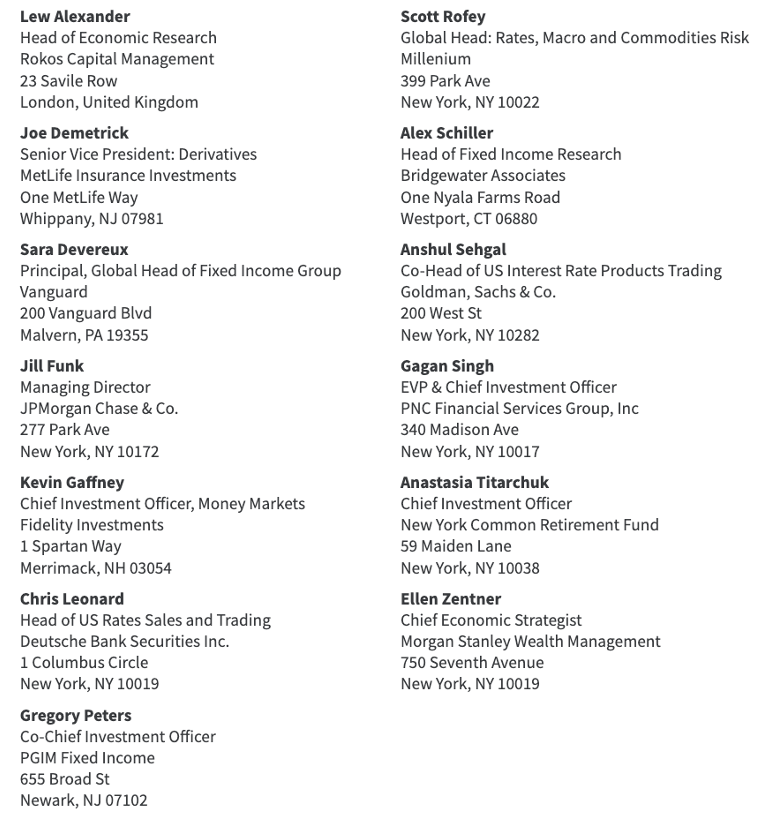
Source: Treasury.gov
Put another way…
When the banking industry cites the “risks” of stablecoins, they are citing themselves.
The digital asset industry and the White House know this. And they took a different tack…
In our other corner sits the digital asset industry.
Names such as the Blockchain Association (BA), Crypto Council for Innovation (CCI), and the Digital Chamber are the three biggest names representing the industry at large.
BA and CCI represent the crypto ecosystem with notable crypto VC firms, custodians, and major entities from decentralized finance being members.
The Digital Chamber on the other hand represents a diverse group including legacy consulting (e.g., KPMG, Ernst & Young), crypto exchanges, legal firms, market makers, and even legacy tech companies such as Cisco, Microsoft, and IBM. Even Brownstone Research is a member of this group.
Together, these groups are looking to move forward on CLARITY Act while voicing support for yield-bearing stablecoins…
These players have been relatively cordial to date. And the White House has come out on their side.
The White House’s Council of Economic Advisers (CEA) issued a report earlier this month that went right at the heart of the TBAC claim. It stated a full yield ban would have minimal impact on bank lending. Even if the bankers got what they wanted, loan writing would only boost by 0.02%.
On the heels of the report, many in the crypto corner were urging for the CLARITY Act to move toward a markup session in the Senate Banking Committee, where it’s currently stalled.
A markup would force Senators to discuss things in the open versus closed-door sessions. It’s a move the digital asset industry believes serves them well. That’s because public discourse on banks protecting their high-margin revenue streams by thwarting innovation will be a common talking point.
And it won’t frame those stalling the bill in a good light.
Which brings us to where we are right now…
The banking industry is trying to do two things.
It first wants to continue pushing the markup further down the road. Delay the bill’s passage until midterm elections heat up, and they’ll suck the air out of the room. If they can keep the bill stalled until the summer, they might prevent it from getting passed in 2026.
Second, the bankers want more concessions. After all, their entire model is at risk.
It’s not just about offering customers stablecoin yields. The digital asset industry could issue lower interest loans, lower fees, and instant service without middlemen. Now that could be a problem for traditional banking.
Banking executives know this.
Brian Moynihan, CEO of Bank of America, held an investor day last year after his company had poor earnings. It was the company’s first investor day since 2011. Some would say fear at the bank was becoming noticeable.
During the event it was clear what the bank was focused on—digital and product innovation, platform efficiency, and even peer-to-peer payments.
They know stablecoins paired with public and permissionless blockchain technology can disrupt their business. And they’re afraid. And so, they’re trying to buy time via a regulatory moat.
But the digital asset industry won’t be quiet for much longer.
The Blockchain Association and Crypto Council for Innovation co-led a letter on April 23. Signed by more than 120 companies and organizations, it urged the Senate to proceed with the CLARITY Act immediately.
The Digital Chamber also followed suit, sending formal letters to Senate Banking Committee members on April 20 and 21 pressing for markup as soon as possible.
Things could boil over this week.
Many expect the markup to get pushed to May. And once it does, I expect to see the gloves come off.
Be ready to see a lot of headlines relating to Washington D.C. and crypto in the coming weeks.
More to come from Washington D.C. soon…
Your Pulse on Crypto,
Ben Lilly
Editor, Chain of Thought
Add Brownstone Research as your preferred source on Google to see our latest stories in your feed.
 Add as a preferred source
Read the latest insights from the world of high technology.
If Apollo is right, a bank run is coming. But it won’t be the panicked, lines-around-the-block variety...

The old guard is competing to build the new gatekeeper that the market uses … and the result will...

Blockchains are infrastructure built for machines. And now the machines are here.