




NVIDIA Needs a New CEO
Two of the biggest names in tech history have suffered two starkly different events, causing very different kinds of...


Musk didn’t engage in the pedantic discourse. He just built with his teams and made the impossible happen. He caught a spaceship falling from Earth’s orbit in midair – with a level of precision that is almost impossible to comprehend.
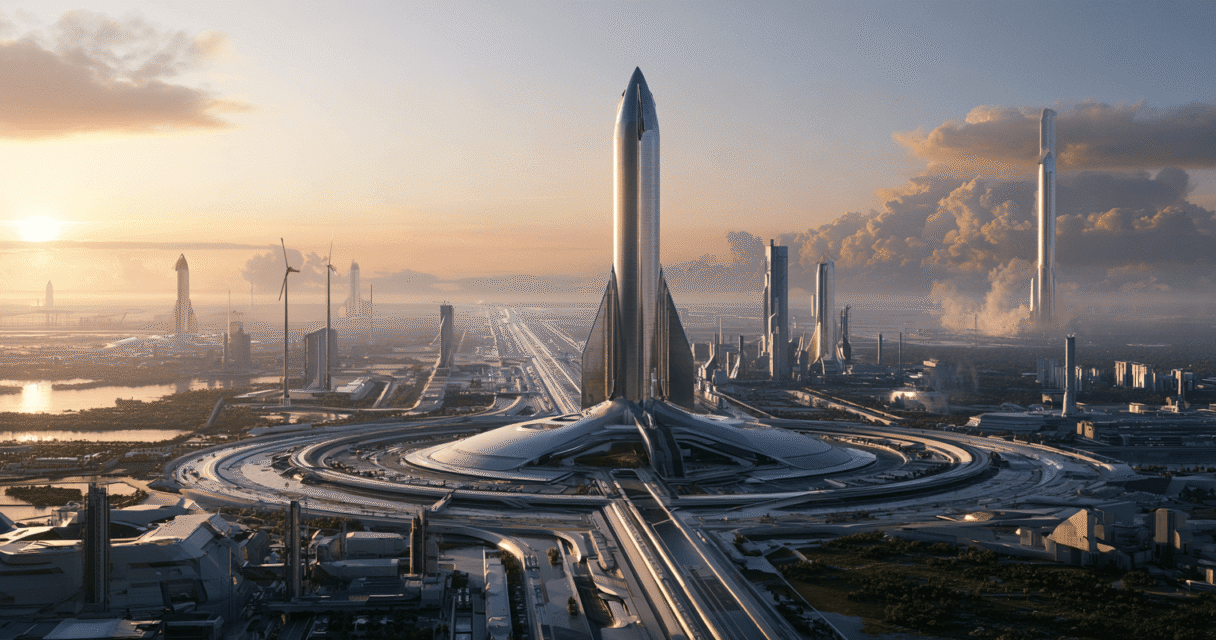
If there was ever a reason to post a wordless issue of The Bleeding Edge…
To just post a short video and leave it at that…
What I’m sharing below would be it.
It speaks for itself.
What an incredible symbol of human ingenuity, resilience, and absolute grit in the face of endless loutish and churlish detractors and critics.
The best revenge is to not be like your enemy.
– Marcus Aurelius
Musk didn’t engage in their pedantic discourse. He just built with his teams and made the impossible happen.
The end result says it all.
He caught a spaceship falling from Earth’s orbit in midair – with a level of precision that is almost impossible to comprehend.
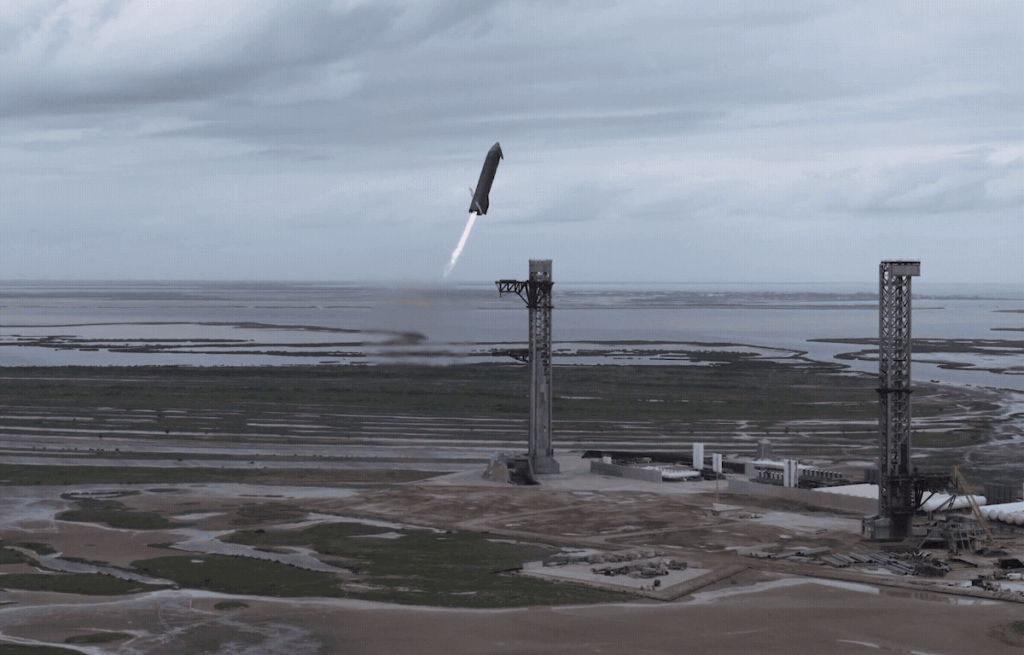
SpaceX Starship Flight 15 Catch | Source: SpaceX
I know that most of us have already seen the videos of SpaceX catching the Super Heavy booster on the launch pad from a previous launch…
But I’d like to point out how different – and far more difficult – it is to safely return a Starship from Earth’s orbit… only to be caught by the Mechazilla…no landing gear required.
The Super Heavy booster and the Starship are traveling around 3,600 miles per hour (mph) at the time when the Starship decouples from the booster.
The decoupling takes place around 70 kilometers of altitude – therefore, below the Karman line in the upper mesosphere (i.e. not in space).
For comparison, the Starship was in low Earth orbit traveling around 17,000 mph – almost five-times faster than the Super Heavy booster.
It’s an incredible challenge to bleed off that kind of velocity in order to enable a catch at a launch pad.
Either you need to have an immense amount of fuel to power thrusters to slow the rocket down, or you need to use Earth’s atmosphere to slow the Starship down.
Adding additional rocket fuel for a return to Earth would take up valuable payload capacity on the Starship…this would make the economics less attractive.
So SpaceX developed bleeding-edge ceramic heat shield tiles with unique geometries to reduce heating between individual tiles.
These tiles are designed not just for a single use, but for multiple flights – as the Starship is designed for reusability.
The Super Heavy booster doesn’t have to worry about this, because it never reaches space. This means it never reaches orbital velocity.
It doesn’t need ceramic tiles. The stainless steel exterior can handle the heat.
There’s a new “$20 super computer.” Beginning November 18, it could light up the most lucrative trading signal of 2026, with the potential to make you a year’s worth of gains. Click here to learn more.

On January 3, a move by Wall Street, Silicon Valley and Washington could send a new group of stocks soaring as high as 852%, 1,267%, 1,532%, and even 1,921% or more… To get all the details about this rare market event, including the name of the #1 stock for 2027, click here now.
This Starship flight 15 was also a commercial flight, just like the previous one.
It deployed another 26 Starlink Version 3 communications satellites into low Earth orbit… and then orbited Earth 14 times before returning to the launch pad.
As a reminder, the Starship didn’t “fly” back to Texas using rockets.
It used incredible precision when deorbiting. Seconds mattered – utilizing Earth’s atmosphere to both bleed off velocity, control its trajectory, and “steer” it to the correct landing spot on Earth.
The use of rockets was primarily for precision movements – to control attitude and positioning – to adapt to aerodynamic forces as the Starship fell back to Earth.
And here is probably the most incredible part…
As the Starship nears the landing pad and the warm embrace of the Mechazilla robotic arms, it only has 18 seconds to flip upright from its belly flop orientation… and maneuver its 171-foot-tall structure to a precise location: right between two mechanical arms with only inches to spare.
Plus a dead-stop hover – right above the ground, as if in animated suspension.
Absolutely brilliant.
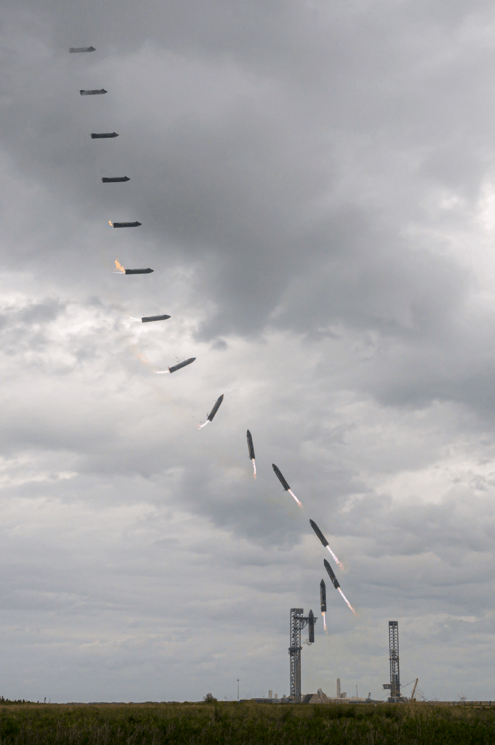
Timelapse of the Starship Flip | Source: X @johnkrausphotos
If anyone thinks this is just an interesting engineering project, with no real-world implications, they’d be dead wrong.
Everything has changed with this single launch.
Here’s what it means:
Still not a believer?
SpaceX is now manufacturing one Starship every two weeks and a Super Heavy booster every four weeks.
And it is building the manufacturing capacity to manufacture 1,000 Starships a year.
Starbase Louisiana will have 10 Starship launch pads, and it is already under construction.
And if that weren’t enough, Elon Musk just announced plans for a fourth-generation Starship, which will add additional Raptor Engines, increase the height to 230 feet (from 171 feet), and increase payload capacity to around 200 tons to low Earth orbit compared to about 100 tons today.
If you read or hear from any do-nothing analyst, journalist, or anyone on the internet that somehow downplays or discredits Elon Musk and his team at SpaceX for what they’ve just accomplished, please just ignore them.
I assure you, they are not worthy of your time.
Which reminds me of one of my favorite quotes from one of the greatest economists of all time (note: there aren’t many), Thomas Sowell…
The beauty of doing nothing is that you can do it perfectly. Only when you do something is it almost impossible to do it without mistakes. Therefore, people who are contributing nothing to society, except their constant criticisms, can feel both intellectually and morally superior.
Do something. Take risks. Innovate. Build. Contribute.
And fight against those who don’t do any of the above. Who prefer to sit and smear and silence those of us who do.
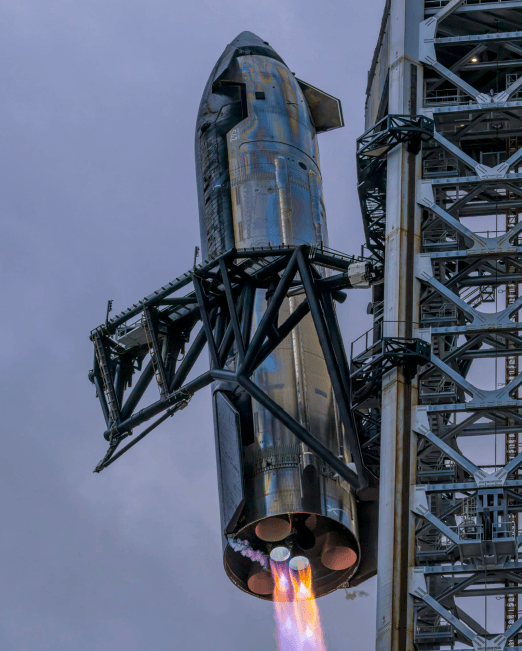
Moments Before the Catch | Source: X @AJamesMcCarthy
It’s not just a rocket ship. It’s symbolic of so much more.
Jeff
Add Brownstone Research as your preferred source on Google to see our latest stories in your feed.
 Add as a preferred source
Read the latest insights from the world of high technology.
Two of the biggest names in tech history have suffered two starkly different events, causing very different kinds of...
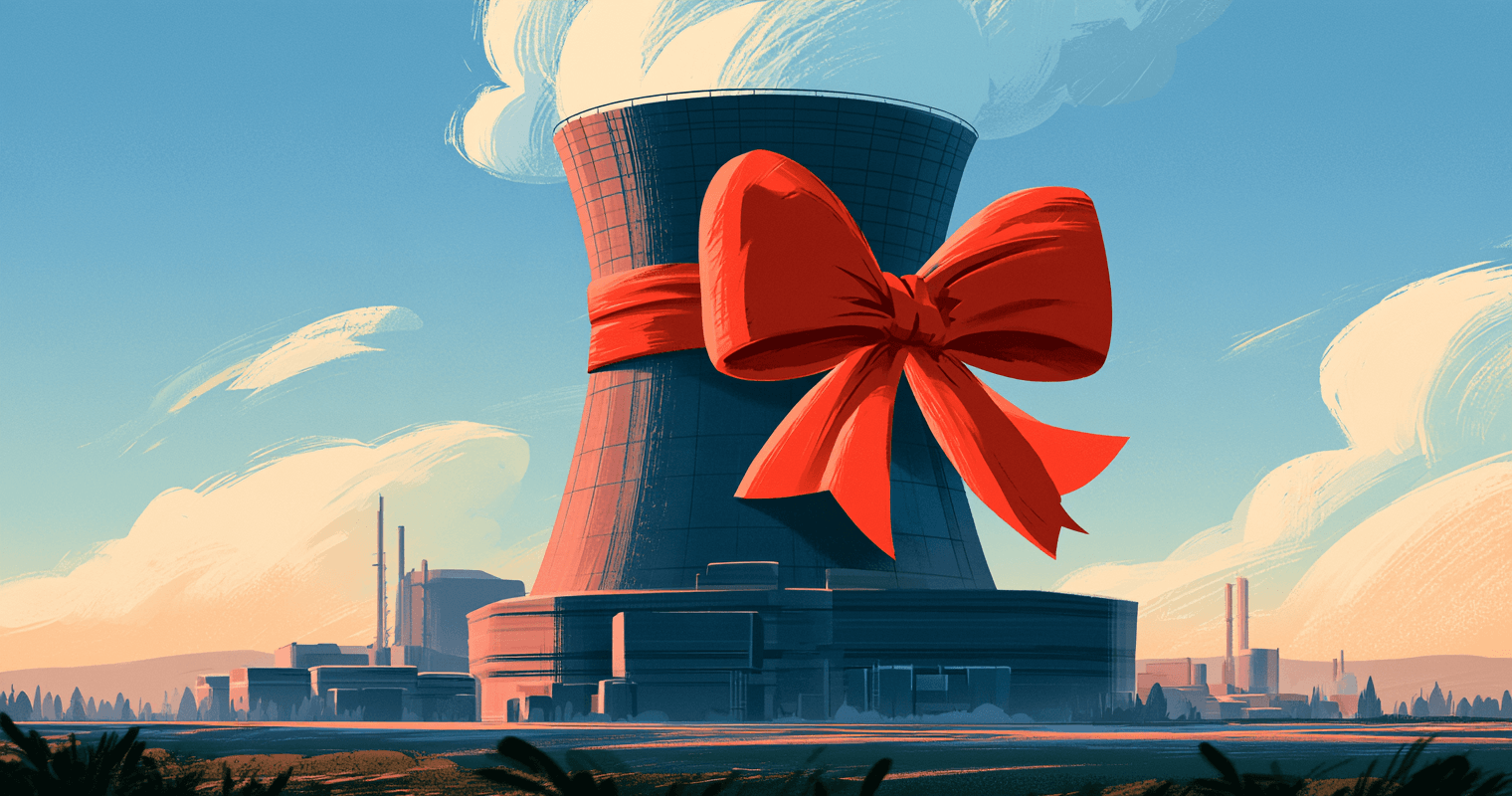
In a compressed window of just a few weeks, three separate advanced reactor developers received meaningful regulatory clearances…

Some of the best opportunities come from taking the other side of the trade when the crowd becomes too...