



The Nuclear Regulatory Commission Just Hit Fast-Forward
In a compressed window of just a few weeks, three separate advanced reactor developers received meaningful regulatory clearances…


Two of the biggest names in tech history have suffered two starkly different events, causing very different kinds of reputational damage.
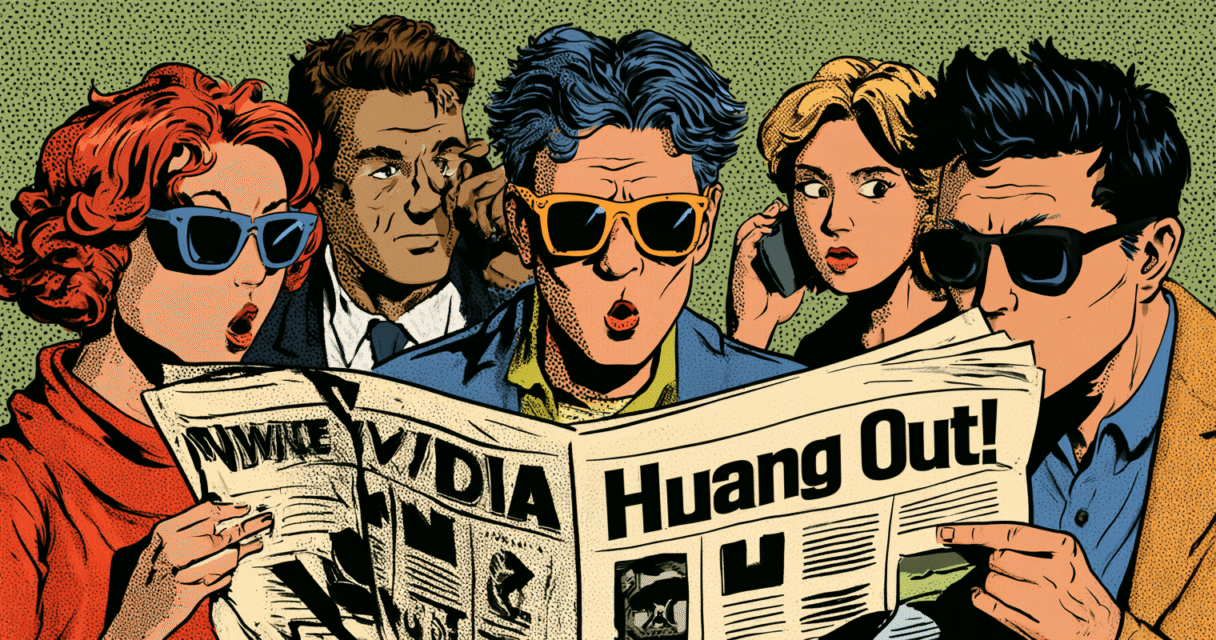
This was most certainly an embarrassing week for high tech.
Two of the biggest names in tech history have suffered two starkly different events, causing very different kinds of reputational damage.
It feels like Microsoft (MSFT) took down the country as its Microsoft Outlook and 365 services crashed yesterday and today. Incredibly, it wasn’t caused by some kind of clever cyberattack… Microsoft just screwed up epically with a network capacity upgrade.
The numbers will be staggering as to the level of damage caused. It will most certainly be in the billions of economic damage. That’s how reliant we have become on this legacy software platform.
But the even bigger development is something that should have been in the realm of a spy novel, but proved to be all too real.
The CEO of the world’s most valuable company – and arguably the most important company to the current economic growth spurt that we are experiencing – was compromised by an alleged Chinese spy.
Jensen Huang, CEO of NVIDIA, was the target of Chinese Communist Party industrial espionage and fell for the trap in the form of a Chinese executive representing an Asia-based distributor for GPUs.
He’s brilliant and one of the most celebrated figures in high tech. He has led and built one of the greatest technology companies in the world. The red flags should have been visible everywhere, and still, he fell for it.
Disappointing. And it has resulted in his immediate removal from NVIDIA.
So what’s next? Is it the end of NVIDIA (NVDA)?
No way.
While Huang was the figurehead and leader of NVIDIA, the team that designs and manufactures NVIDIA’s GPUs is one of the best in the world.
NVIDIA’s roadmap for the next few years is already well established, and there certainly won’t be a reduction in demand for its GPUs in the next two to three years. NVIDIA’s manufacturing capacity at TSMC is well established and secured, and right now that is just about as important as the product itself.
The biggest problem to solve short-term is to find a successor to head NVIDIA.
There are some decent options inside NVIDIA, and perhaps one or two external semiconductor executives.
There are also already rumors that Huang may step aside for a couple of years, and then the board will bring him back in after the dust settles from this debacle. Petitions are already circulating online to reinstate him. All said, it’s too early to tell.
The other rumor that is floating around is that Elon Musk will bring Huang on board as CEO of the Terafab, which will become the world’s largest semiconductor manufacturer.
Now wouldn’t that be interesting?
Have a great weekend.
Hi Jeff,
Thank you again for all your wonderful insights [in] your publications. I’m a Brownstone Unlimited member and always look forward to reading your updates and implementing your recommendations.
My question for you today is, how detrimental do you anticipate the midterm results to be for crypto and for technology?
Those that now hold significant power and sway have been very vocal against blockchain technology, superintelligence, and data centres. They have previously demonstrated the ability and willingness to stifle industries and have all but explicitly stated that they would use lawfare and any other trick in their arsenal to hinder Elon Musk’s endeavours.
As many of my investments are in Crypto and in Musk’s companies, as well as other tech stocks, I’m concerned that these will greatly suffer in the upcoming political and regulatory environment! (Not to mention personal concerns of censorship and authoritarianism, such as the UK has seen).
I know you cannot give personal investment advice, so I look forward to your general outlook of what is to come over the next 2-6 years. Thanks!
– Robin N.L.
Hi Robin,
You’ve raised such an important topic.
As much as I wish you were wrong, you’re 100% correct about which way the wind is blowing.
My only interest in politics is so that I can better understand the appropriate investing and trading strategies for my subscribers given whatever regime is in charge. And my only bias with regards to politics is that I strongly prefer regulatory environments that are pro-economic growth, pro-innovation, and pro-energy simply because they produce better investment opportunities for me and my subscribers.
To your point, we are going to see a lot of lawfare for the next two years, all sorts of subpoenas, and legislation designed to slow down and overregulate the development of artificial intelligence.
An artificial superintelligence (ASI) is the largest lure of all. One ring to rule them all. It can be used for the most oppressive kind of censorship and oppression one could imagine. And it is critical that it is never used for that. On this subject alone, we are in for an incredible battle as we look ahead.
Now, with that said, looking ahead for the next two years, I am actually very bullish.
The reality is that regardless of the outcome of the midterms, President Trump still has veto power. So yes, there will be a lot of politics and bluster in Washington over crypto and AI, but from a regulatory standpoint, both industries will continue to benefit from the current regulatory environment.
To be clear, we no longer believe that the CLARITY Act will pass in the next two years. We’ve been keeping in close touch with our network in D.C., and we now feel that this is highly unlikely.
But there are three reasons for us to be positive in the near term (i.e., the next two years):
It is far more difficult to have a strong prediction about what happens in January 2029 without knowing the outcome of the November 2028 presidential election and respective congressional elections.
As support for the CLARITY Act was largely divided along party lines this year, the future for crypto will likely heavily depend on that outcome, sadly.
One would think pro-economic growth, pro-financial transparency, and pro-financial inclusion technology – as well as the benefits of the radically improved efficiencies from blockchain technology (i.e., dramatically lower transaction costs) – would receive bipartisan support, but that has largely not been the case, with only a few exceptions.
Regardless, with the support of the SEC and CFTC, industry will continue to adopt and implement blockchain technology and make it vitally important to our financial system in the next two years.
The industry strategy is simple… make adoption so widespread that any U.S. government administration will have to accept the adoption. And that’s why the next two years are so critical for the digital assets industry.
We expect lots of investment and progress.
As for artificial intelligence, we’ll definitely see legislation designed to slow development down. And we can expect that Anthropic (ANT) will have its hands deeply in those efforts, pushing for regulatory capture. But those efforts will amount to nothing more than a circus, nothing but bluster.
The largest economic growth driver right now for the U.S. is investment related to artificial intelligence. It is creating so many jobs across so many sectors, and cities and municipalities that partner with tech companies are the beneficiaries of economic growth, job opportunities, and large tax revenue increases.
Wherever we see states stupid enough to ban AI investment in data center infrastructure, we’ll see those opportunities flow towards states that favor economic growth and opportunity.
And the midterm outcomes will not slow the investment spend in the next two years in the industry. And 2027 will see more than $1 trillion invested in AI infrastructure on Earth. And we’ll also see SpaceX launch the first of its A1 Starmind AI satellites in Q3 2027 and ramp up quickly into the end of the year. Then 2028 will see large volumes of AI data center satellites. So we’ll see both terrestrial and orbital investment skyrocket – literally.
AGI exists today, and it is generating hundreds of billions in revenues right now. And all the frontier AI companies, namely Google, OpenAI, Anthropic, and SpaceX, are aggressively racing towards ASI, the biggest prize of all.
And it’s worth noting that the open-source, or open-weight, AI industry is thriving right now, helping industries adopt AI throughout their respective businesses. This trend will see aggressive growth for the next two years, and the outcome of the midterms won’t slow this trend down.
And let’s not forget that the 12 months that follow midterm elections have always proven to be one of the best investment environments time and again. Just one more reason to be excited about 2027.
And please rest assured, if something fundamentally changes – anything that gives us reason to be bearish – you’ll be the first to know, and we’ll adjust our strategies accordingly.

Starting January 3, many of today’s top stocks could lose their grip… While a new group of stocks could soar double, triple, and even quadruple-digits. That’s the latest warning from Jeff Brown and one of his most trusted analysts and former Wall Street insider, Jason Bodner. If you’re unprepared when this happens, you could risk financial ruin… But if you’re ready, you could potentially turn a few thousand dollars into a six-figure nest egg in a few short months or even weeks. (It has happened before!) Jeff and Jason share all the details in their urgent briefing: The 2027 Stock Market Power Shift... including a way to potentially spot the new winners early – right before they break out 852%, 1,267%, 1,532%, and even 1,921%.Click here to watch before it’s too late.
The man who called the 2025 crash three months before it unfolded has a startling new prediction: “Nov. 25 could spark a financial crisis.” He’s not predicting a typical crash. Instead, he has a peculiar warning for Thanksgiving and a “bizarre” new recommendation to review immediately.
Why do you associate the stock RAMBUS (RMBS) with data centers rather than with memory chip companies? Thanks.
– Charles R.
Hi Charles,
I touched on this briefly in last week’s AMA, The Bleeding Edge – The Catalyst for Critical Assets.
Rambus has the most important intellectual property portfolio when it comes to high bandwidth memory (HBM). And HBM is the number one bottleneck in the AI infrastructure build-out, far more so than GPUs right now (that and energy production, of course).
And all of the major semiconductor companies license Rambus patents in order to manufacture and use HBM technology in their semiconductors. NVIDIA, AMD (AMD), SK Hynix (SKHY), Samsung Electronics (SSNLF), Micron (MU), and so many others.
Every implementation of HBM into a server, on a GPU, or even into a robot utilizes Rambus technology.
In the current market, an extremely high percentage is being traded by AI. Human investors in previous generations that may have traded the market based on company revenues aren’t the majority anymore.
If mostly AI agents are trading the market today, then what’s to stop AI from inadvertently crashing the market or preventing “normal” gains from top revenue-earning companies? AI doesn’t care about companies; AI just wants a quick buck.
– Brian K.
Hi Brian,
You’re absolutely correct. As much as 75% of all trades are made by automated algorithmic trading systems, which are driven by machine learning and/or artificial intelligence. And the utilization of this technology will only increase adoption.
And you’re right, most of these algorithms are just looking for very short-term gains as they search for arbitrage opportunities, or short-term opportunistic trades based on technical price action.
But there is an important caveat for us to understand.
The vast majority of publicly held equity is held by longer-term institutional investors, family offices, and individual investors. So while the majority of trading volume might be high-frequency automated trading, the majority of equity holders have longer time horizons.
And those longer-term investors absolutely do care about the financial health, the growth profiles, the income generation, and the valuations of companies when they make decisions about when to buy and sell.
We did see a great example of the impact of this kind of algorithmic trading immediately after the midterm election. The immediate reaction was negative for the economy, and the stock markets dropped sharply.
The AI/ML algorithms went into overdrive as they automatically reacted to the negative price action, which exacerbated the pullback. The NASDAQ was down about 5.5% on November 5 but has since retraced about half that drop.
The reality is that these high-frequency trading shops are very short-term and do create some volatility from time to time. But they have nothing to do with the direction stocks are trading over the longer term, which is far more determined by the health and growth prospects of a company, the economic environment, and the current interest rates.
Jeff
Add Brownstone Research as your preferred source on Google to see our latest stories in your feed.
 Add as a preferred source
Read the latest insights from the world of high technology.
In a compressed window of just a few weeks, three separate advanced reactor developers received meaningful regulatory clearances…

Some of the best opportunities come from taking the other side of the trade when the crowd becomes too...
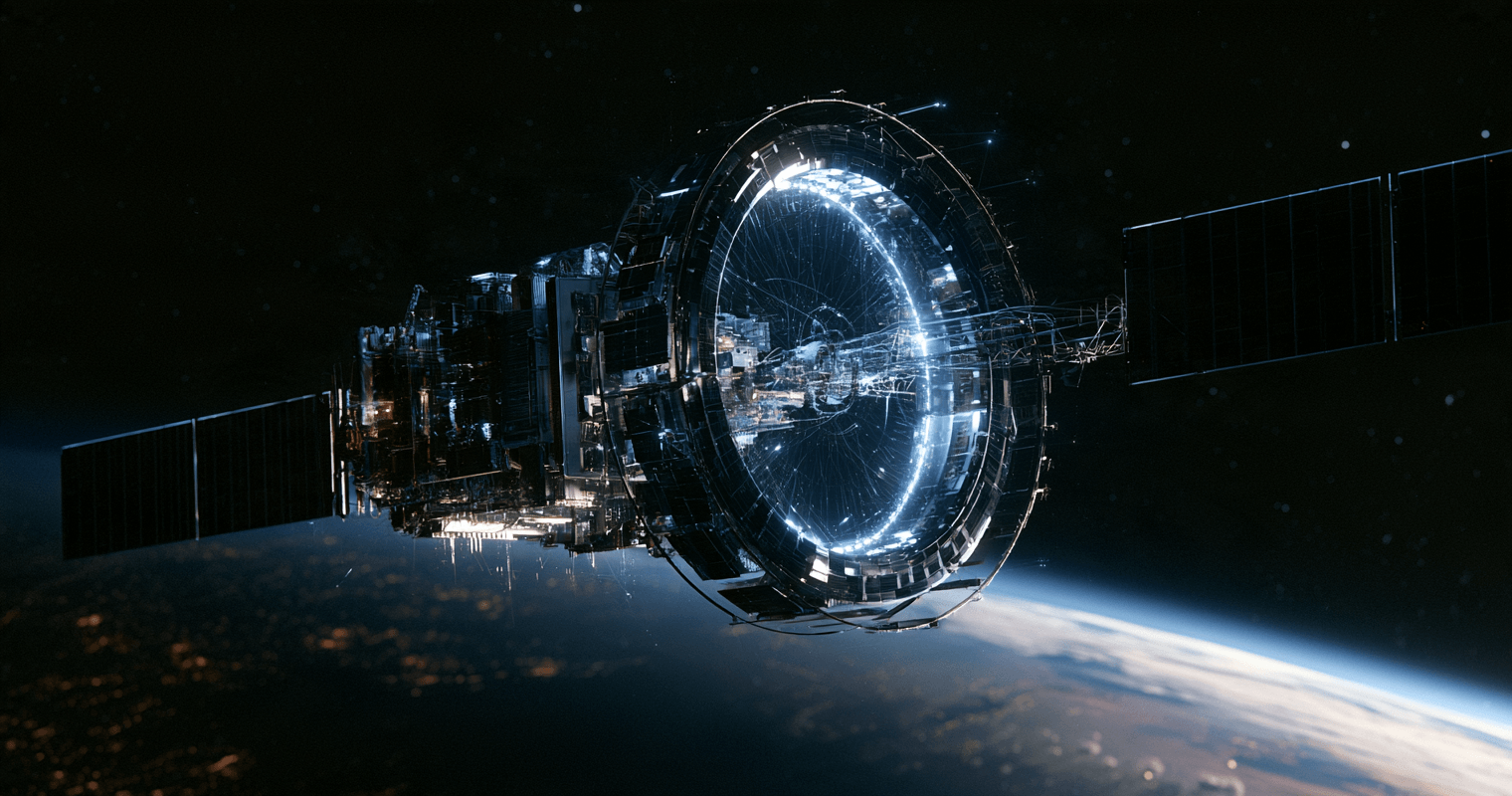
Of the 119 payloads aboard the SpaceX (SPCX) Transporter-16 launch on March 30, 2026, one in particular caught my...